
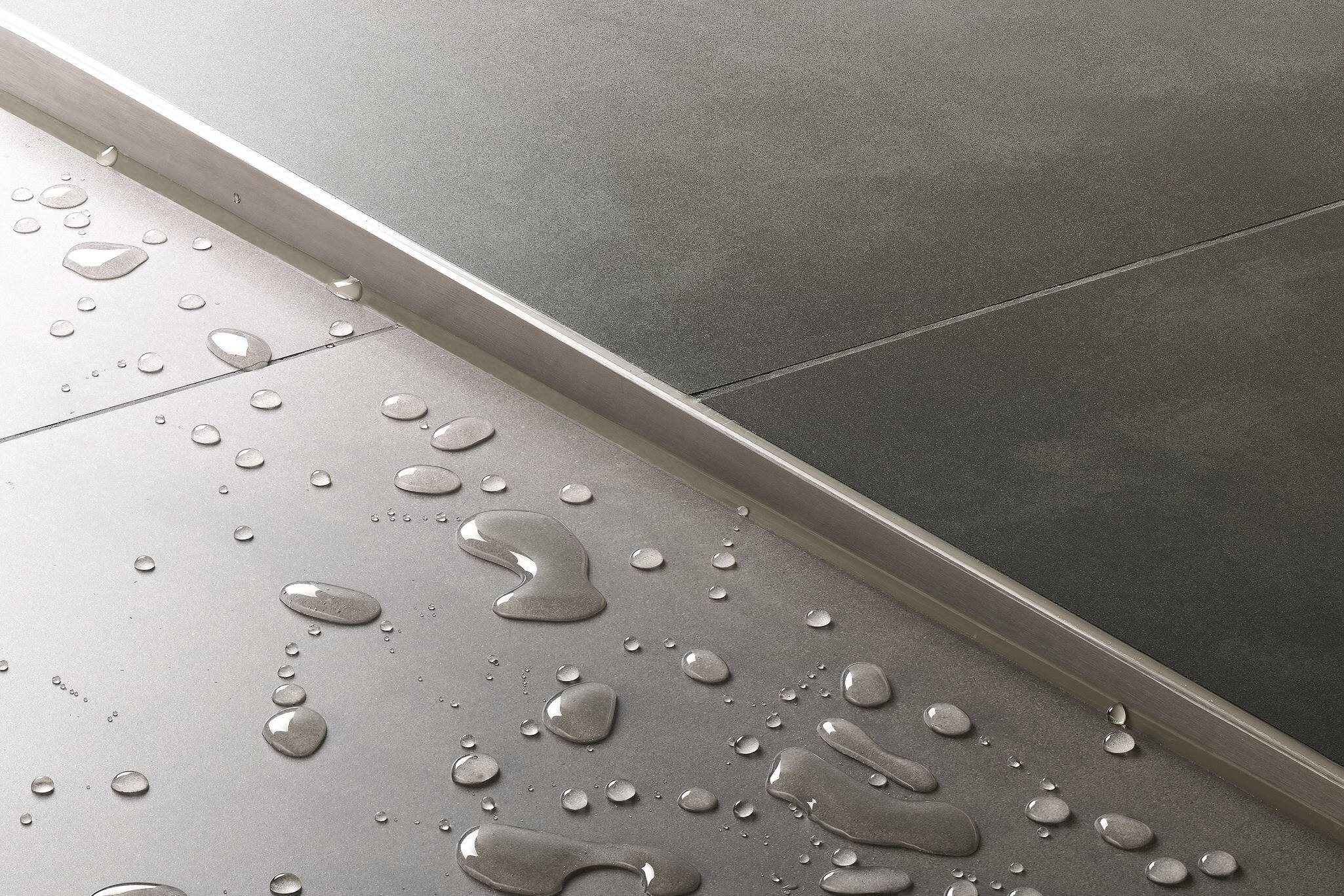
Building materials
What goes under the tiles and along their edges, which is where it is decided whether a job lasts.
See the materialsCall +34 971 732 343On a building site what you see are the tiles, but what decides whether a floor lasts twenty years or lifts within two is what sits underneath and at the edges. The adhesive, the membrane, the joint and the profile work together: if one of the four does not match the substrate, the size of the tile or the use it will get, the failure appears all the same, however good the ceramics are. On this page we explain what each building material we stock actually is, when it comes into play and what problem it prevents, so that you can order what your job really needs.
01
Before anything is laid
Getting the substrate flat and making sure water cannot pass. It is the part nobody sees and the only one that cannot be redone later without lifting the floor.
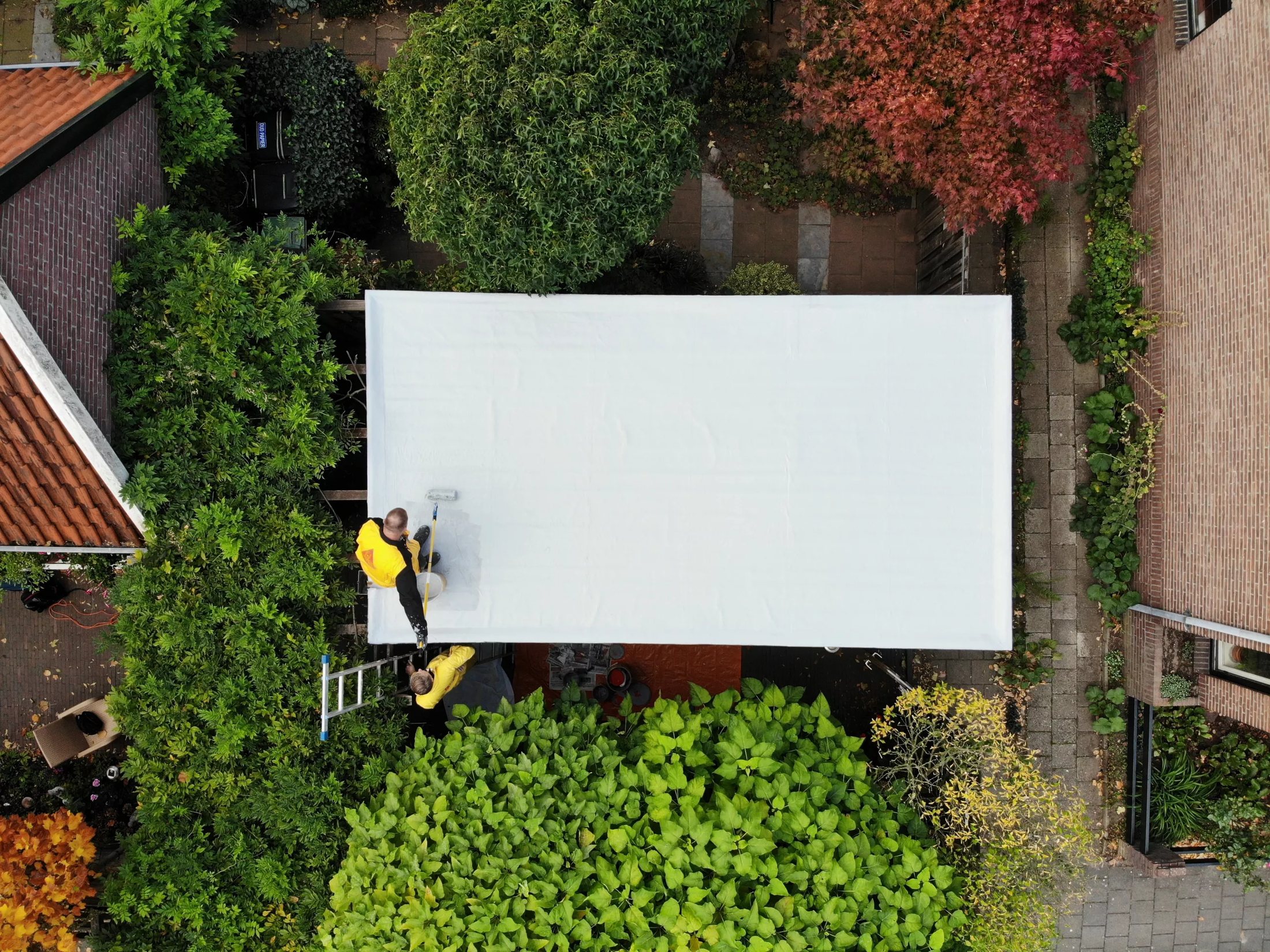
SikaWaterproofing and chemicals
Fabricante de productos químicos para la construcción: impermeabilización, adhesivos cerámicos, materiales de rejuntado, selladores, morteros de reparación y aditivos.
Cubre las tres decisiones técnicas de un alicatado: con qué se impermeabiliza, con qué se pega y con qué se rejunta.
Sus propios procedimientos de ejecución marcan cuándo el soporte está listo (más de 6 meses en soleras y losas de hormigón, 7 días en recrecidos, 3 días sobre membranas líquidas de impermeabilización) y cómo se elige el adhesivo según soporte, lado mayor de la pieza y absorción de la baldosa.
Ahí es donde se evitan los dos fallos más repetidos: alicatar sobre un soporte que todavía se mueve y usar un adhesivo por debajo de lo que pide la pieza.
Why we recommend itMultinacional suiza con filial española en Alcobendas. Lo elegimos por algo poco vistoso pero decisivo: publica los procedimientos de ejecución completos y gratuitos, con la clase normalizada de cada producto a la vista (C2TES1, CG2WA).Eso permite comprobar sobre el papel, antes de comprar, que el material corresponde al trabajo. No todos los fabricantes lo ponen tan fácil.
Estil GuruWaterproofing membranes
Fabricante de láminas técnicas y de sistemas de ducha, drenaje exterior y elementos modulares. Diseña, fabrica e innova cada sistema en sus propias instalaciones.
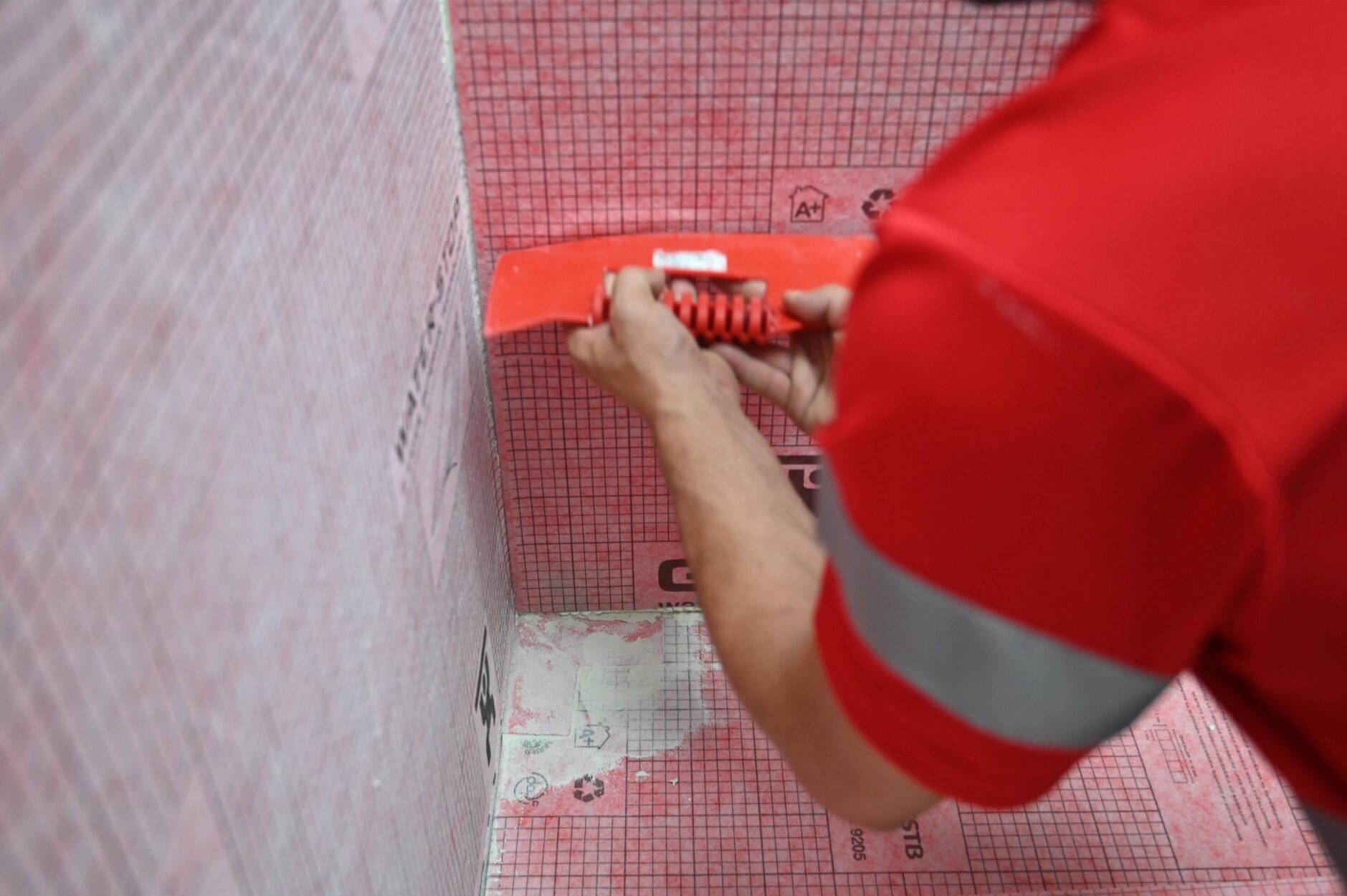
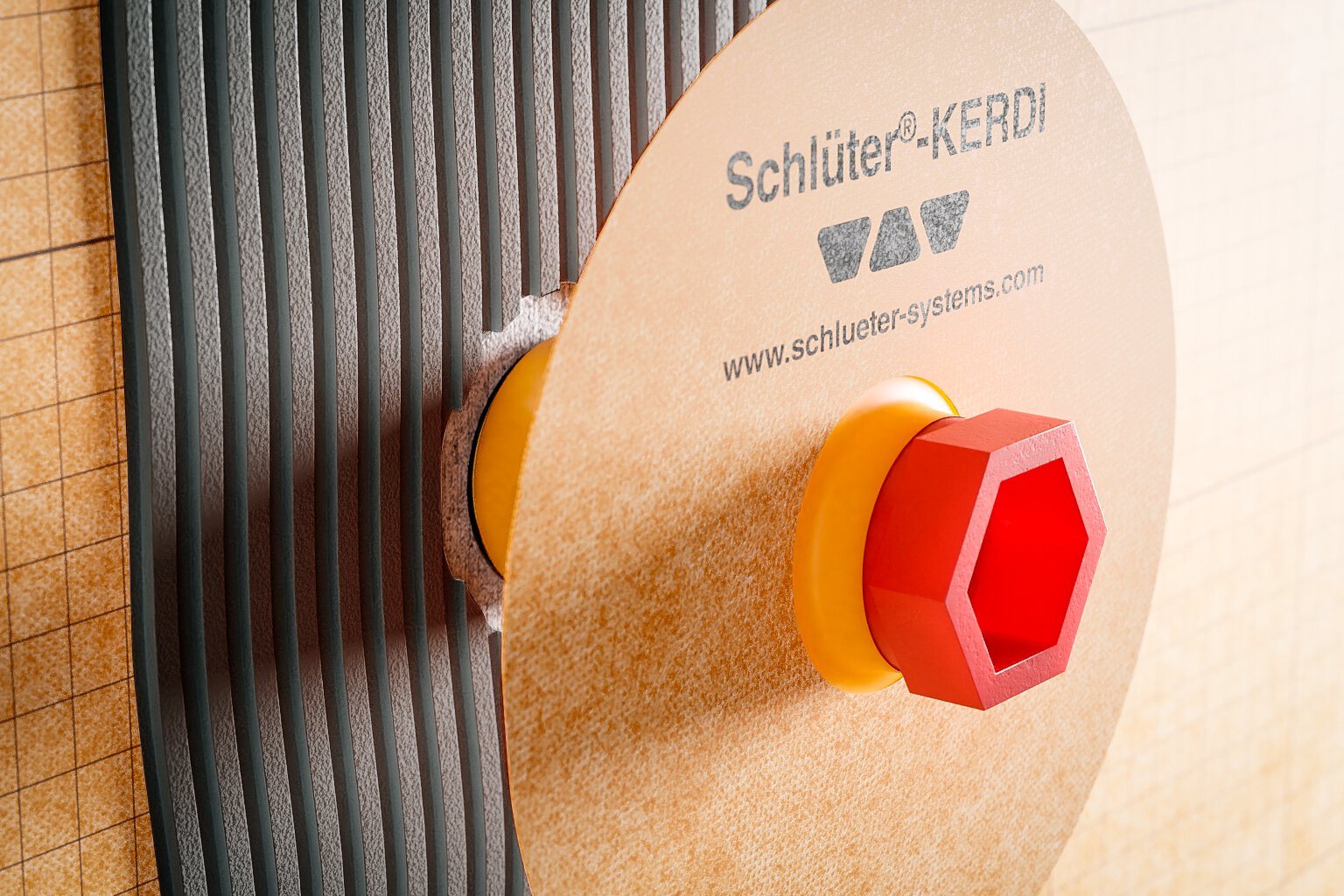
Se usa en el momento de impermeabilizar y de resolver el desagüe, antes de colocar la cerámica. La lámina Water-Stop se fija al soporte con cemento cola C2, queda cubierta por el revestimiento final, tiene 0,5 mm de espesor nominal y puentea fisuras de hasta 3 mm.
Sirve en cubiertas planas, terrazas, balcones, piscinas, jardineras y zonas húmedas interiores, y evita el fallo más caro de un baño o una terraza, que es la filtración descubierta cuando ya está todo alicatado.
Why we recommend itTrabaja por sistemas cerrados y no por productos sueltos. La lámina, la banda, el sumidero y el módulo de ducha están pensados para ir juntos, y cada pieza tiene su ficha.Lo elegimos porque en una ducha de obra la filtración casi nunca viene del material, viene del encuentro entre dos materiales, y aquí ese encuentro ya llega resuelto de fábrica.
PumaMortars and renders
Fabricante español de morteros para construcción.
El mortero es el material de la fase previa a la cerámica: regularizar, recrecer, revocar y enlucir para que el soporte quede plano, sano y a cota.
Los procedimientos del sector son claros en que esa capa de nivelación es la que permite colocar después, y que un soporte con coqueras, material suelto o falta de planeidad arruina cualquier adhesivo. Dicho de otra forma, el mortero no se ve pero fija la calidad del acabado que sí se ve.
Why we recommend itFabricante español de morteros. Lo elegimos para la fase previa, la que nadie ve: dejar el soporte plano, sano y a cota. Es la parte de la obra que más condiciona el resultado final y la única que no se puede corregir después sin levantar lo que ya está colocado.
02
The bond and the joint
Where it is decided whether the tile holds. The adhesive has to match the substrate and the format, and the joint has to be able to move.
MapeiAdhesives and grouts
Fabricante italiano de productos químicos para la construcción, conocido sobre todo por sus adhesivos para cerámica y piedra y por sus materiales de rejuntado.
Es la otra pata del agarre: adhesivo y junta, más los sistemas de impermeabilización y preparación que van debajo. La junta se elige al final, pero condiciona el mantenimiento durante toda la vida del suelo, porque de ella dependen la absorción de agua, la resistencia a manchas y la limpieza.
Una junta mal elegida no se cambia sin levantar o repicar, así que es una decisión que conviene tomar con la pieza delante, no cuando ya está colocada.
Why we recommend itEmpresa de Milán fundada en 1937, con casi noventa años especializándose en una sola cosa: cómo se agarra un material a otro. Esa veteranía se nota en el detalle, en una gama ordenada por soporte y por formato y en una documentación que dice exactamente qué adhesivo pide cada caso.Como Profilpas pertenece al mismo grupo, el adhesivo, la junta y el perfil se resuelven dentro del mismo sistema.
CercolAdhesives and grouts
Fabricante italiano de adhesivos y productos especiales para la construcción: preparación de soportes, impermeabilizantes, adhesivos para cerámica y piedra natural, materiales de rejuntado y sellado, y productos para colocar parquet.
Entra en la fase de agarre, que es la que va de dejar el soporte plano y sano hasta rejuntar la última pieza. Al cubrir toda la secuencia con una sola marca (regularización, impermeabilización, adhesivo y junta), cada capa está pensada para la siguiente.
Eso evita el problema clásico de mezclar productos de distinta procedencia y descubrir luego que uno no agarra sobre el otro.
Why we recommend itFabricante italiano con sede operativa en Sassuolo, en pleno distrito cerámico. Lo elegimos porque cubre la secuencia completa, de la preparación del soporte al rejuntado, con una sola marca.Eso evita el fallo más habitual en obra: mezclar productos de distinta procedencia y descubrir después que uno no agarra sobre el otro.
PeygranLevelling systems
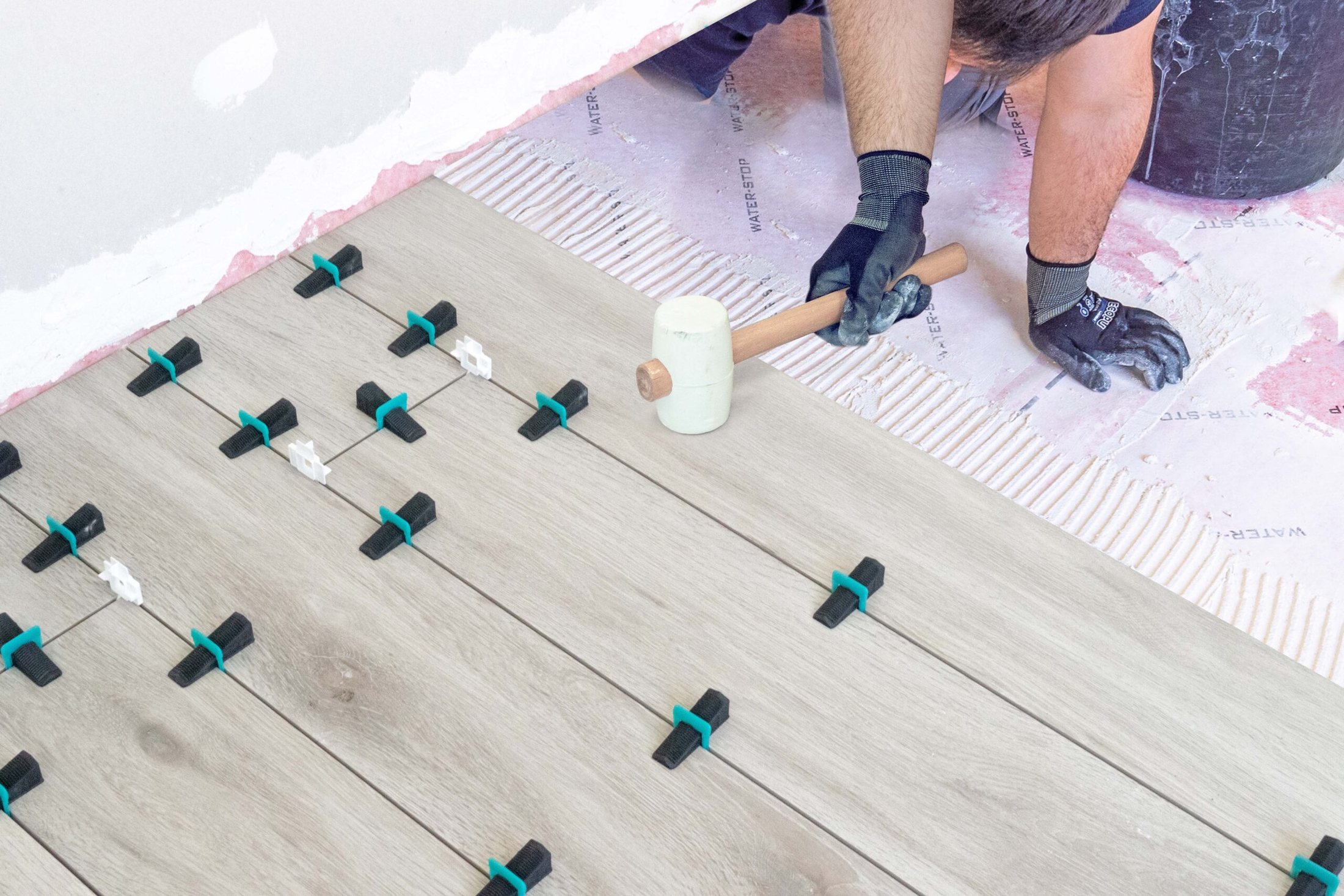
Fabricante español de sistemas de nivelación y de herramienta de colocación: crucetas y calzos de nivelación, separadores, útiles para extender el cemento, herramienta de limpieza, anclajes de fachada y plots.
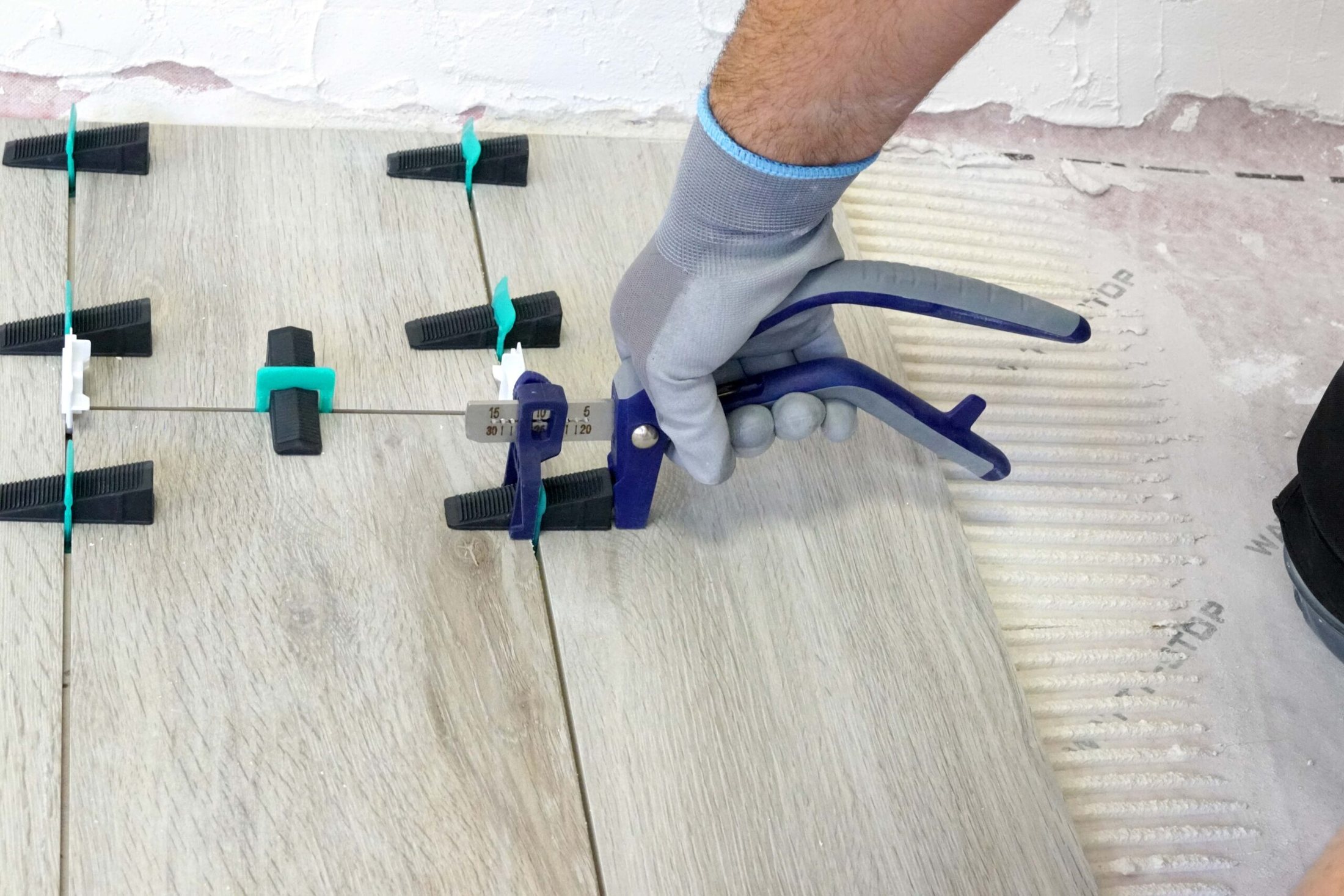
Los calzos de nivelación se ponen durante la colocación, pieza a pieza, y se retiran cuando el adhesivo ha fraguado. Mantienen dos baldosas contiguas en el mismo plano mientras el adhesivo está fresco, que es justo cuando una pieza grande se desplaza.
Evitan el resalte entre baldosa y baldosa, el defecto que más se nota al pisar y con luz rasante.
Why we recommend itFabricante alicantino que lleva más de treinta años desarrollando y produciendo sus propios sistemas de nivelación.Lo elegimos porque la nivelación es de esas cosas que solo se notan cuando falla: un resalte de un milímetro entre dos piezas de gran formato se ve a contraluz durante el resto de la vida del suelo.Sus cuatro sistemas cubren desde la baldosa corriente hasta el gran formato, y el LS Gyre se aprieta con un giro de muñeca y se retira de un golpe, que en una jornada de colocación son horas de diferencia.
03
Edges and junctions
Corners, steps, changes of level and pipe penetrations. The edge of a ceramic tile is its weak point, and almost every breakage starts there.
SchlüterProfiles and shower systems
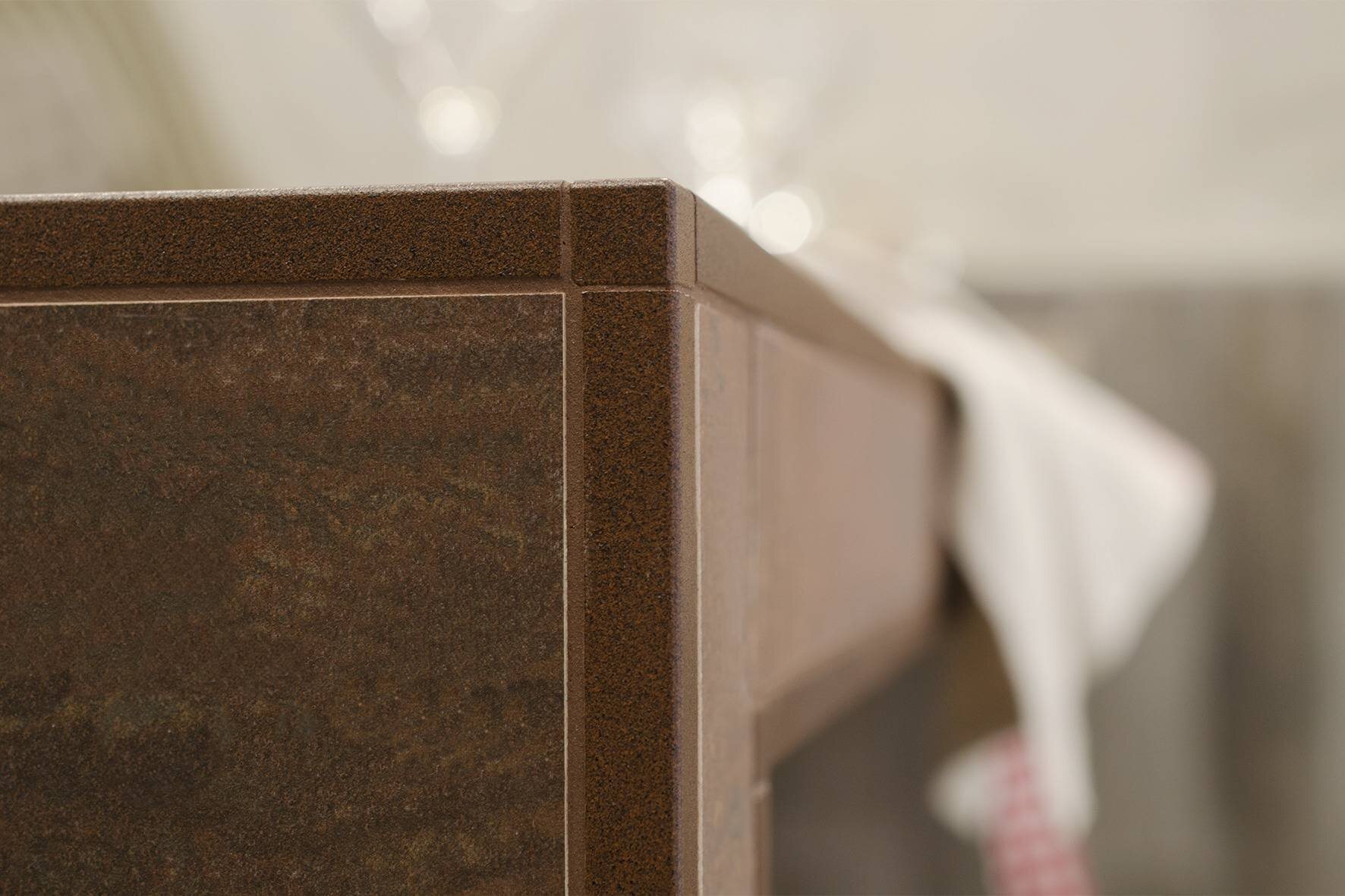
Fabricante alemán de perfiles y de sistemas de instalación para cerámica: perfiles de remate y de canto, láminas de impermeabilización y de desolidarización, platos y canales de ducha, suelo radiante y drenaje de terrazas.
Interviene entre el soporte y la pieza, en la capa que nadie ve.
Su lámina de desolidarización se coloca entre recubrimiento y soporte para independizar las dos capas y absorber vibraciones y tensiones, y está indicada sobre hormigón joven, recrecido de cemento fresco, recrecidos de anhidrita, recrecido calefactado, yeso, madera y balcones o terrazas.
Lo que evita son las fisuras que aparecen semanas después de colocar, cuando el soporte sigue trabajando y la cerámica no puede seguirlo.
Why we recommend itLa fundó en 1966 un maestro colocador de cerámica, y eso explica el catálogo: cada pieza resuelve un problema que alguien se ha encontrado alicatando. Sigue siendo empresa familiar y tiene delegación española en Onda.Lo elegimos porque documenta sus sistemas uno por uno, de manera que una ducha de obra se puede montar entera, de la membrana al perfil, con componentes pensados para encajar entre sí.
ProfilpasProfiles and edge trims
Fabricante italiano de perfiles para pavimentos y revestimientos, canales de ducha y accesorios de instalación.
El perfil se decide antes de empezar a colocar, porque su altura tiene que cuadrar con el espesor de adhesivo más pieza, y se monta a la vez que la cerámica.
Resuelve los puntos donde la baldosa termina y queda desprotegida: cantos de pared, esquinas, remates contra otro pavimento, zócalos y peldaños. Sin perfil, el canto de la pieza se desconcha con el primer golpe y la junta de ese borde se abre.
Why we recommend itFabrica perfiles en Italia desde 1976 y forma parte del grupo Mapei desde 2022. Lo elegimos por una razón práctica: en perfiles lo decisivo es poder reponer exactamente el mismo acabado años después, y un fabricante con esa estructura mantiene el catálogo estable.Cambiar un peldaño y que el remate nuevo no case con los de al lado es un problema caro de arreglar.
04
Where the water goes
Terraces, showers and driveways. The channel is decided at the start, because it governs the fall and the setting out of the tiles.
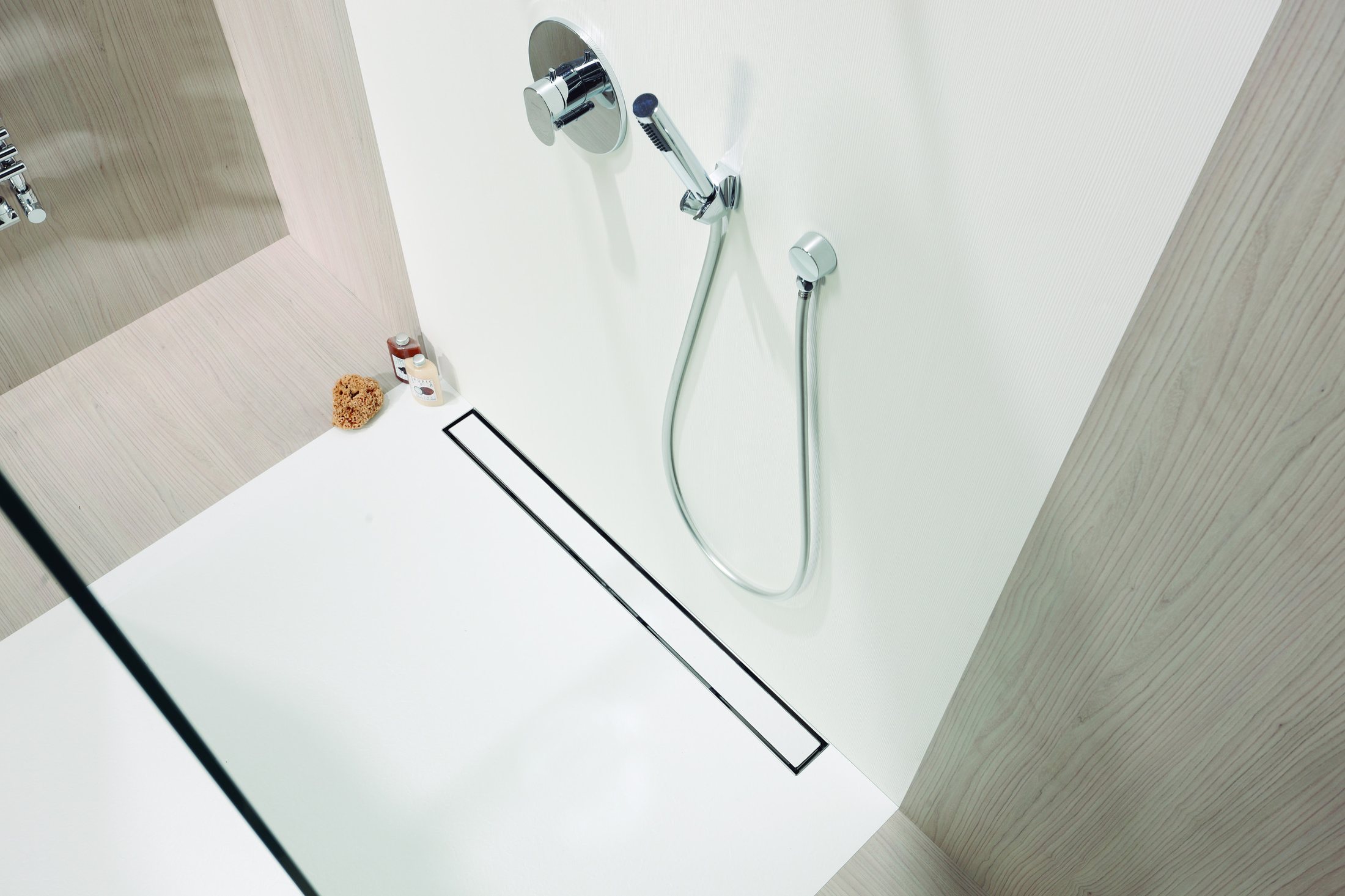
AcoChannels and drainage
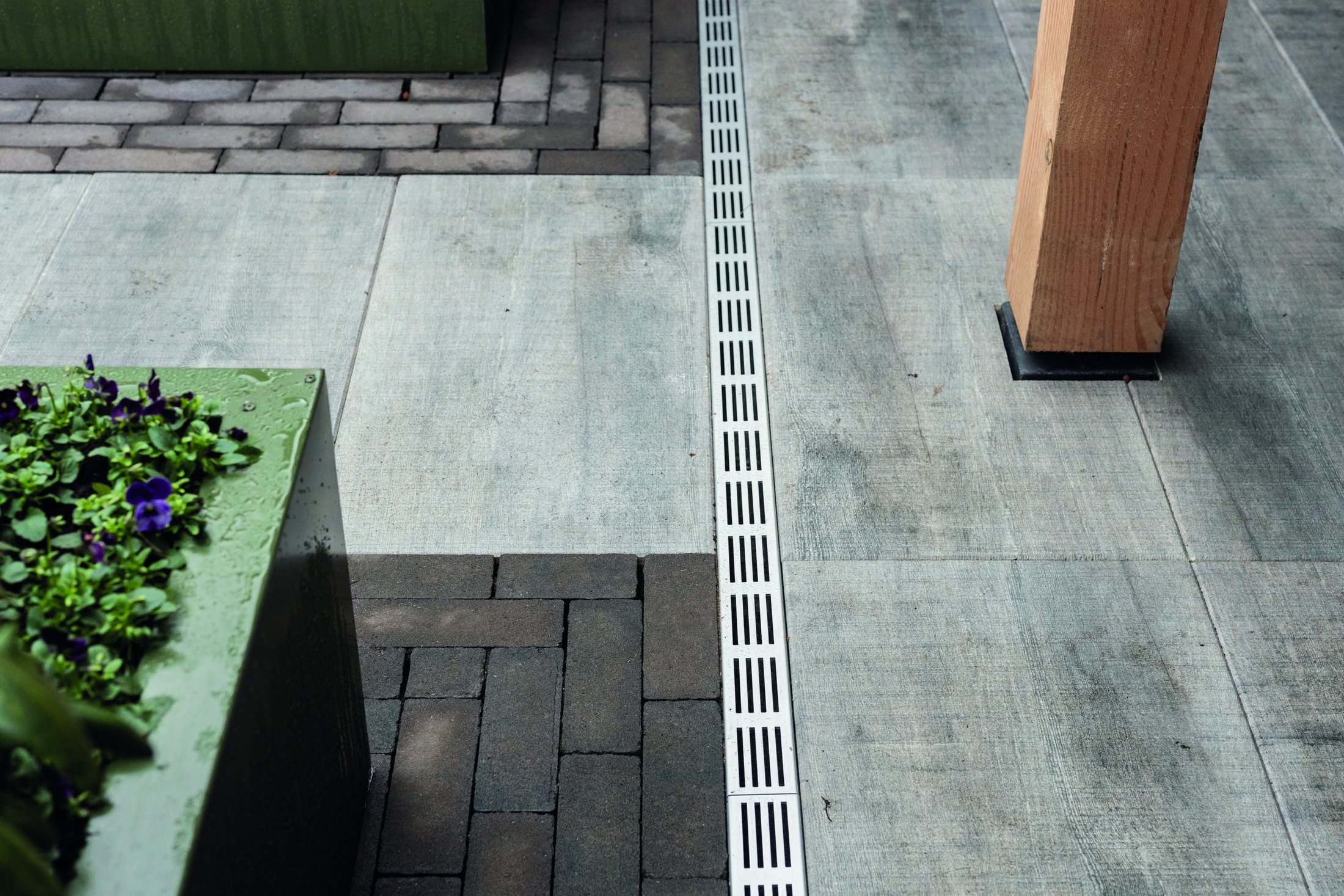
Fabricante de canaletas y sistemas de drenaje: canales con reja, sumideros, imbornales, tapas de arqueta y equipos de tratamiento y bombeo del agua.
Se define al principio, cuando se decide por dónde sale el agua de una terraza, un acceso de garaje, un patio o un porche, porque el canal condiciona la pendiente y el replanteo de las piezas.
Los canales se fabrican en acero inoxidable, hormigón polímero, acero galvanizado o plástico, y tanto el material como la reja se eligen según el tránsito que van a soportar.
Lo que evita es el agua que se queda parada en el pavimento o que entra hacia la vivienda, un defecto que luego solo se arregla levantando el suelo.
Why we recommend itFabricante alemán de origen familiar, presente en más de cincuenta países y con fábrica propia en España desde 1988.Lo elegimos porque organiza toda su gama alrededor del recorrido del agua, de la recogida al desagüe, y eso permite resolver una terraza entera con piezas del mismo sistema en lugar de ir encajando marcas distintas.Que fabrique en España también acorta los plazos cuando hay que reponer una reja o una tapa.
05
Openings and access
Roof windows, skylights, sliding doors, loft and spiral staircases, and the insulation that goes with them.
MaydisaRoof windows, staircases and insulation
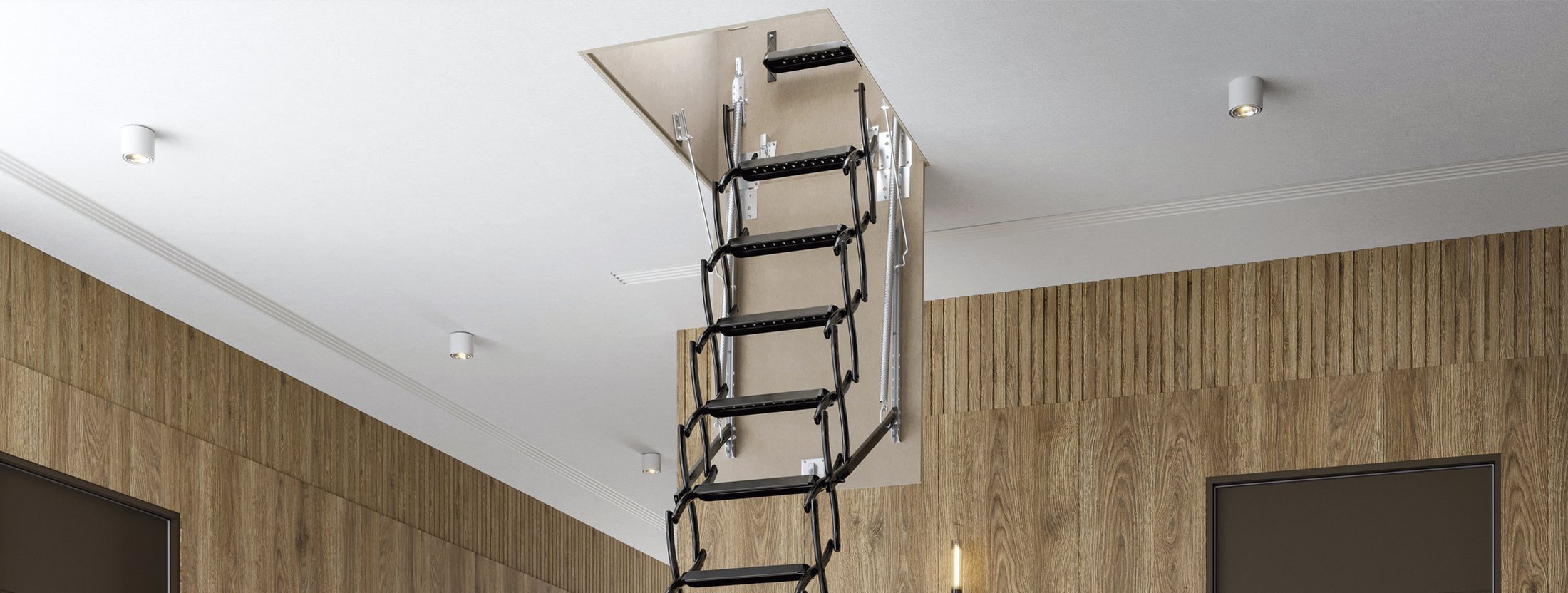
Empresa de materiales para construcción y reforma, centrada en huecos y cerramientos: ventanas de tejado, claraboyas y luceras, escaleras (escamoteables, de tijera, rectas y de caracol), sistemas de puertas correderas, aislamientos y láminas transpirables.
No es material de agarre, es material de obra para resolver luz, acceso y aislamiento. Se decide en la fase de estructura y cubierta, porque una ventana de tejado o una escalera escamoteable hay que dejarla prevista antes de cerrar y revestir.
Si se deja para el final, lo normal es tener que rehacer hueco, remates y, muchas veces, parte del alicatado o del falso techo.
Why we recommend itEs el proveedor al que recurrimos para lo que no es cerámica pero aparece en la misma obra: abrir un hueco de luz en la cubierta, resolver el acceso a una buhardilla o aislar un encuentro.Tener un solo interlocutor para esas piezas evita que la obra se pare esperando a un segundo proveedor cuando ya está todo lo demás en marcha.
Frequently asked questions
Which adhesive do I need for large-format porcelain stoneware?
Cementitious adhesives are classified under the standard UNE-EN 12004-1, and for large format you work with class C2 adhesives with deformability, that is type C2TES1 or C2ES1 where a deformable adhesive is enough, and C2ES2 or C2TES2 where high deformability is called for. The choice does not depend on the tile alone: it is decided together with the type of substrate, the length of the longest side of the tile and the water absorption of the ceramics. Porcelain stoneware absorbs very little, so the adhesive has to provide the adhesion itself, and that rules out C1 in large formats. Ask to be shown the class printed on the bag, because that is the figure that tells you whether the material matches the job.
Is back-buttering needed, and which trowel is the adhesive spread with?
The standard UNE 138002:2023 links the longest side of the tile to the notch of the trowel: for mosaic of around 10 cm it gives V3, for a tile of 20 to 30 cm U6, at 45 cm U8, and in large formats you move up to U10 or U12 notches and also add adhesive to the back of the tile. Back-buttering is exactly that, applying adhesive to the substrate and to the rear face of the tile as well, so that no voids are left underneath. On extruded tiles, or tiles with a heavily profiled back, back-buttering with the flat side of the trowel is compulsory whatever the format. Voids under the tile are what causes point breakages and the hollow sound underfoot, which is why the trowel is no minor detail.
How long do you have to wait before tiling onto a new slab or screed?
Industry installation procedures give specific waiting times: a concrete slab or floor slab is considered stable after 6 months in normal conditions and free of cracks, a screed after 7 days, and over a liquid waterproofing membrane the substrate is stable after 3 days. Waiting is not a formality: green concrete and fresh screed keep shrinking, and if the ceramics are bonded directly to them, that movement is passed on to the tiles and to the joints. Where you cannot wait, the technical answer is to lay an uncoupling membrane that separates the two layers. Before starting it is worth checking that the substrate is sound, clean, dry, free of loose material and with the pores open, which is what secures the adhesion.
Do you have to waterproof before tiling a shower floor?
Yes. Protecting the substrate and the adjoining elements is considered essential in wet areas, and damage from moisture getting in tends to be considerable and costly. Waterproofing is not the ceramics: it is a layer that goes underneath and only guarantees watertightness in combination with the adhesive and the tiling, which is why it is carried out in direct contact with the ceramics. In a level-access shower it is worth waterproofing the doorway as well, to protect the rooms next door. The waste pipe needs a minimum fall of 1 to 2 per cent, and in accessible showers the regulations limit the fall of the surface to 2 per cent.
How do you waterproof with a membrane, and when is one used?
A waterproofing membrane is fixed to the substrate with C2 type tile adhesive and ends up covered by the final tiling, which is also fixed over it with C2, so it is neither visible nor adds appreciable thickness: we are talking about a nominal thickness of 0.5 mm in a geotextile membrane of this kind. It is used on flat roofs, terraces, balconies, swimming pools, planters, fountains and indoor wet areas such as showers and bathrooms. As well as stopping the water, these membranes bridge cracks of up to 3 mm and work in a temperature range of -20 to +80 degrees, which matters outdoors. If the substrate is new or liable to crack, the membrane solves two problems at once, watertightness and movement.
Which grout stands up to swimming pool water?
For a swimming pool what you use is epoxy grout, that is reactive resin grouting material, class RG under UNE-EN 13888. A two-component epoxy grout for widths of 2 to 20 mm is suitable for pools with any type of chlorination, as well as for industrial areas, hospitals and kitchens, because it has high chemical resistance and high hardness. There are improved cementitious grouts of class CG2WA approved for swimming pools, but with one important limitation: non-saline water only. If the pool is salt water or has strong chemical treatment, epoxy grout stops being an upgrade and becomes the correct option.
What is the difference between cementitious and epoxy grout?
The standard UNE-EN 13888 distinguishes two families: CG, cementitious grouting material, and RG, reactive resin grouting material, which is the epoxy. Within the cementitious ones, class 1 is normal and class 2 is improved, and the added letters indicate the extra performance: W is reduced water absorption and A is high abrasion resistance, hence the designations CG2W, CG2A and CG2WA. The cementitious type is mixed with water, applied with a rubber trowel and covers widths from 1 to 6 mm in the fine grouts and from 3 to 20 mm in those for walls and facades. The epoxy comes as two components that set by chemical reaction, is preferably applied with a rubber float and stands up better to chemicals and abrasion, in exchange for being more demanding in mixing and cleaning.
If the water where I live leaves a lot of limescale and my grout stains, which grout should I ask for?
What you want in that case is a grout with reduced water absorption, identified in the UNE-EN 13888 classification by the letter W, and preferably with high abrasion resistance too, which is the A. High-performance mineral grouts of class CG2WA are described as resistant to UV radiation, to fungi and to staining, with high abrasion resistance and very low water absorption, and they cover widths from 1 to 12 mm. If the setting is very demanding, for instance a worktop, a shower floor in daily use or a kitchen, epoxy grout is the next step up thanks to its chemical resistance. And one practical warning: the final cleaning has to be done once the grout has hardened completely, at least 24 hours after applying it, because hardened residue can only be removed by mechanical means.
What exactly does a levelling system do, and when is it worth it?
A levelling system is a clip placed between tiles during fixing that holds them in the same plane while the adhesive sets: a base that sits under the tile and a top piece that is tightened and then removed. In automatic screw systems the tightening is done with a turn of the wrist, the clip comes off with a single tap and the base has pre-cut lines so the tile is not damaged when it is removed. It is worth more the larger the format, because on a big tile any difference in adhesive thickness turns into visible lippage, and because the fixing standard itself already requires larger trowel notches and back-buttering above certain sizes. On small formats and very flat substrates it brings less, and there an ordinary spacer is enough.
Which profile is used on a stair edge or on a corner?
They are two different profiles. On a step you use a stair tread profile, for example aluminium with an interchangeable plastic anti-slip insert, because the edge of the step is the most critical point of a staircase: without a profile the tiling wears away and the edge breaks. Those profiles also add slip resistance, with classifications of the R10 type under DIN EN 16165, and they make the step visible, which matters in low light or with reduced vision. On an external corner of a tiled wall you use a 90 degree edge trim, available in stainless steel, aluminium, brass, PVC and lacquered finishes, which protects the edges of the ceramics against knocks and saves having to mitre the two tiles that form the corner.
What is an uncoupling membrane and when do I need one?
It is a membrane laid between the tiling and the substrate to separate the two layers: the ceramics bond to the membrane and not directly to the substrate, so vibration, movement and stress between the two are reduced. That is what prevents cracks, breakages and the tiling coming away. It is recommended over green concrete, fresh cement screed, calcium sulphate screeds (self-levelling anhydrite), heated screed, masonry and mixed substrates, plaster, timber and board, and on balconies, terraces and roofs because of thermal expansion. As a rule of thumb: if the substrate is new, mixed, heated or outdoors, the membrane stops being an extra.
Can I tile over the old wall tiles?
You can, but with conditions. Existing ceramics, glazed or not, are accepted as a substrate provided they are prepared first and have no loose areas. Preparation means sanding to improve the adhesion of the later layers and cleaning thoroughly, leaving the surface free of visible moisture, dust and friable material, preferably with a brush and a vacuum. After that you need an adhesive suitable for low-absorption substrates: C2 adhesives with deformability of the C2TES1 type expressly state their use over old ceramics and low-absorption substrates. What you cannot do is bond straight onto a wall tile that sounds hollow or moves, because the failure will be in the layer underneath.
I am going to put in underfloor heating with ceramics. What changes?
Two things change: the movement and the waiting times. Heat expands the tiling and creates stresses that can crack it, so heated screed is one of the cases where an uncoupling membrane is recommended, to separate ceramics and substrate. There are low-thickness underfloor heating systems, with studded panels, that need only 8 mm of screed over the stud and allow the tiles to be fixed as soon as the screed can be walked on, without giving up the uncoupling. As for the grout, it is worth asking expressly for one suitable for underfloor heating: there are mineral cementitious grouts that state it on their data sheet, for both indoor and outdoor use. And respect the structural joints: what the system does away with are the shrinkage joints in the screed, not the ones in the building.
What does a terrace or a balcony tiled outdoors need?
More layers than indoors, because the enemy is not just the water but the freeze-thaw cycle. Water that passes through the joints sits on the waterproofing and wets the mortar: when it freezes it damages the ceramics, and along the way you get efflorescence of calcium carbonate and silicates, tiles coming away, cracks from the different expansion of substrate and tiling, and even corrosion of the reinforcement in the concrete once the pH drops below 9.5. That is why outdoors you combine uncoupling and waterproofing under the tile, with movement joints laid at the same time as the ceramics (structural, expansion, perimeter and abutment joints) and drip-edge profiles along the exposed edge. The outlet is resolved with a drainage channel or a gutter, choosing material and grating according to the traffic: channels are made in stainless steel, polymer concrete, galvanised steel or plastic.
Your question not here?Tell us about your project so that we can advise and guide you.Call +34 971 732 343Write to us
Bath and SpaBathroom and showerSpa and mini pools


