
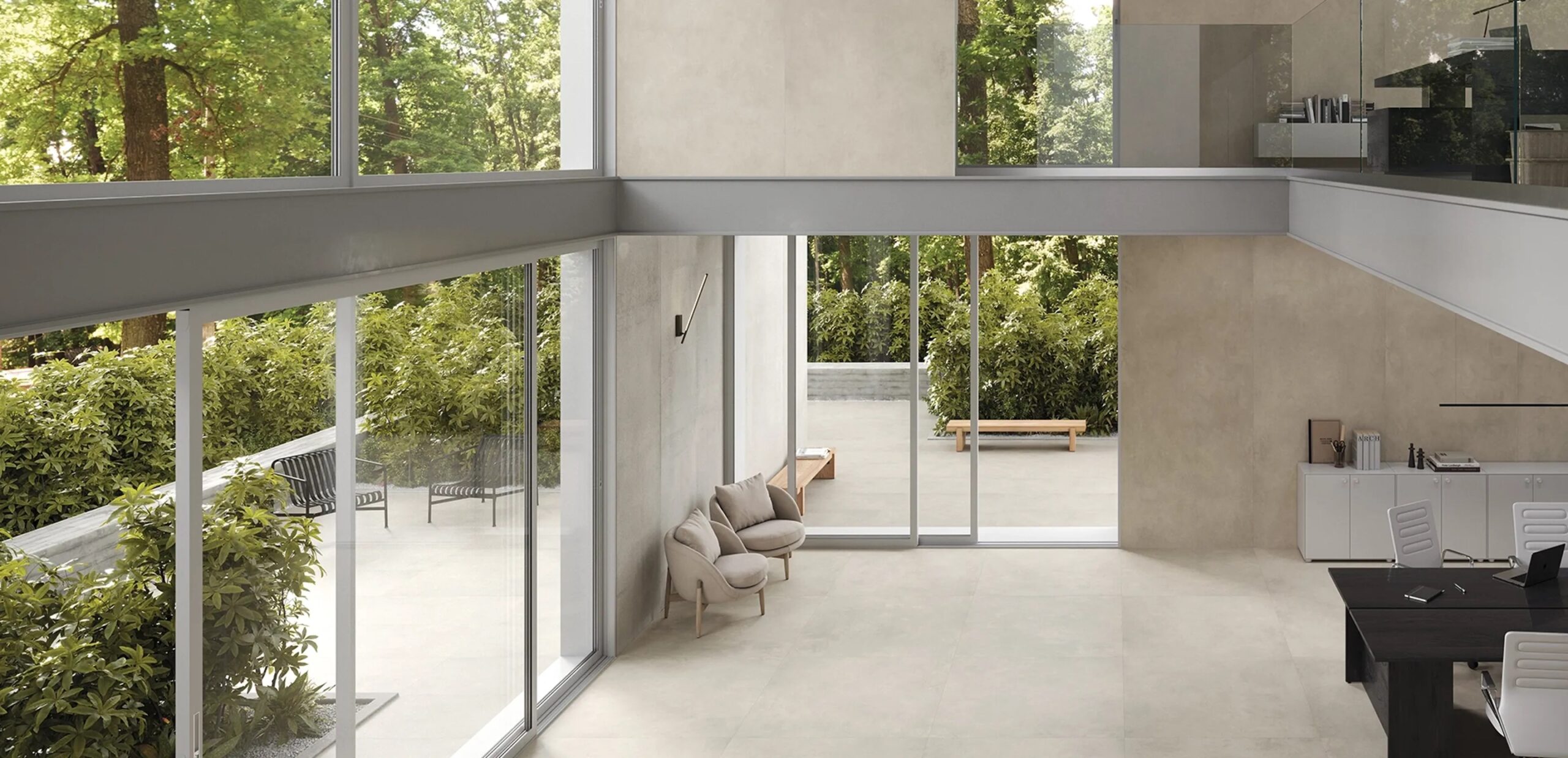
Ceramiche Keope was the first ceramics company in the world and in Europe to obtain the ISO 14064 standard, which says a good deal about how it understands its trade. It is an Italian factory making porcelain stoneware tiles for flooring and wall tiling, indoors and outdoors, and all its work looks for perfect continuity between the tile, the architecture and the landscape. That idea shows in its large formats, up to 120 x 278 cm with only 6 mm of thickness, which cover a whole wall with very few joints. At Gomila Cerámica we choose Keope because it lets you carry the same tile from indoors to outdoors, with no change of material as you cross the door, and because behind every series there is Made in Italy production.
Moov UpUltra-matt microcement effect in eight colours and formats up to 120 x 278 cm, with a 20 mm version for the terrace.Download the Moov Up catalogue
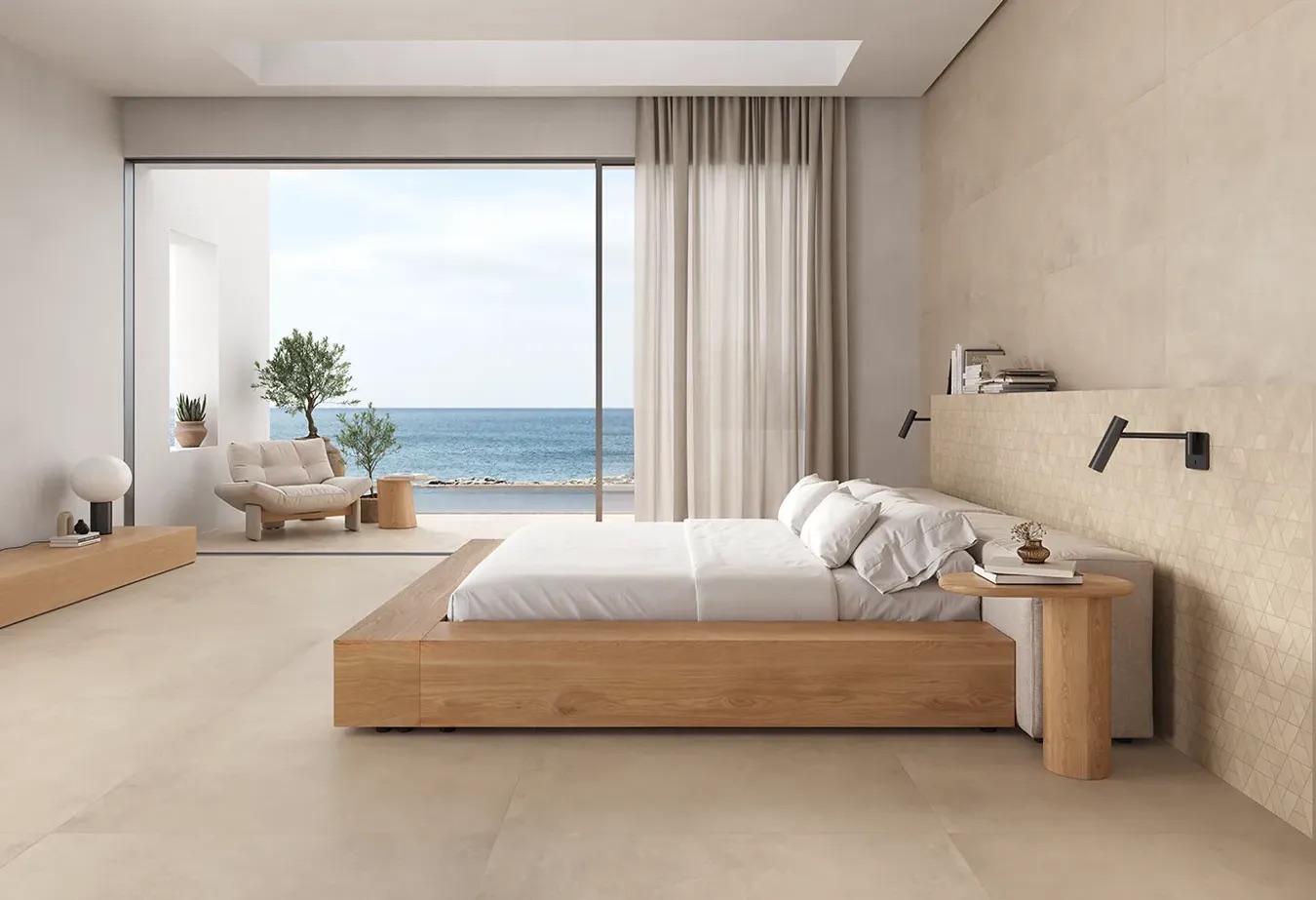
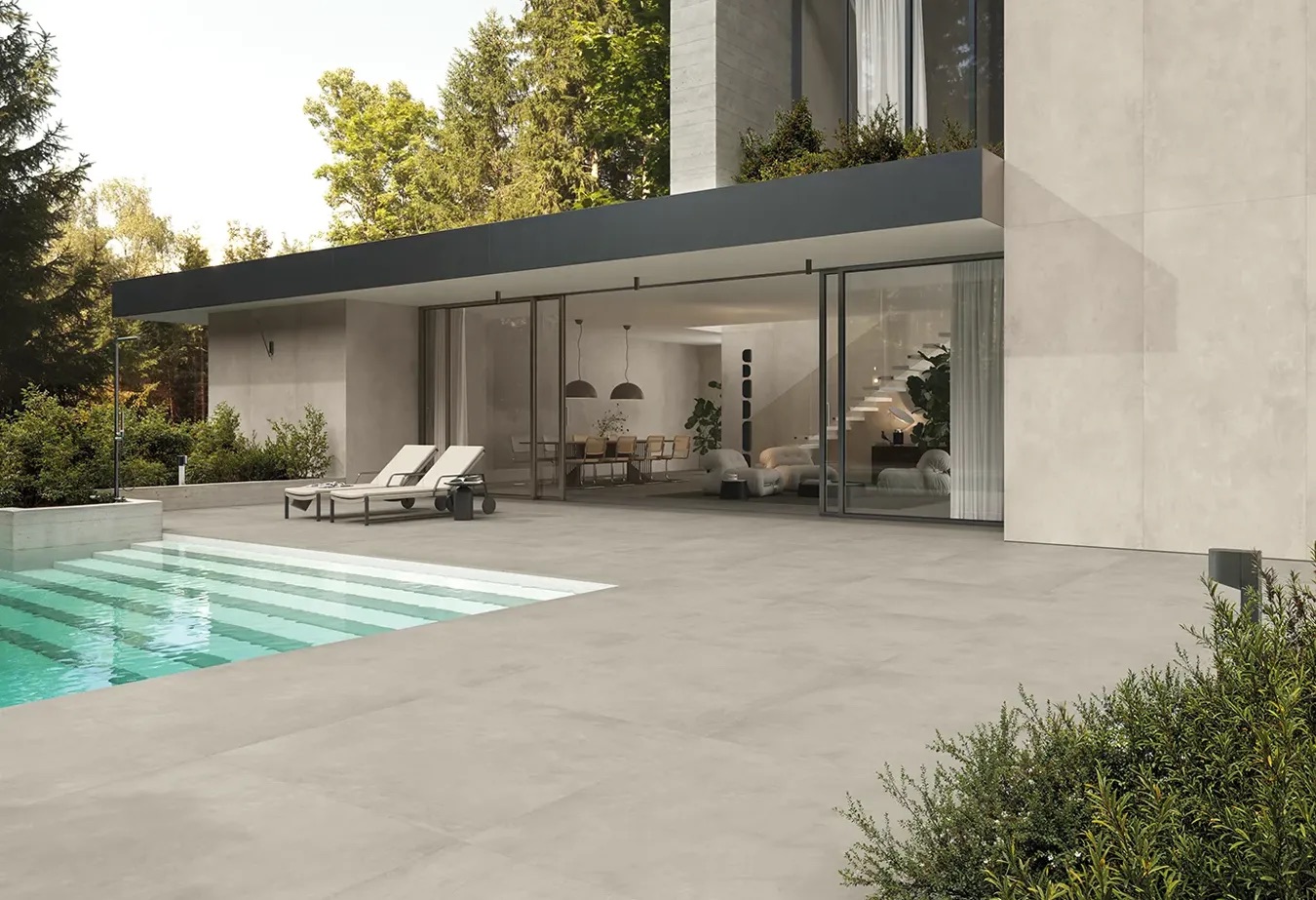
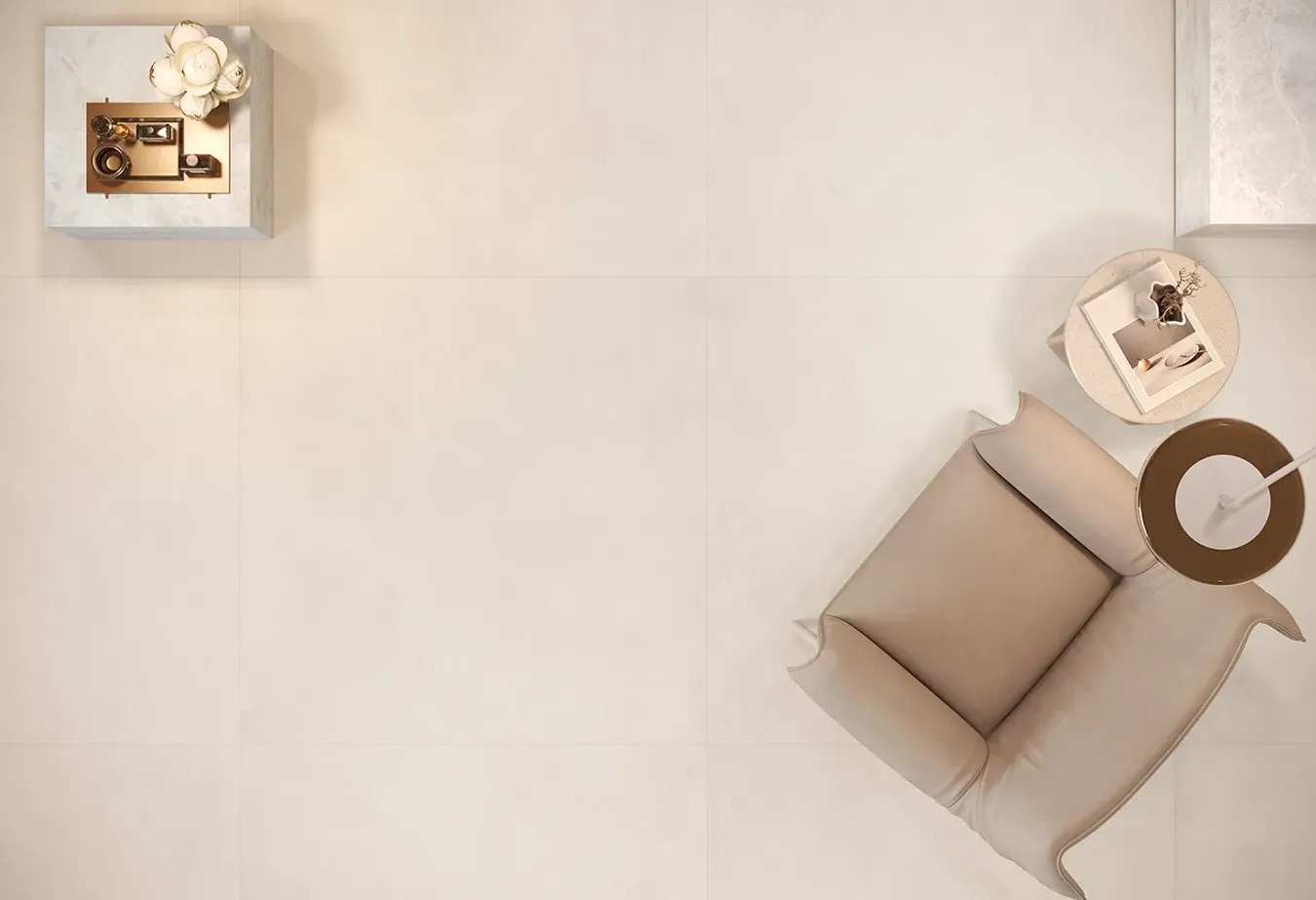
Elements DesignResin effect with a matt surface, inspired by the great metropolises, with five pastel colours from the Paint series.Download the Elements Design catalogue


Frequently asked questions
What formats, finishes and thicknesses does Keope have?
Keope states that its sizes run from 15x30 cm up to large formats of 120x278 cm, with thicknesses from 6 to 20 mm. The finishes the manufacturer lists are natural, lapped and structured. The 20 mm structured tile is intended specifically for outdoor use.
What thickness do I need for the floor of my house?
Keope explains that it depends on the type of floor, the use, the loads and the installation conditions. The manufacturer puts the usual thickness between 6 and 10 mm, and keeps the 20 mm tiles for outdoor use, where they are laid dry, over a screed or raised. Its thinnest tile available is 6 mm in the 120x278 cm format.
How slip resistant are they, and which class suits each area?
Keope describes classes R9 to R12, from lower to higher slip resistance. According to the manufacturer, R9 suits private bathrooms and bedrooms, R10 dry indoor areas, R11 damp indoor areas and commercial areas, and R12 very wet areas such as public showers and pool edges. Keope places its own range between R9, in the indoor series, and R11, in the outdoor products.
Can it be laid without a joint, butted up?
No. Keope is clear that a joint is always needed to absorb movement in the structure, and warns that too narrow a joint stiffens the whole and can cause deformation or breakage. On rectified tiles the manufacturer accepts a minimum joint of 2 mm, while on tiles with a natural edge it talks about wider joints, of the order of 4 to 5 mm.
How is stoneware cleaned, and what products should I avoid?
Keope recommends sweeping or vacuuming first and then mopping area by area with a neutral or specific detergent diluted in warm water, without flooding the joints. The manufacturer insists on rinsing well so as not to leave residue or marks, and on drying with a cloth or letting it dry before walking on it. Among the things to avoid, Keope mentions acids, bleach, ammonia and abrasive scouring pads or brushes.
Why is porcelain stoneware said to stain so little?
Because it absorbs very little water. Keope points out that its tiles sit below 0.1 % absorption, when the reference for a material to count as porcelain stoneware is under 0.5 %. Even so, the manufacturer warns that marks can be left if acidic substances (lemon, vinegar), grease or strong pigments such as wine, coffee or spices are left to act for a long time, and that an unsealed joint is a common route to staining.
Your question not here?Tell us about your project so that we can advise and guide you.Call +34 971 732 343Write to us


