
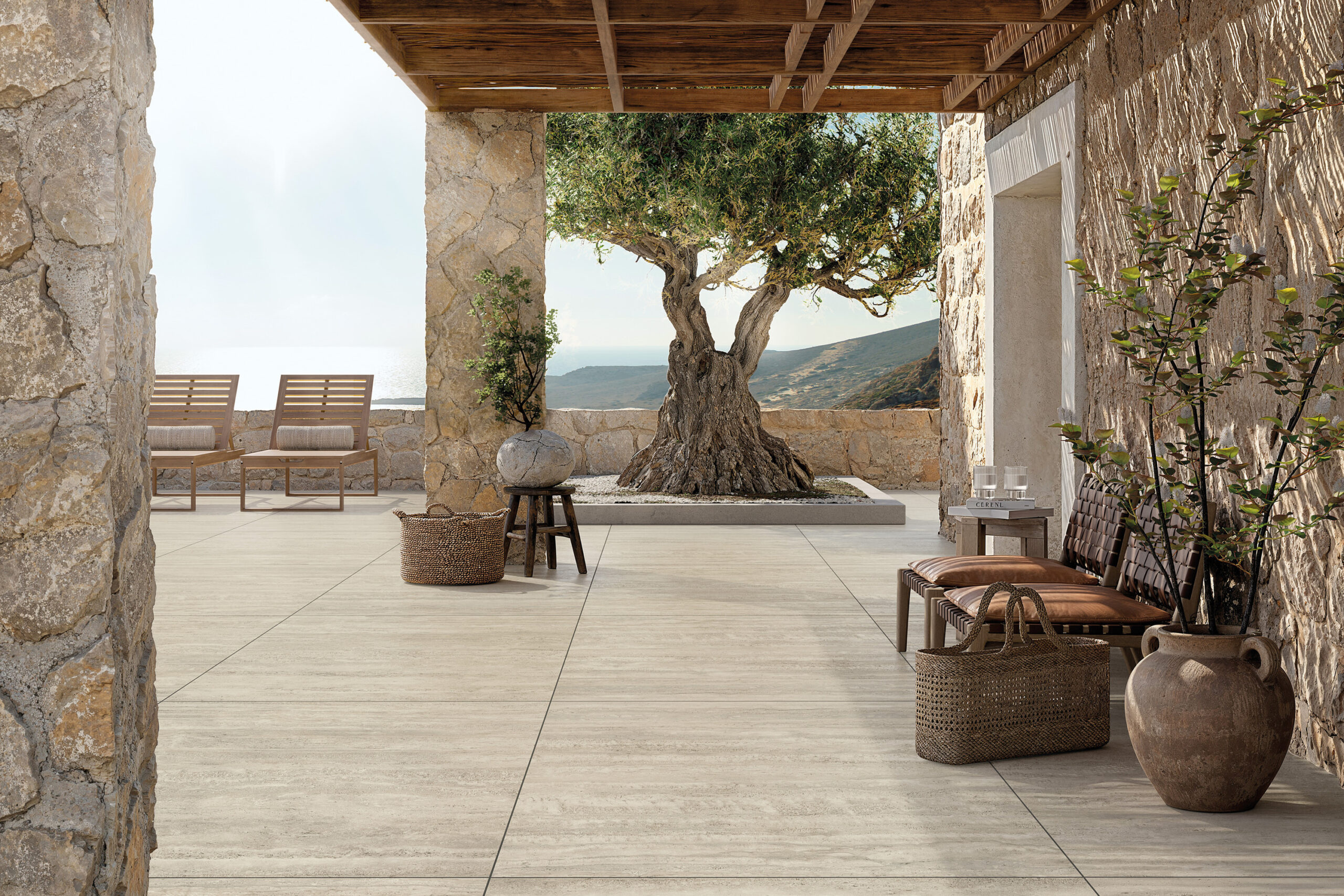
Over fifty years of experience in interior design and architecture lie behind the way Mirage works. Its porcelain stoneware is conceived for indoors and outdoors, and in collections such as Clay, Glocal, Gyliane, Oudh, Elysian and Elysian Travertini you can tell that the starting point is not the isolated tile but the space it has to serve. That project-wide eye is what interests us at Gomila Cerámica: material that an architect or an interior designer can carry from a room out to a terrace without breaking the continuity. We trust Mirage for that half-century in interiors and architecture, and for a commitment to sustainability that we share and that we see as part of the value of the product.
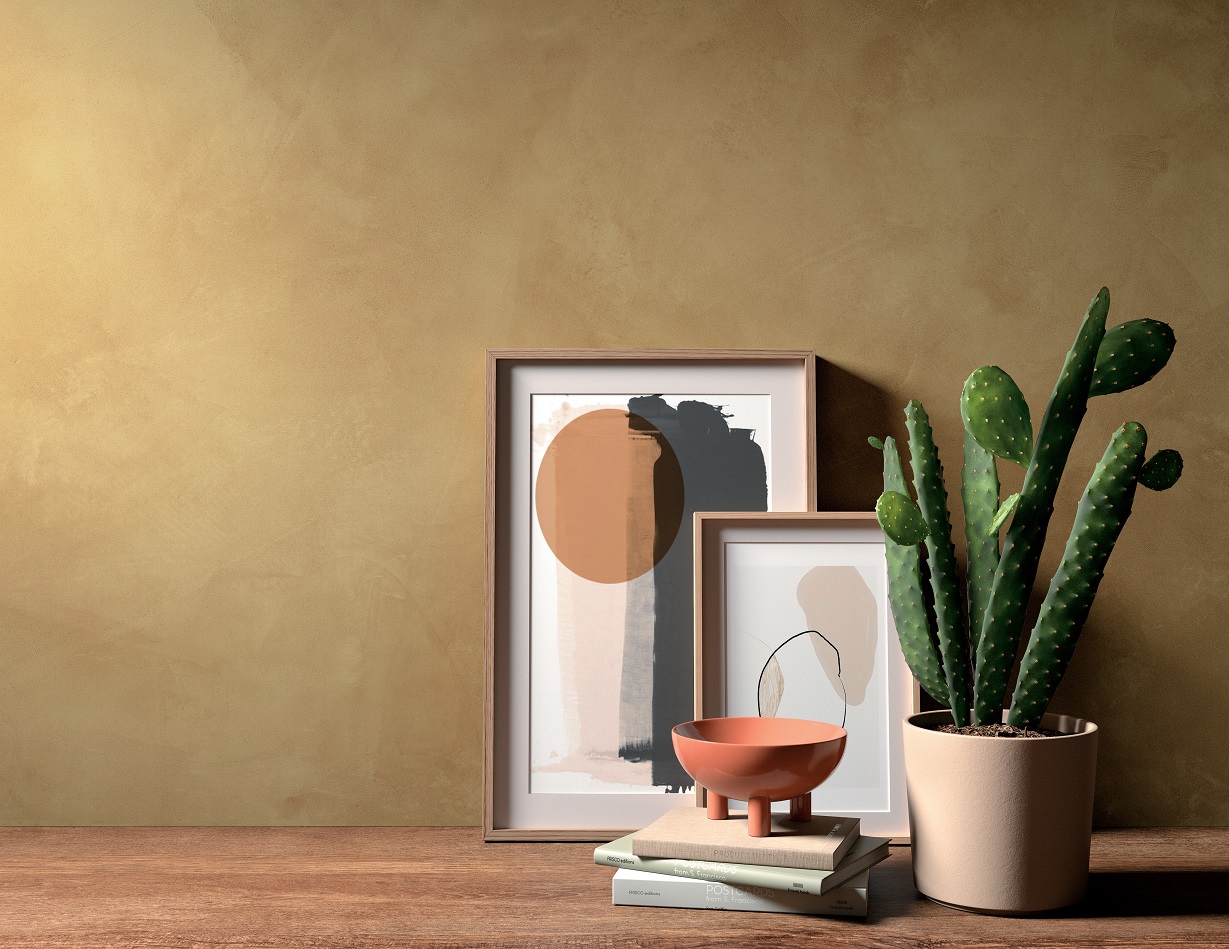
ClayThe look of resin and a slightly glossy effect on a matt surface, in a range running from whites to greys, greige, taupe, cotto, mustard and petrol blue.Download the Clay catalogue



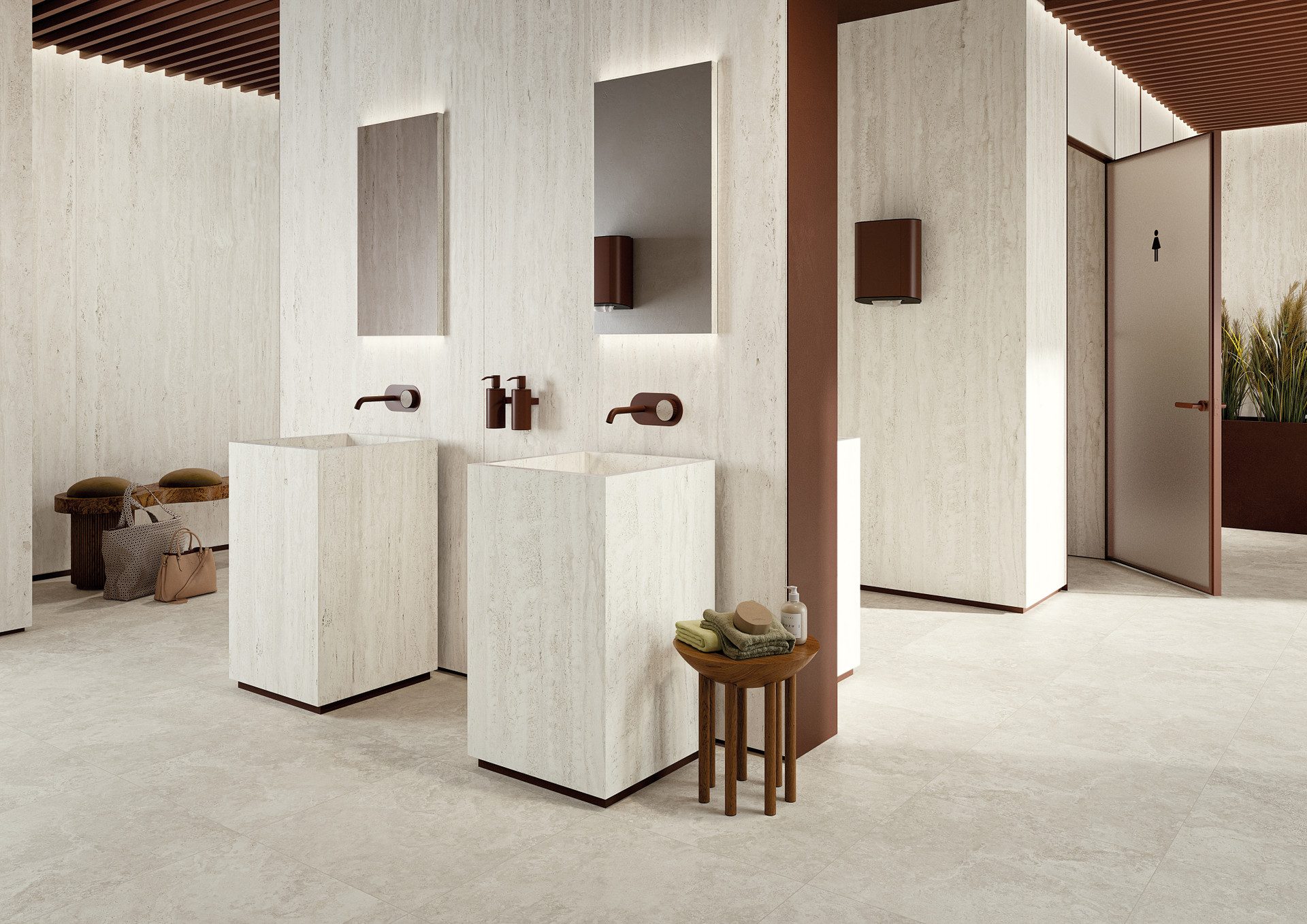
Elysian TravertiniA collection of timeless charm, warmth and harmony.Download the Elysian Travertini catalogue


GylianeUses porcelain stoneware to recreate the look of old timber, in an unconventional wood effect floor.Download the Gyliane catalogue


GlocalBorn in 2017 and reworked by Italian designer Giulio Cappellini, it offers eight tones and combines the look of concrete with decided colour contrasts.Download the Glocal catalogue


ElysianA genuine laboratory for indoor and outdoor applications, with mineral effects and balanced colours.Download the Elysian catalogue


OudhClassic, delicate patterns with contrasts and knots, available in seven natural colours and conceived from biophilic design.Download the Oudh catalogue


Frequently asked questions
What exactly is Mirage porcelain stoneware and what is it made of?
According to the manufacturer, porcelain stoneware is a compact material, highly resistant to wear and with practically no porosity. Mirage explains that around 99% of each tile is minerals, kaolin, feldspars and clays, with natural colourants, and that it is pressed at 500 kg/cm² with no adhesives or resins. It is then fired at over 1250 °C in kilns more than 90 metres long.
Can I lay Mirage porcelain stoneware outdoors, on a terrace or around the pool?
Yes. Mirage states that its porcelain stoneware is suitable for outdoor use because it resists frost and keeps its colours stable. The manufacturer specifies that on outdoor surfaces the coefficient of friction must be higher than R10, so it is worth choosing a finish that meets that requirement.
What joint should be left between tiles? Can they be laid with closed joints?
Mirage does not recommend laying with closed joints and advises leaving a minimum joint of 2 to 3 mm, because the grouting material then bonds better to the edges of the tiles. On large surfaces the manufacturer asks that expansion joints be distributed regularly, and on small surfaces that a little clearance be left around the perimeter, later covered by the skirting. For the specific case, Mirage refers you to the judgement of the technician or the site manager.
Does it work for any kind of space, including premises with heavy footfall?
The manufacturer points out that its porcelain stoneware is suitable both for homes and for commercial spaces, including very busy public areas such as airports or shopping centres. Even so, Mirage warns that some collections, Jewels for example, are only suitable for residential or light traffic walls and floors, so the suitability of each product needs to be checked. Mirage also states that its material has fire reaction class A1 under European regulations, that is, non-combustible.
How is it cleaned and what maintenance does it need?
Among the features Mirage highlights are ease of cleaning, stain resistance and tolerance of aggressive detergents, as well as frost resistance. On grouting, the manufacturer recommends removing the excess material before it sets, with a sponge and plenty of water.
I have seen differences in tone between tiles. Is that normal?
Yes, in certain collections it is. Mirage explains that some series show noticeable differences in tone between tiles, and that mixing tiles from different boxes at random accentuates that effect. It is worth bearing in mind when deciding how to distribute them on site.
Your question not here?Tell us about your project so that we can advise and guide you.Call +34 971 732 343Write to us


