
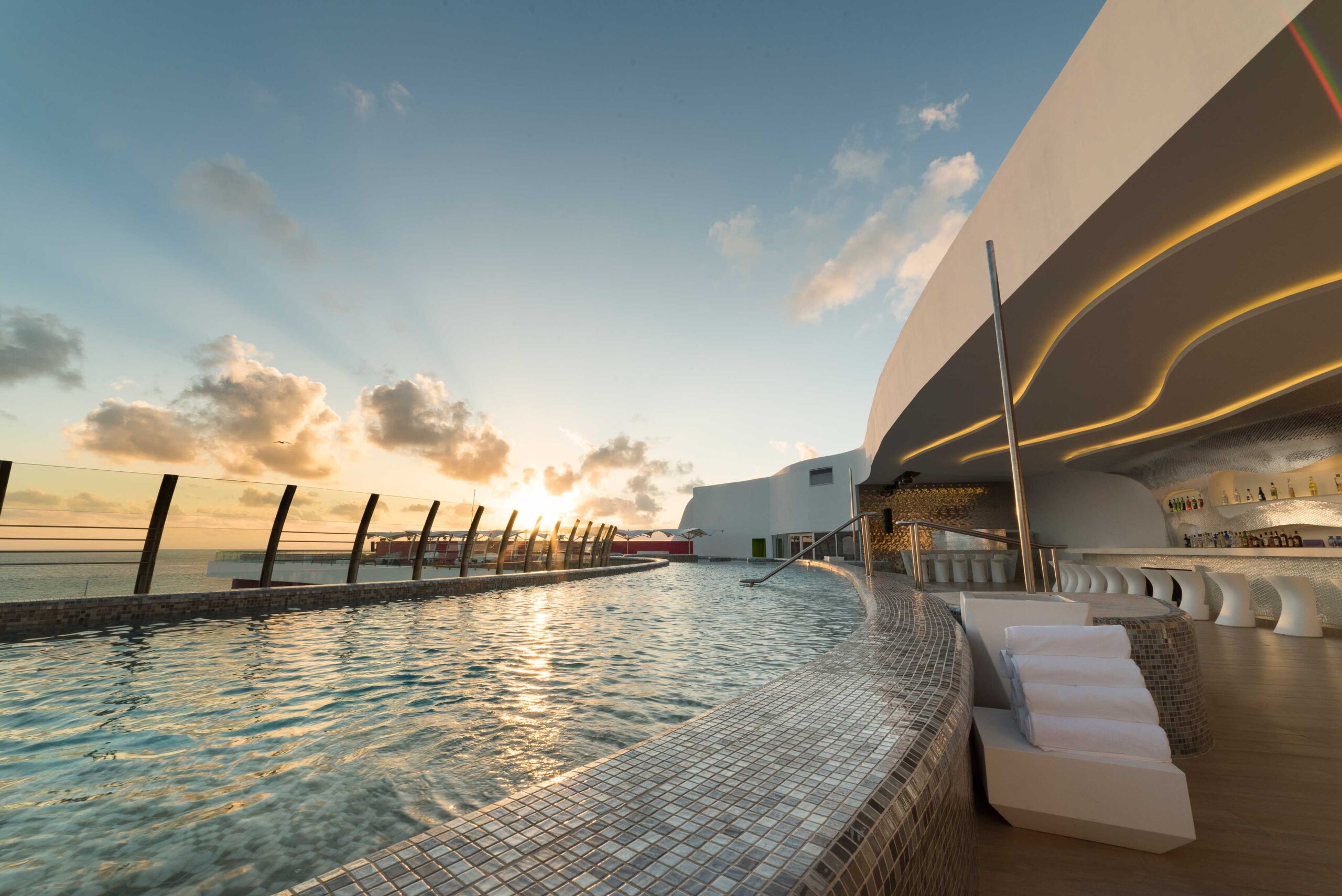
Onix is today the largest international manufacturer of glass mosaic, and it produces it with 98% recycled glass, recyclable packaging and its own solar energy. Its mosaic has no porosity, resists damp and temperature changes and is easy to clean, so it performs just as well in a pool, in a wet area or on a wall, indoors and outdoors. The Penta collection takes it to the square 50x50 mm tessera. At Gomila Cerámica we chose it precisely for that performance: here a good share of the projects involve water, and for those metres we want a material that does not suffer with damp, that withstands temperature change and that the client can clean without complications.
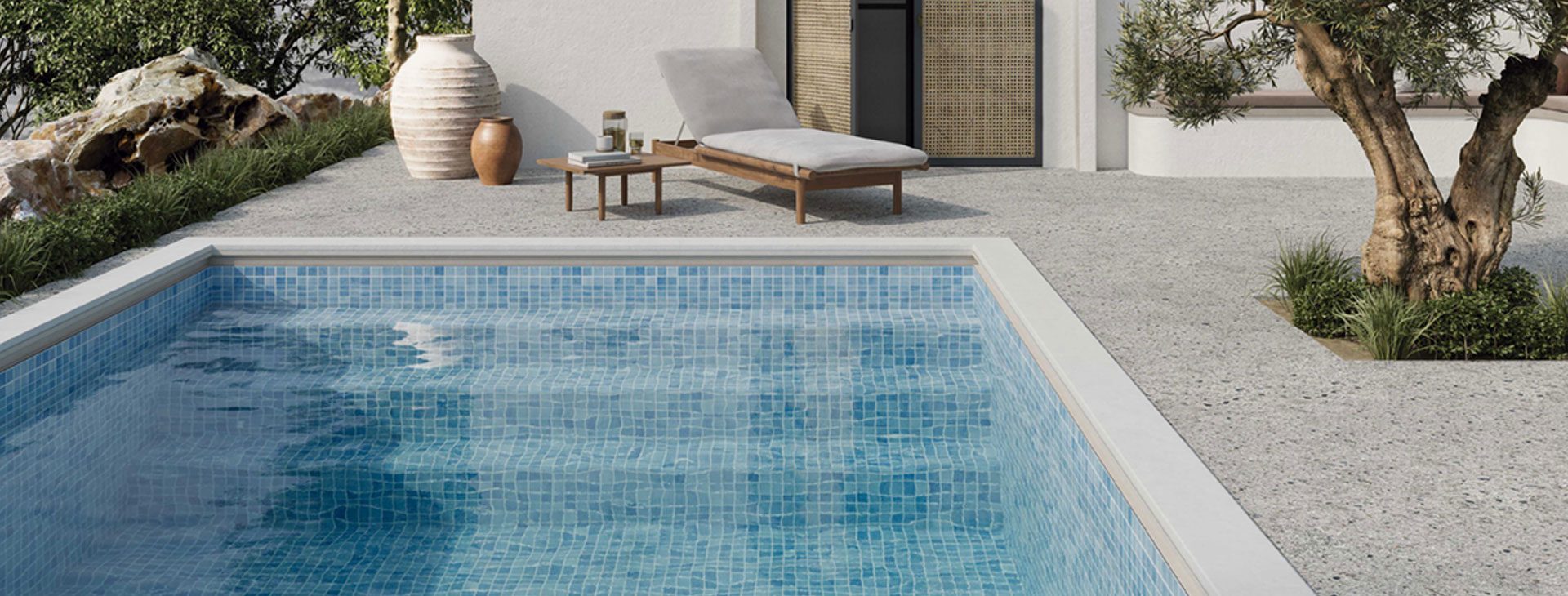
PentaSquare 50x50 mm mosaics in colours that evoke the sea, corals and volcanic landscapes, with designs such as Penta Carel, Penta Bora and Penta Black Rock Matte.Download the Penta catalogue

Frequently asked questions
What is Onix glass mosaic made of?
The manufacturer states that 100% of the material in its tesserae is recycled glass. Onix also says that its manufacturing process is 100% electric and free of combustion emissions, that it uses no water in its processes and that it holds an Environmental Product Declaration (EPD) verified by an independent third party in accordance with EN 15804 and ISO 14025. It also declares ISO 50001 energy management certification, obtained in 2024.
Can Onix mosaic be laid on the floor?
It depends on the series, and it is worth checking item by item. In its suitability guide, Onix classifies most series as suitable for floors in residential use only, some as suitable for residential and commercial use (for example Square Stoneglass and Hex Stoneglass) and others as not suitable for floors (for example Square Opalo or Penta Vanguard). The manufacturer also warns that the glass should not be exposed to abrasion or heavy impact, nor laid on flexible substrates.
Does it work for the pool and for a bathroom or a spa?
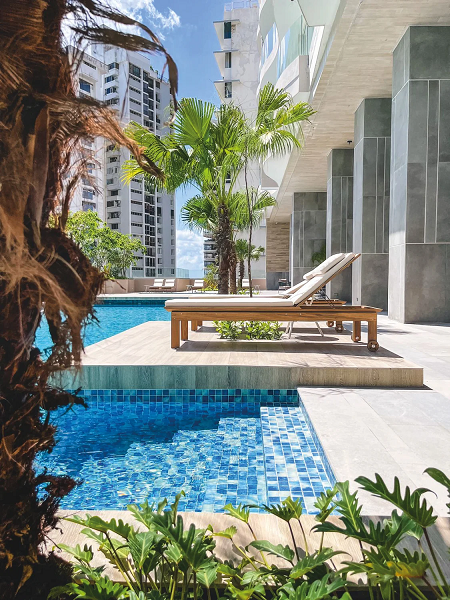
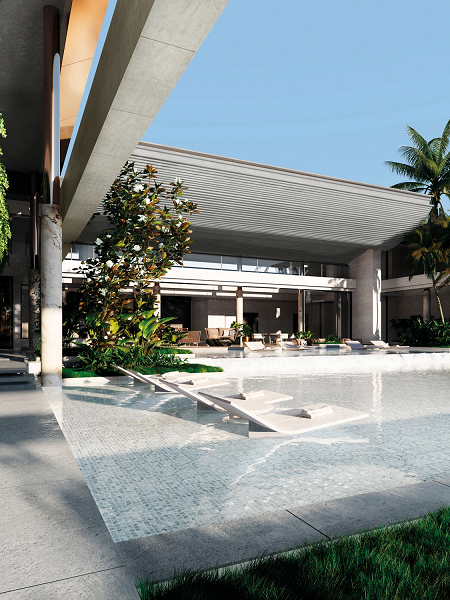
Yes. In its suitability guide Onix marks its glass mosaic series as suitable for pools and for wet areas, while suitability for walls and floors varies from one series to another. In its technical data table the manufacturer also declares resistance to pool water additives, to frost, to thermal shock, to household products and to low and high concentration acids and alkalis, with Class 5 stain resistance and zero water absorption according to UNE-EN-ISO 10545-3.
Is it anti-slip? What class does it have?
There are specific series tested for this, with the values published by the manufacturer. For Penny Cottiva, Penny Terra, Hex Normatech or Hex XL Upscale Marbles, for example, Onix declares class R11 by the ramp method with footwear, Class C on the barefoot ramp and Class 3 by the pendulum method (PTV) according to UNE-EN 16165, with a wet dynamic coefficient of friction (DCOF, ANSI A326.3) of 0.60 or above. Other series such as Stoneglass come in at R9, Class A and pendulum Class 3 with DCOF of 0.42 or above, and for several series the manufacturer does not publish these values: you need to look at the table for the series you choose.
What adhesive and what grouting should be used, and how is it cut?
Onix recommends white cementitious tile adhesives of class C2 according to EN 12004, or flexible acrylic or two-component epoxy adhesives, and warns that some glass mosaics contain resins, so the adhesive needs to be confirmed as compatible. For grouting the manufacturer advises sand-free material, type RG or epoxy, so as not to scratch the surface, and advises against dark grouts with light matt anti-slip mosaics because they are then hard to clean. For cutting it asks that you always use diamond discs made specifically for glass with a wet saw, not ceramic discs, and for drilling, a glass core bit.
What is the difference between mosaic mounted on mesh and mosaic mounted on dots?
According to the manufacturer, the dot backing (in PVC or polyurethane) leaves up to 91% of the surface free for the adhesive, compared with the 75% left by glass fibre mesh. Onix adds that the dot system is insensitive to damp and can be stored outdoors without altering, that it adapts to corners, curved surfaces and irregular finishes, and that the sheet size of 12 x 18 tesserae allows a 27% saving in installation time. Unlike paper backing, with dots the mosaic is visible while it is being laid, which makes it possible to create patterns and shapes.
Your question not here?Tell us about your project so that we can advise and guide you.Call +34 971 732 343Write to us


