
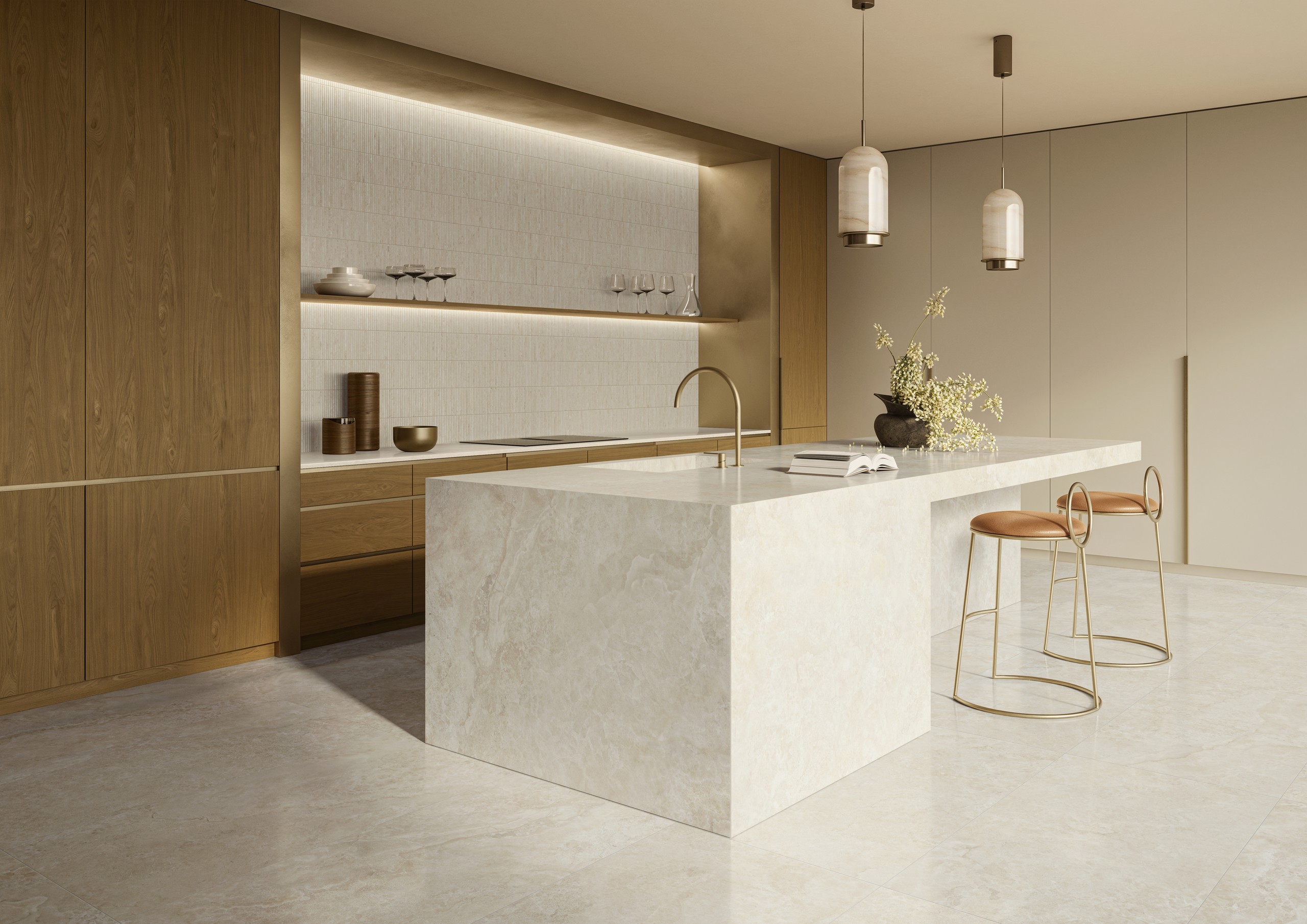
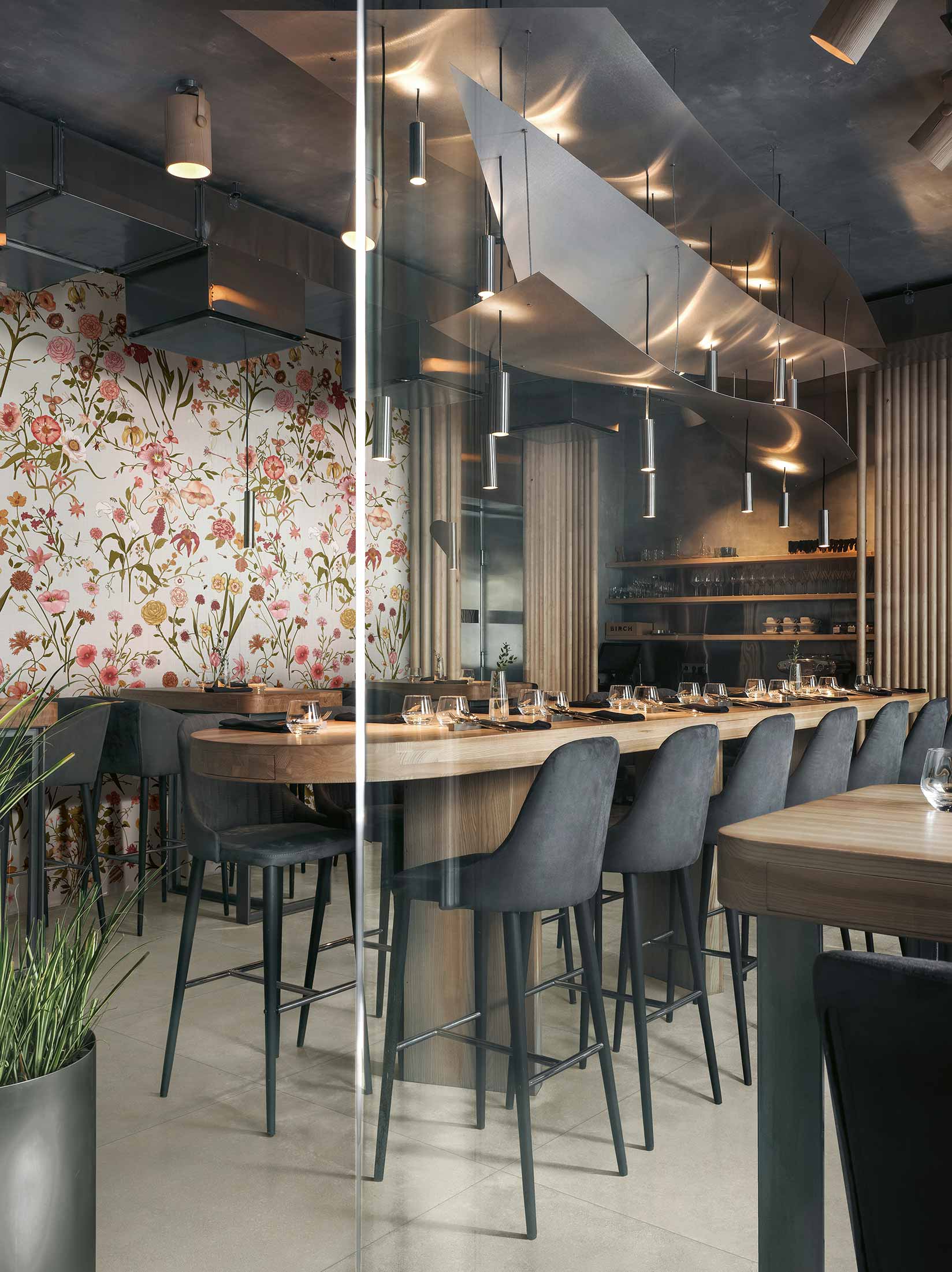
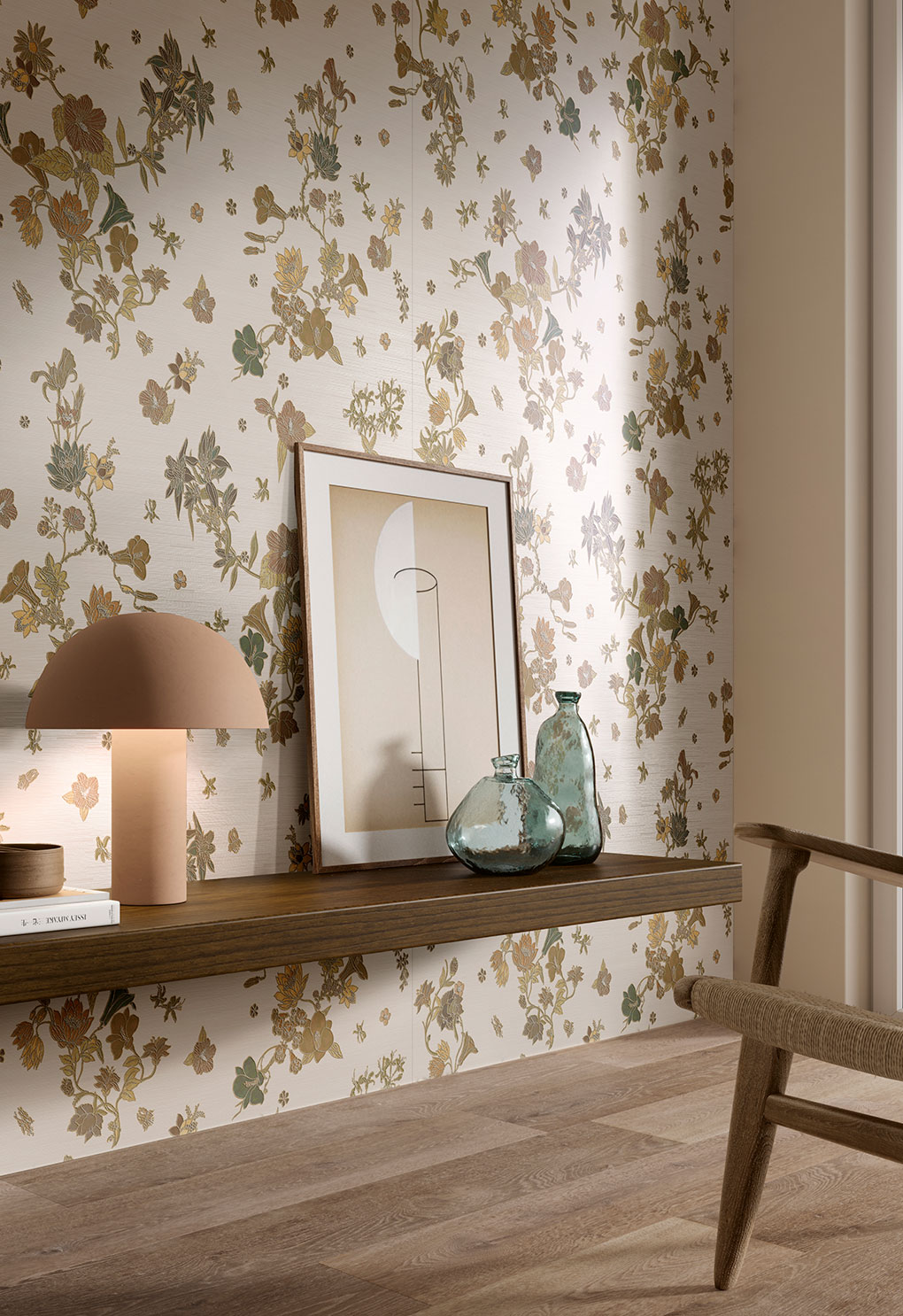
There is ceramic you install and ceramic you look at. Vallelunga & Co. is an Italian company in the Ascot group specialising in designer decorative ceramics, with a glazed porcelain stoneware for walls that reinterprets nature and art. Its two ranges work at opposite and complementary scales: Bloom, in 50x100 cm and only 3.5 mm thick, and Grandiosa Blooming, in 120x280 cm and 6 mm. At Gomila Cerámica we chose it for that decorative character: Bloom and Grandiosa unfold across the wall like wallpaper, but with the strength of porcelain stoneware behind them. We are Vallelunga distributors in the Balearics, so we can follow the project from choosing the tile through to its arrival on site.
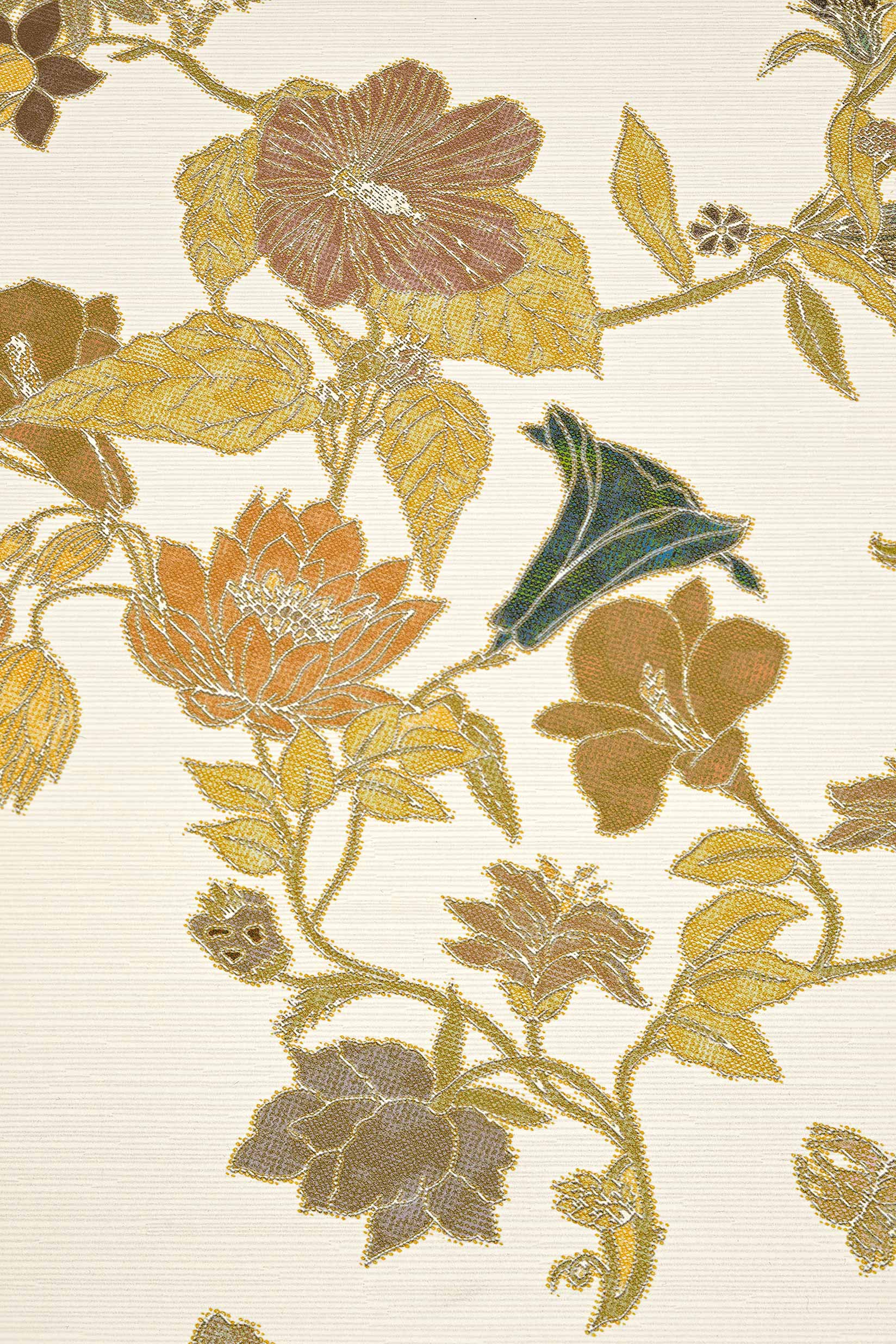
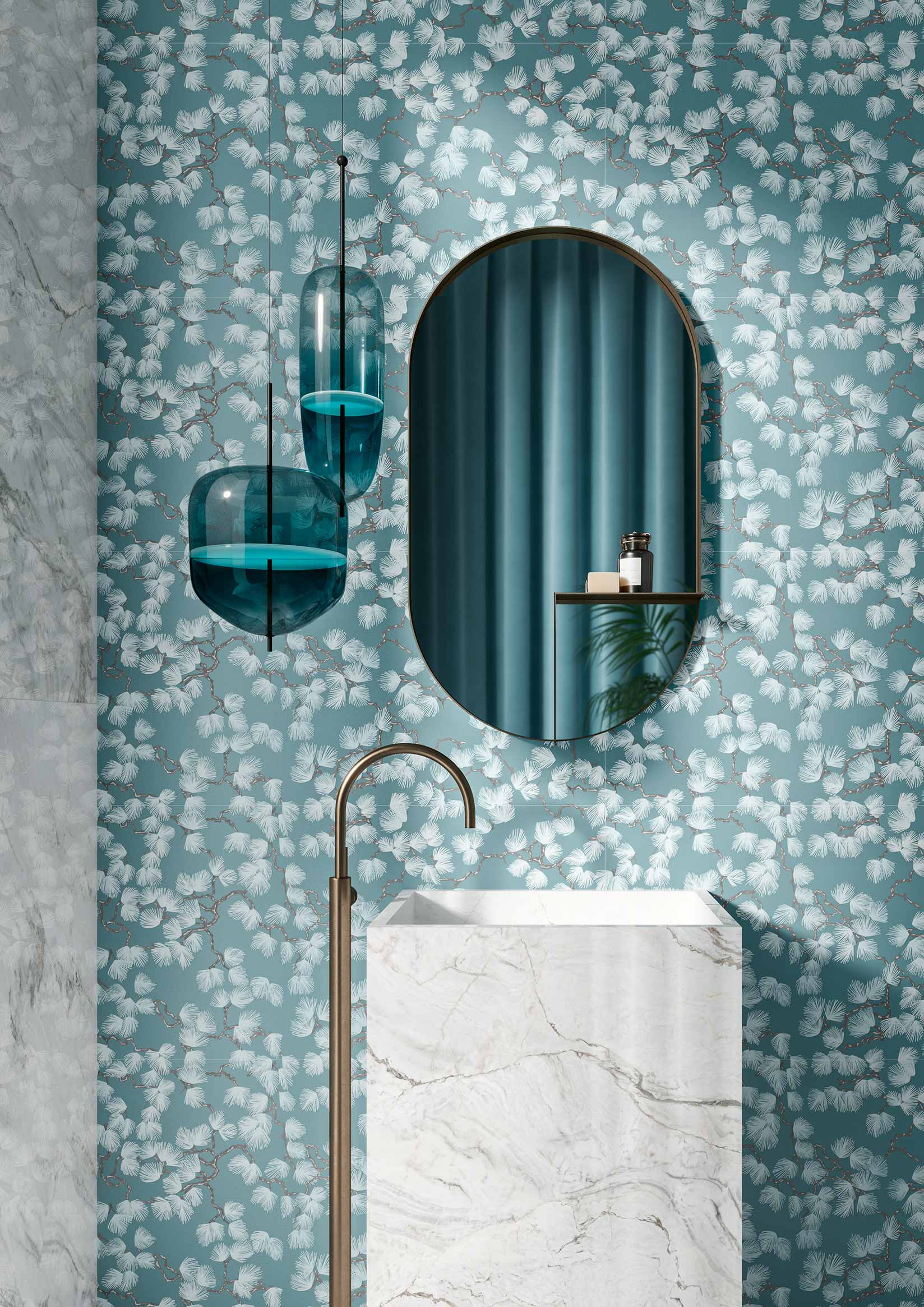
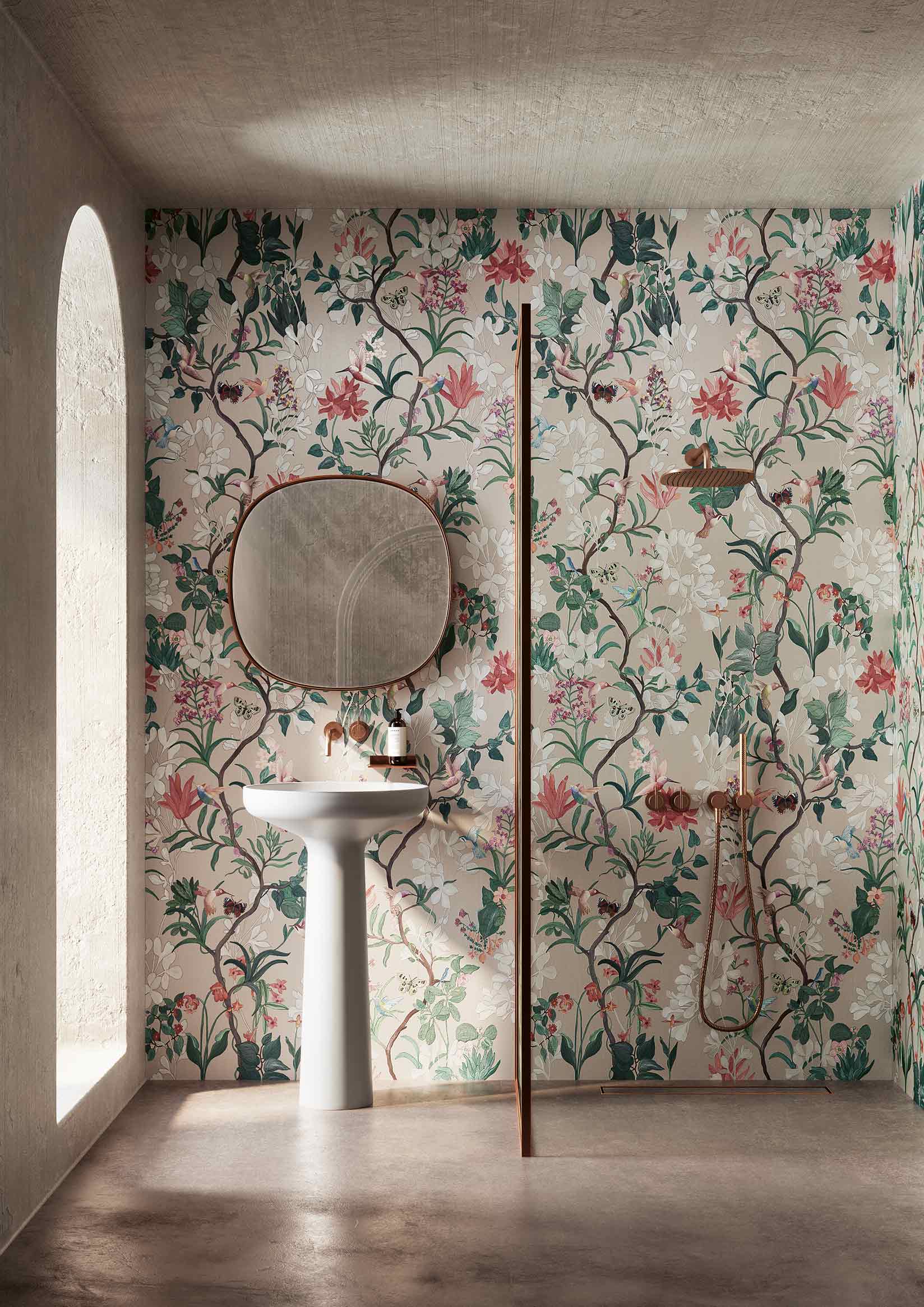
BloomFlowing floral and botanical motifs in 50x100 cm and 3.5 mm thickness, with eight decors and two plain tiles in the Avorio and Avio palettes.Download the Bloom catalogue
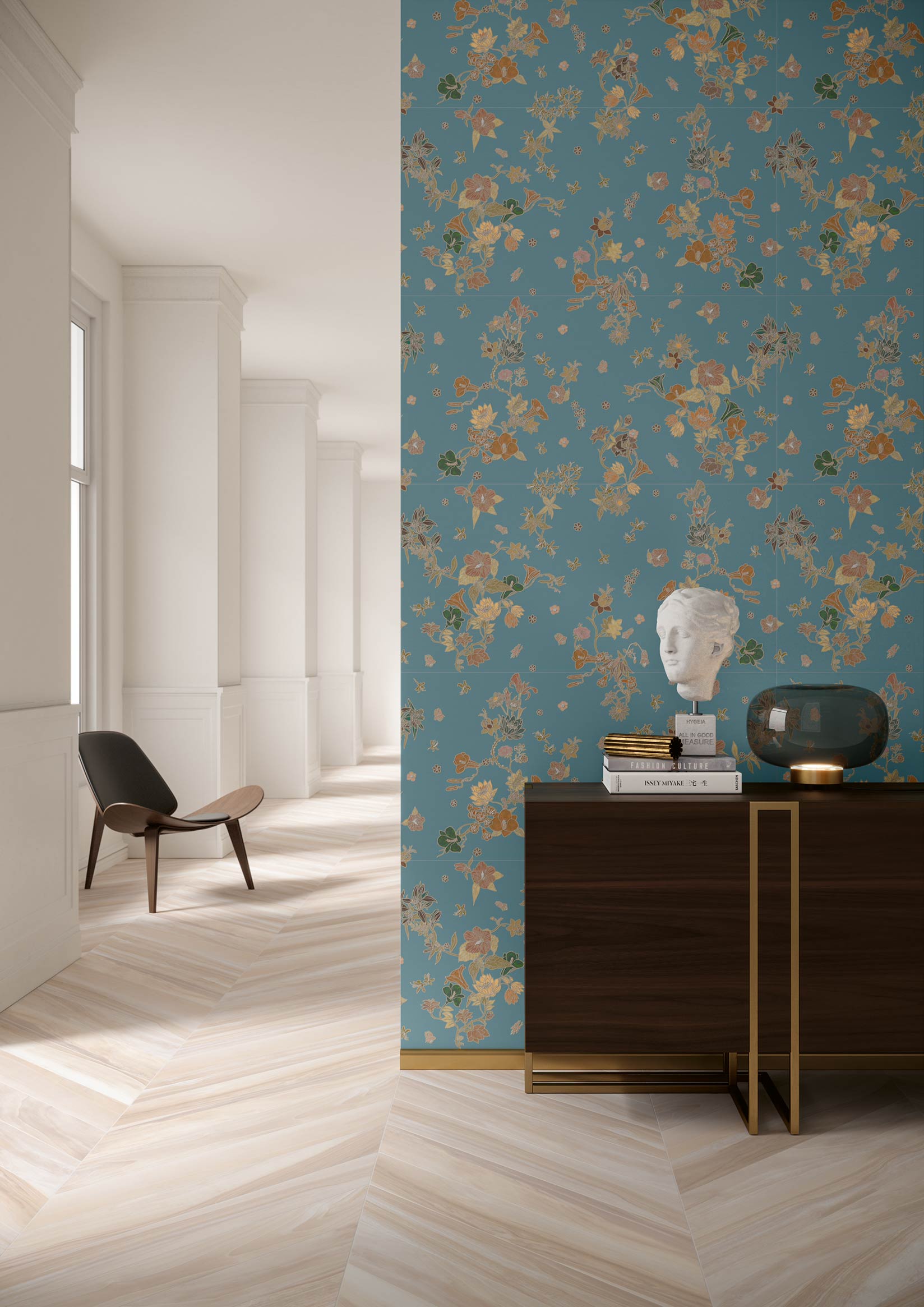
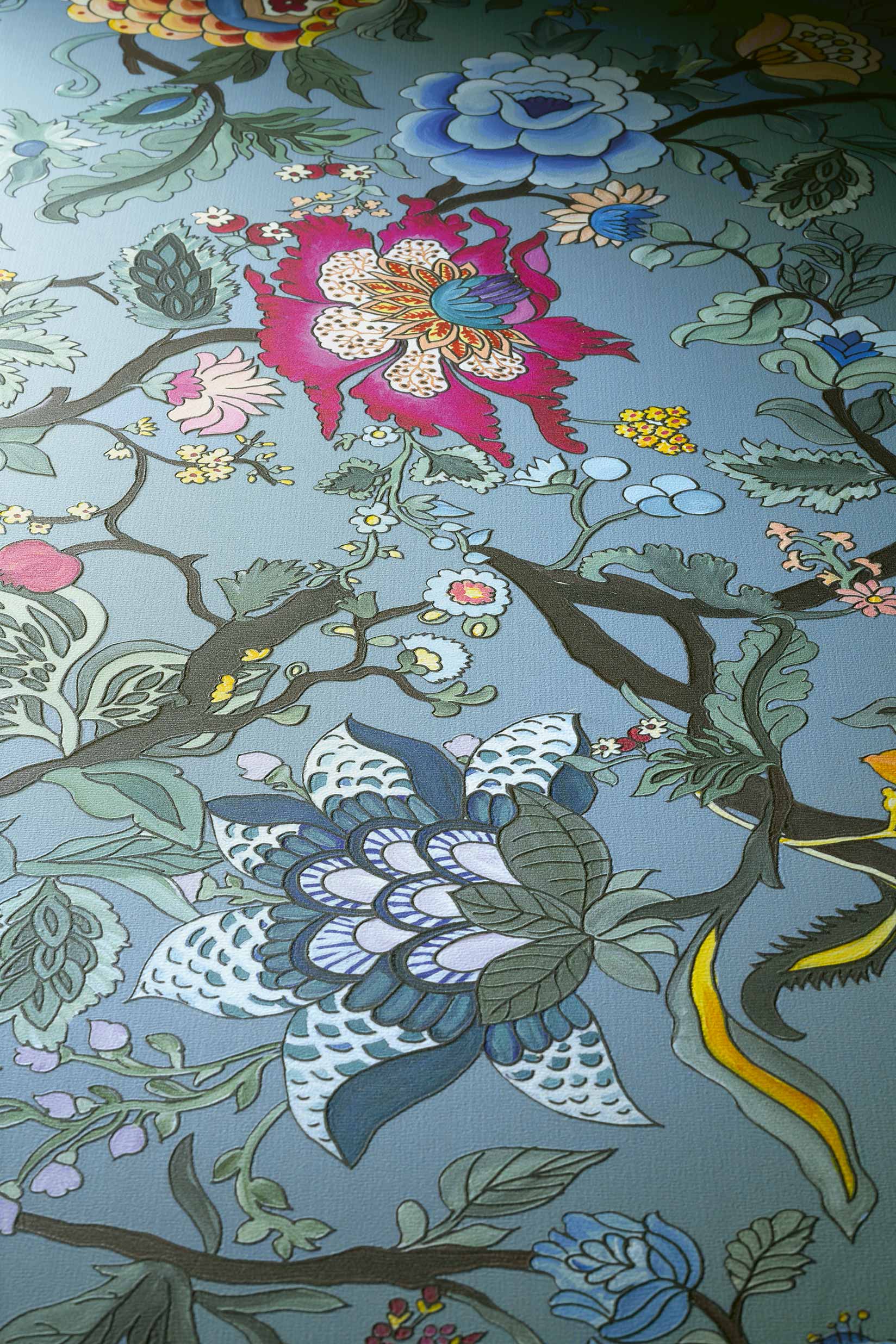
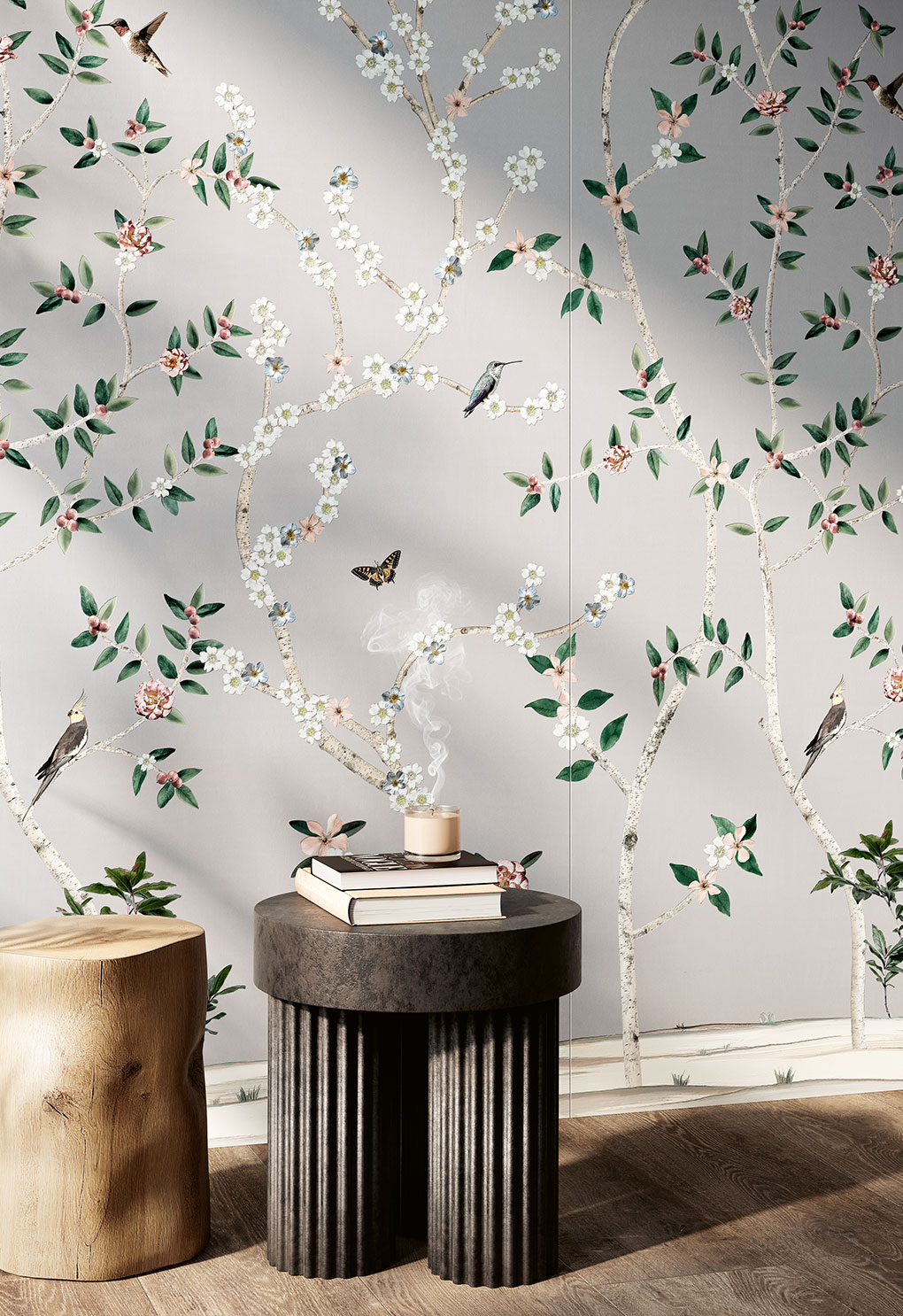
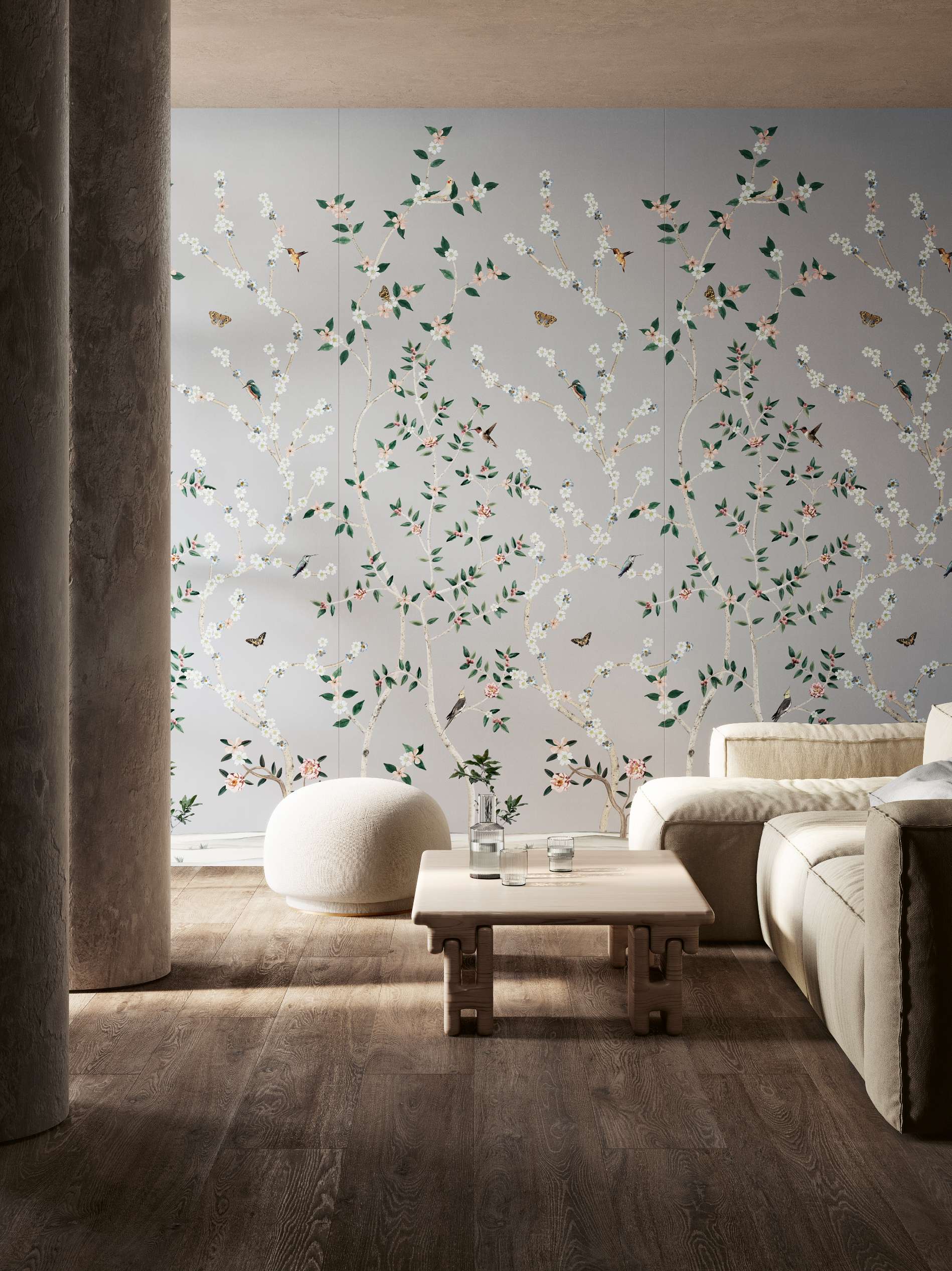
Grandiosa BloomingLarge format floral landscapes on slabs of 120x280 cm and 6 mm, with seven decors in Avio and Avorio that share motifs with Bloom.Download the Grandiosa Blooming catalogue
Frequently asked questions
What joint should be left between tiles, and can they be laid without joints?
Vallelunga & Co. explains that natural porcelain stoneware materials show slight variation in calibration, so it specifies a 2 mm joint for rectified materials and 3 to 4 mm for natural products. The manufacturer firmly advises against butt-jointed installation and suggests laying in a staggered pattern, with tiles offset by no more than 10 or 20 per cent. It also points out that strong or highly contrasting grout colours can make cleaning more laborious than a tone-on-tone grout.
Is it normal for there to be shade differences between one tile and another?
Yes. The manufacturer notes that shade variation is a characteristic of some ceramic products. That is why it recommends laying out at least 2 or 3 square metres of material on the floor before starting, to check the overall effect, and taking tiles from several boxes for a better colour result. Vallelunga & Co. also asks the installer to point out any visible defect to the customer before laying, because once the material is installed no claim can be made on those grounds.
Where can I see the slip resistance, thickness and wear resistance of each series?
The Vallelunga & Co. general catalogue publishes that data collection by collection, in a panel next to the formats. For the Doro series, for example, it states coloured-body glazed porcelain stoneware, satin 3D finish, rectified, 9 mm thick, V3 shade variation, slip class R9, DCOF of 0.42 or higher and PEI 4, in 60x120, 30x60 and 7.5x30 cm formats. It is worth checking the panel for the specific collection, because the values change from one to another: the same catalogue includes series with R10 and with other shade variation grades.
Can the decorated tiles also be used on the floor?
No, according to the manufacturer. Vallelunga & Co. states that its tiles decorated using craft techniques are intended solely for interior wall tiling. The reason it gives is that this decorative technique improves colour definition and depth, but makes surface abrasion resistance less good than in traditional porcelain stoneware. It therefore insists on following the instructions in the catalogue and on the packaging.
How are the decorated tiles cleaned, and what sealant can I use in the shower?
For daily cleaning of its decorated tiles, the manufacturer specifies neutral detergents or water, applied with a microfibre cloth or a soft sponge. It allows acidic limescale removers provided the surface is rinsed quickly with water afterwards, and it prohibits solvents (alcohol and similar), abrasive sponges and anything that scratches. For sealing joinery, showers or sanitaryware against the ceramic, Vallelunga & Co. asks that acetic silicone products not be used and that neutral silicones be used instead.
What certifications does the factory hold, and what does it do on the environmental side?
Vallelunga & Co. is part of Victoria PLC Ceramics Italy, and the manufacturer states that the management system of the group's plants holds ISO 14001 environmental certification and ISO 9001 product certification. In its sustainability section it mentions the growing use of renewable energy, with photovoltaic generation and fuel blends with hydrogen replacing methane. It adds that its production cycles allow full reuse of production waste and the use of local raw materials.
Your question not here?Tell us about your project so that we can advise and guide you.Call +34 971 732 343Write to us


