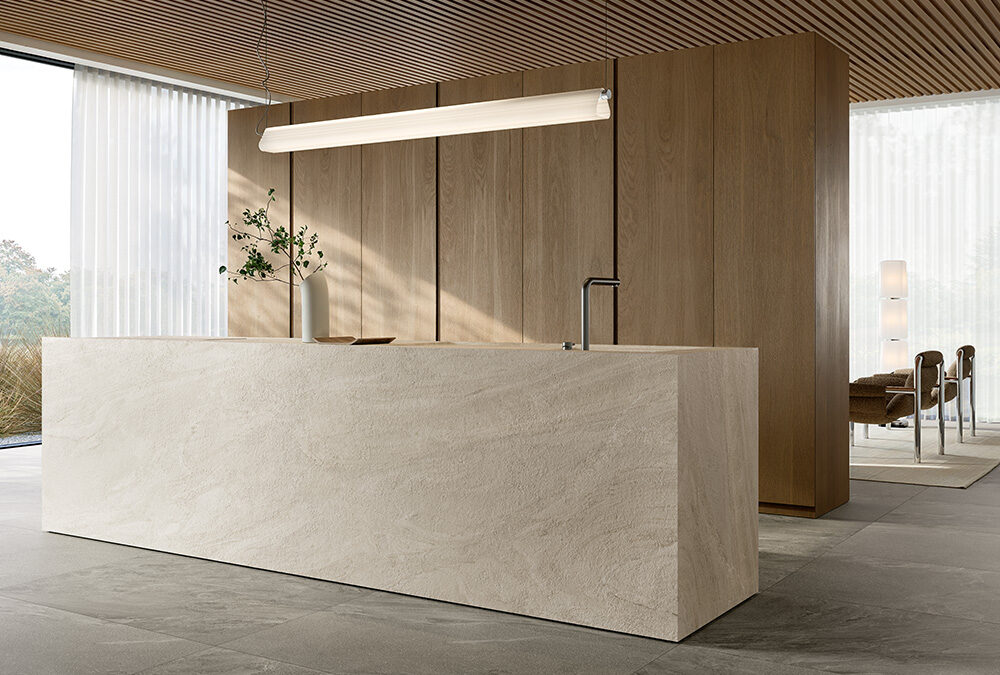
Choosing the countertop material is one of the decisions that shapes a kitchen the most, both for its look and for everyday life. Large-format porcelain, quartz (Silestone), granite and marble are the four most common options. Each has its own character; here we compare them carefully so you can choose with confidence.
In short
- A porcelain countertop handles heat and scratching better than quartz, granite and marble, and needs no sealing.
- Quartz (e.g. Silestone) is tough but can be damaged by direct heat; porcelain shows no visible effect up to ~200 °C.
- Granite is very hard but porous and needs periodic sealing; porcelain doesn’t absorb water.
- Marble is the most delicate (porous, scratches and stains); marble-effect porcelain offers its look without the upkeep.
- For large format and worked edges (Smart Edges), the options we carry are Coem’s IMMENSA and Inalco’s MDi.
At a glance
| Feature | Porcelain | Quartz (Silestone) | Granite | Marble |
|---|---|---|---|---|
| Heat resistance | Very high (~200 °C) | Medium (may yellow) | High | Medium |
| Porosity / staining | Non-porous, won’t stain | Low porosity | Porous (needs sealing) | Very porous (stains) |
| Scratching | Highly resistant | Resistant | Highly resistant | Sensitive |
| Outdoor / UV | Suitable (won’t fade) | Not recommended (UV) | Suitable | Sensitive |
| Maintenance | Minimal | Low | Medium (periodic sealing) | High (delicate) |
| Look | Stone/marble/cement/wood effect | Uniform tones and veining | Unique natural stone | Noble natural stone |
| Format | Large format, few joints | Standard slabs | Block slabs | Block slabs |
Porcelain vs quartz (Silestone)
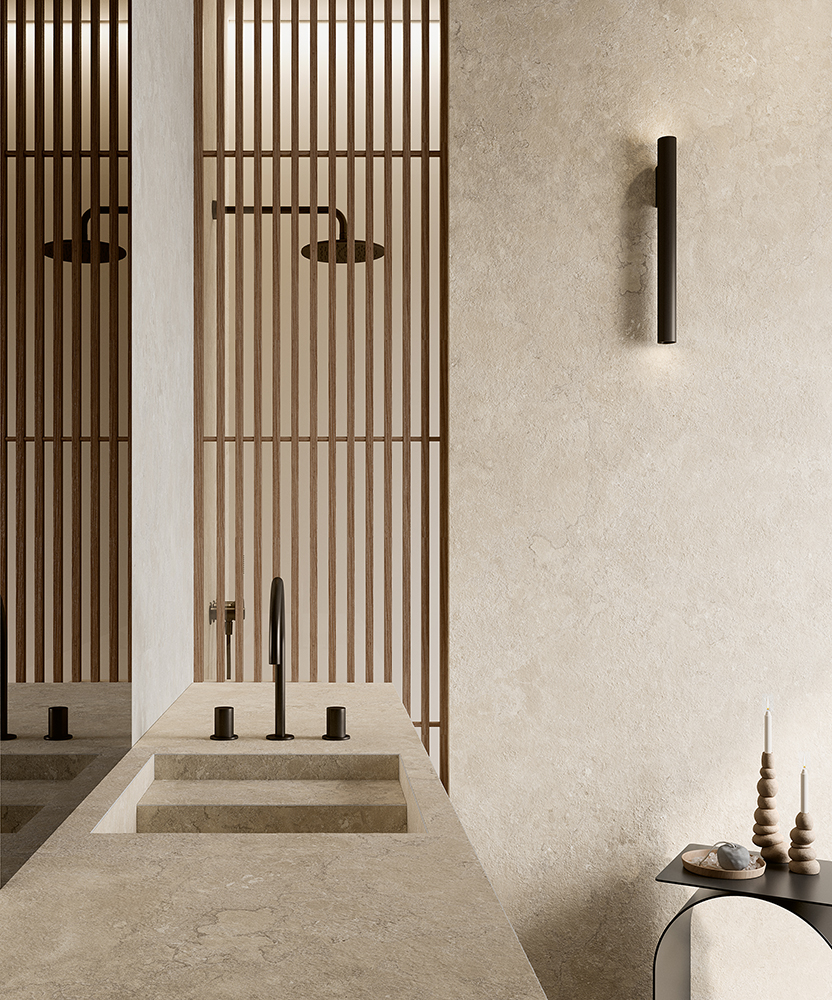
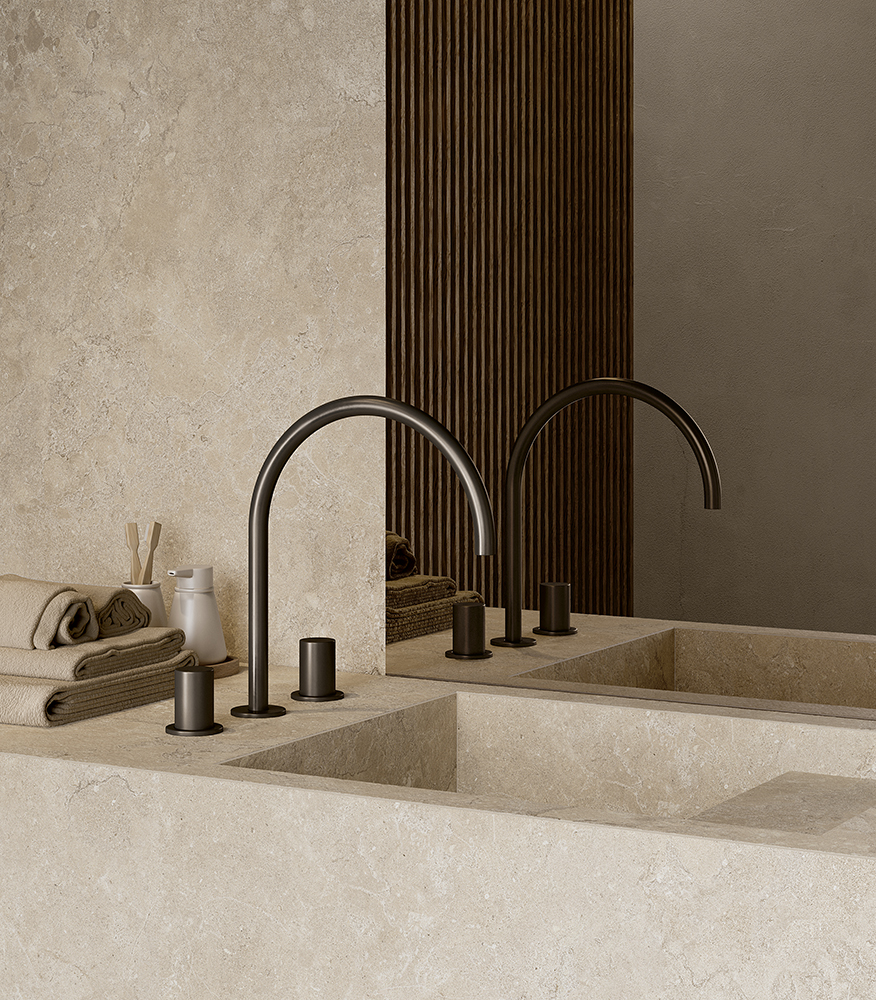
Quartz is a compound of mineral and resin: attractive and low in porosity, but sensitive to heat (the resins can yellow under a very hot pan) and not recommended outdoors because of UV rays. Porcelain, 100% fired mineral, withstands heat and sun without altering. If you want a countertop for a demanding kitchen or an outdoor/summer kitchen, porcelain has the edge.
Porcelain vs granite
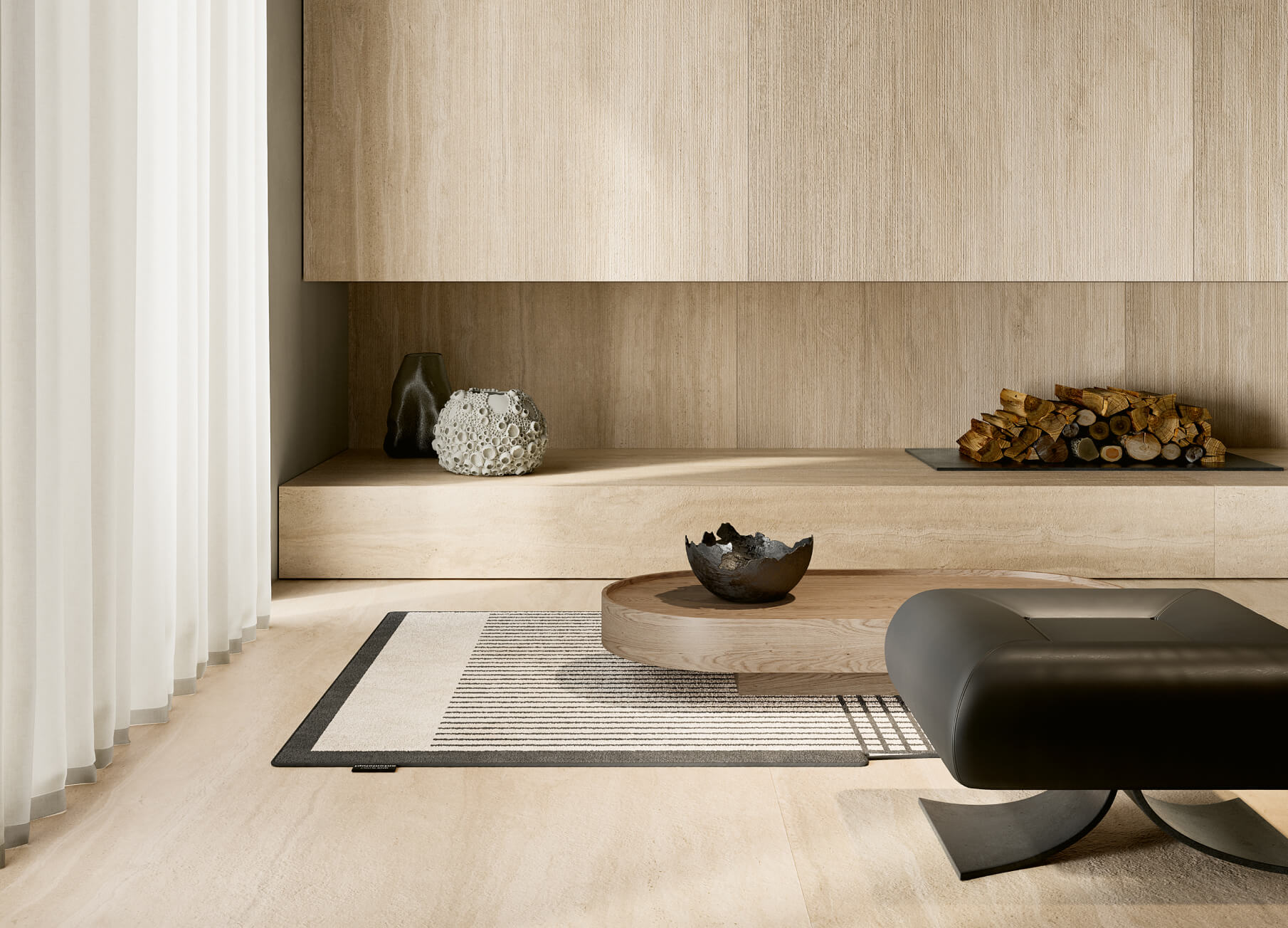
Granite is a very hard natural stone that resists heat well, with the appeal that every piece is unique. The trade-off: it is porous, so it needs periodic sealing to avoid absorbing oil or wine, and its layout depends on the block. Porcelain needs no sealing, doesn’t stain and offers large format with continuous, reproducible veining.
Porcelain vs marble
Marble is the most noble and luminous material… and the most delicate: it is porous, scratches and stains easily (lemon, wine, coffee), so it demands great care. Today marble-effect porcelain achieves that same elegance —veining included— without its fragilities: it doesn’t absorb, doesn’t scratch easily and doesn’t lose its shine. The sensible choice for anyone who wants the marble look without the upkeep.
What about Dekton or other ultra-compact surfaces?
Dekton and other ultra-compact surfaces belong to the same family as porcelain and offer very high performance. If that’s your specific question, we answer it in the article “Porcelain vs Dekton countertops”.
So, which one should I choose?
- Intensive kitchen, with heat and outdoor use, minimal maintenance → porcelain.
- Marble look without the fragility → marble-effect porcelain.
- Unique natural stone and you don’t mind sealing → granite.
- Uniform tones and you don’t cook “hard” → quartz.
- Aesthetics above all else and extreme care → marble.
Gomila’s porcelain countertops
At Gomila Cerámica we work with large-format porcelain for countertops through IMMENSA by Coem (162 × 324 cm, 12 mm, exposed edge; Sinai, Reverso and Touch Stone collections) and Inalco’s large-format MDi (Amara —the Binissalem stone reinterpreted—, Petra, Pacific, Ananda, Atalaia and Lyra). Unsure which material suits you? Write to us or visit the showroom and we’ll advise you. gomila-ceramica.com
Frequently asked questions
Which is better for a countertop, porcelain or quartz?
For heat and outdoor use, porcelain is superior: it withstands ~200 °C and UV rays without altering, whereas quartz can yellow with heat and is not recommended outdoors.
Is porcelain better than granite?
Porcelain is non-porous and needs no sealing, while granite requires periodic sealing. Granite, in turn, offers the appeal of unique natural stone.
Does marble-effect porcelain stain like marble?
No. It reproduces the look of marble but, being non-porous, it doesn’t absorb liquids or stain, and it resists scratching much better.
Which countertop needs the least maintenance?
Porcelain: water and a neutral soap are enough. Granite needs sealing and marble requires constant care.
Can a porcelain countertop be installed outdoors?
Yes. It withstands frost, temperature changes and UV rays without fading, making it ideal for outdoor kitchens.