Before choosing a porcelain countertop, almost everyone asks the same things: does it survive a hot pan? do knives scratch it? does red wine stain it? Here are the answers, clear and without the marketing, plus the care that keeps it looking flawless for years.
In short
- Porcelain countertops resist heat (no visible effect up to ~200 °C), scratching, stains and chemicals.
- They’re non-porous: no water absorption and no sealing needed; hygienic and food-safe.
- Daily care: water and neutral soap; for tough stains, common cleaning products won’t damage the surface.
- Resistant to frost, temperature changes and UV, keeping their colour stability over time.
- Only caution: avoid very hard point impacts on edges. Otherwise, one of the most durable kitchen surfaces.
Does it resist heat?
Yes, very much so. Porcelain is fired at high temperatures, so it shows no visible effect up to around 200 °C. You can set down a hot pan or pot without damaging the surface. Even so, as with any material, using a trivet for very prolonged contact is a good habit.
Does it scratch?
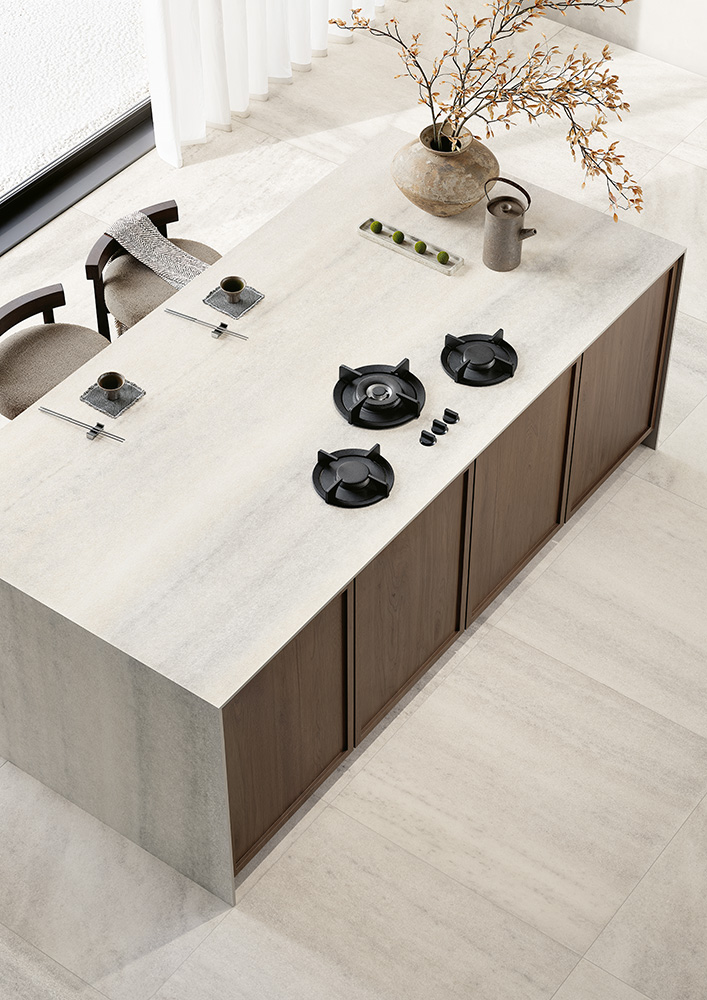
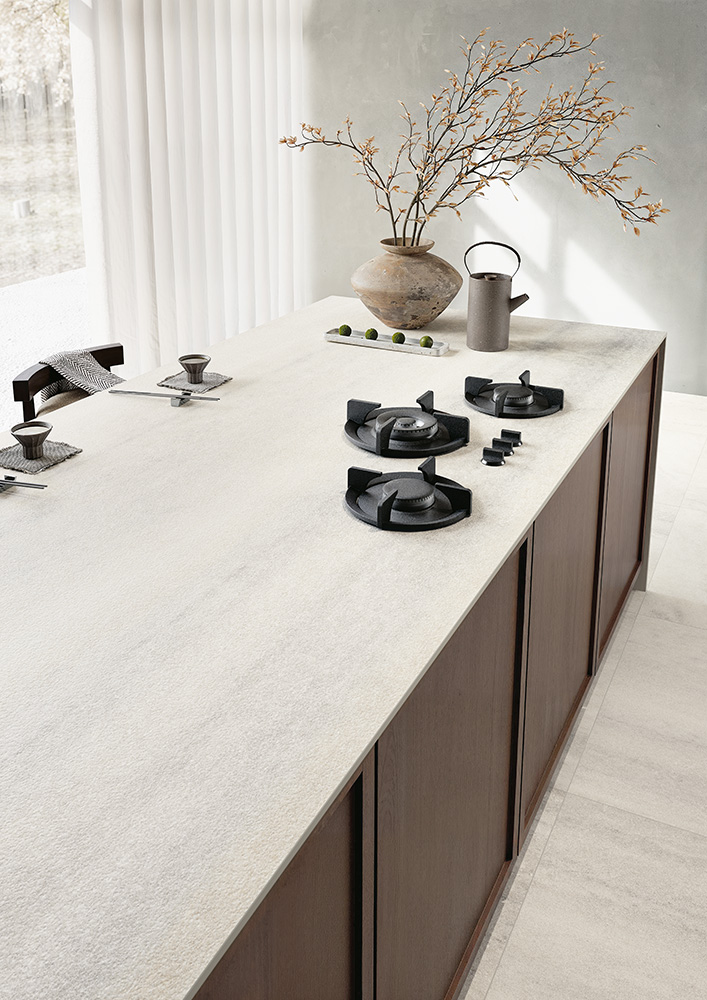
It is one of the most scratch- and abrasion-resistant countertop materials there is. Normal kitchen use won’t mark it. Sensible advice: don’t cut directly on the countertop (for the sake of your knife edges and hygiene) — use a cutting board.
Does it stain? Is it porous?
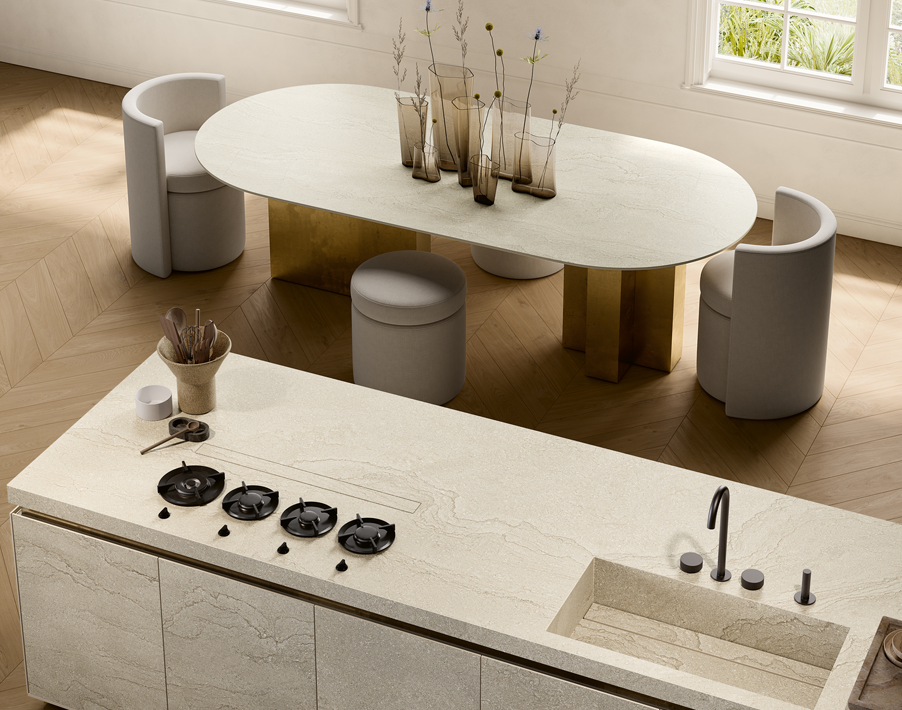
It is not porous and does not absorb liquids, so it won’t stain from coffee, wine, oil, lemon or sauces. Whatever spills wipes away with a cloth; it doesn’t penetrate the material. That’s why it is food-safe and highly hygienic.
Does it withstand chemicals?
Yes. It resists everyday cleaning products, acids, bases and solvents without changing. It needs no special products.
Everyday cleaning and care
- Daily: warm water and pH-neutral soap with a cloth or soft sponge. Nothing more.
- Stubborn stains (very rare): a regular degreasing cleaner; rinse and dry.
- Avoid: very aggressive metal scourers and waxes/polishes (it doesn’t need them and they can leave a film).
- No sealing required (unlike granite or marble).
Can it be repaired? What about the joints?
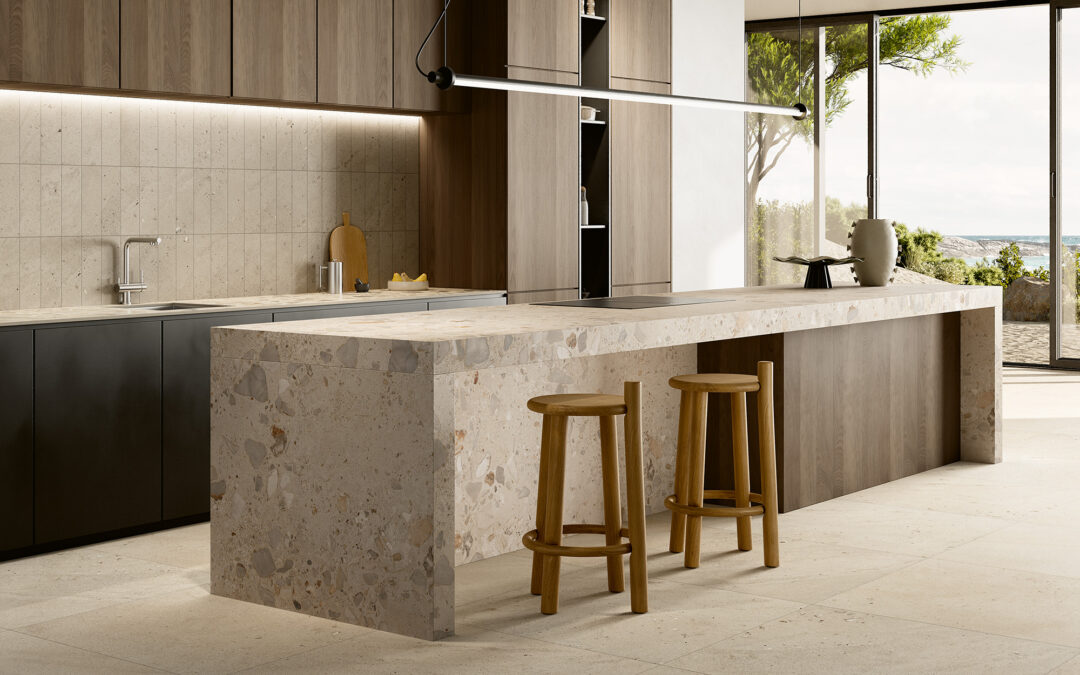
Large format minimises the joints, and any that remain are resolved with precision. Because it is a full-body slab, exposed edges (Smart Edges) are worked like natural stone, with a seamless finish. A very hard, direct knock on an edge is the only thing to watch, as with any hard surface.
Is it suitable for outdoors?
Yes. It resists frost, temperature swings and UV rays without fading, which makes it ideal for outdoor kitchens, barbecues and utility areas.
In short
The porcelain countertop is among the lowest-maintenance on the market: it resists heat, scratching and stains, needs no sealing and cleans with soap and water. The look of stone, with minimal care.
Gomila’s porcelain countertops
At Gomila Cerámica we work with large-format porcelain from two leading brands for countertops: IMMENSA by Coem (stone-effect collections such as Sinai, Reverso and Touch Stone, with an exposed edge) and Inalco’s large-format MDi (Amara, Petra, Pacific, Ananda, Atalaia, Lyra). If you’d like to see and touch it, drop by the showroom or write to us. gomila-ceramica.com
Frequently asked questions
Do porcelain countertops scratch?
They are highly scratch-resistant; normal use won’t mark them. Even so, it’s best to cut on a board rather than directly on the surface.
Do porcelain countertops stain?
No. Being non-porous, they don’t absorb liquids, so coffee, wine or oil wipe away with a cloth without leaving a mark.
How do you clean a porcelain countertop?
With warm water and pH-neutral soap daily. For the odd stubborn stain, a regular degreaser. No sealing or waxes needed.
Can it handle a hot pan?
Yes, it shows no visible effect up to around 200 °C. For very prolonged contact, a trivet is good practice.
Does it need sealing like granite or marble?
No. Porcelain is not porous, so it requires no periodic sealing.