In short
- Everyday care of porcelain tiles is simple: water and a pH-neutral cleaner, a well wrung-out mop and, if your water is hard, a final pass to dry the floor.
- Limescale comes off with a mild acid descaler, diluted, on a surface that has been wetted first, followed by a thorough rinse. As an occasional treatment, not a routine.
- What suffers from limescale and acids is cement grout, not the tile. Epoxy grout is the more resistant alternative if you decide on it when the floor is laid.
- Porcelain tiles need no waxes or polishes. The only acid that attacks ceramics is hydrofluoric acid: never use it at home.
- You can see polished, matt and anti-slip finishes at our showroom in Palma, Carrer de Calçat, 16.
Porcelain stoneware is one of the most rewarding materials to look after: it absorbs almost no water, does not stain easily and withstands most household cleaning products. Even so, in Mallorca one question keeps coming back: why the floor is left with rings, why the shower screen and the shower wall turn whitish, and why the grout darkens before its time.
The answer is almost always the same: limescale. This guide explains how to clean porcelain tiles with hard water, what to use, what to avoid and in what order.
Why limescale is the issue in Mallorca
Across much of the island the water is hard. Mallorca’s subsoil is largely limestone, and the water that runs through it picks up calcium and magnesium. EMAYA, Palma’s own municipal water company, describes the water it supplies as hard or moderately hard, depending on the area and the time of year.
That hardness is not a health issue, but it is a cleaning one: when water evaporates on a surface, the calcium carbonate stays behind. On porcelain tiles it shows up as a whitish haze, marked droplets or rings. The good news is that the limescale sits on top of the tile, not inside it: porcelain with water absorption ≤ 0.5% does not let it in. If you want to know where to find that figure, we explain it in how to read a tile’s technical data sheet.
Everyday cleaning
- Sweep or vacuum first. Sand is abrasive and, once walked on, ends up marking polished surfaces. Even more so in homes near the sea.
- Mop with lukewarm water and a pH-neutral cleaner, at the dose stated on the bottle. More product does not clean better: it leaves a film.
- A well wrung-out mop. With hard water, the less water left on the floor, the less limescale is deposited as it dries.
- A final pass to dry in glossy or high-traffic areas, with a dry dust mop or microfibre cloth.
If rings still appear, a simple trick is to mop now and then with distilled or demineralised water, which leaves no limescale when it evaporates.
How to remove limescale from porcelain tiles
Which product to use
Limescale is calcium carbonate, and it dissolves in acid. For porcelain tiles you use a mild acid descaler, one formulated for ceramics, or a diluted white vinegar solution for light deposits. The porcelain tile tolerates both without any problem. The care lies in what surrounds it.
How to apply it without damaging the grout
- Wet first the surface and, above all, the grout with clean water. Grout saturated with water absorbs far less acid.
- Dilute as the manufacturer indicates and apply only to the affected area.
- Leave it on briefly and scrub with a soft brush or non-abrasive sponge.
- Rinse with plenty of water and dry.
It is an occasional treatment: every few weeks in a shower with heavy limescale, or whenever the haze appears. Used daily, the acid ends up wearing away cement grout.
Grout: the weak point
On a porcelain floor, the grout is almost always the first thing to age. Cement-based grout is more porous than the tile: it holds dirt, builds up limescale and is attacked by acids, because cement is also calcium-based.
- To clean it: a pH-neutral or mildly alkaline cleaner and a brush with firm but non-metallic bristles. Rinse well.
- To prevent problems: dry damp areas and, if the grout manufacturer recommends it, apply a water-repellent grout sealer.
- If it is already badly worn: the grout can be cleaned out and renewed without touching the tile. This is best done by a professional.
If the floor has yet to be laid, epoxy grout is worth considering: it is far less porous and resists stains, limescale and chemicals better than cement grout. It is a material decision made at the laying stage; we cover it in our guide to laying porcelain floor tiles.

Polished, matt or anti-slip: they are not cleaned the same way
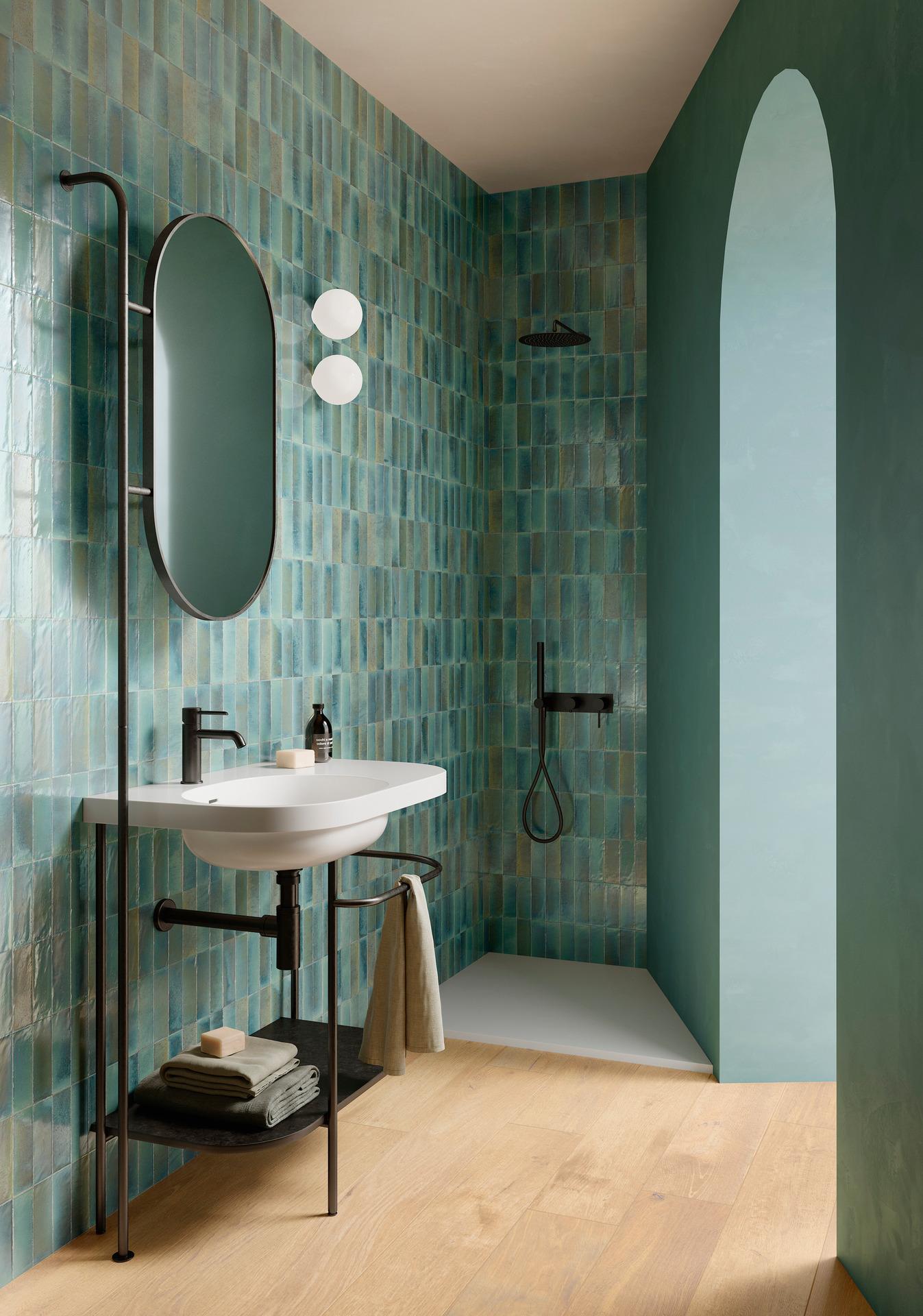
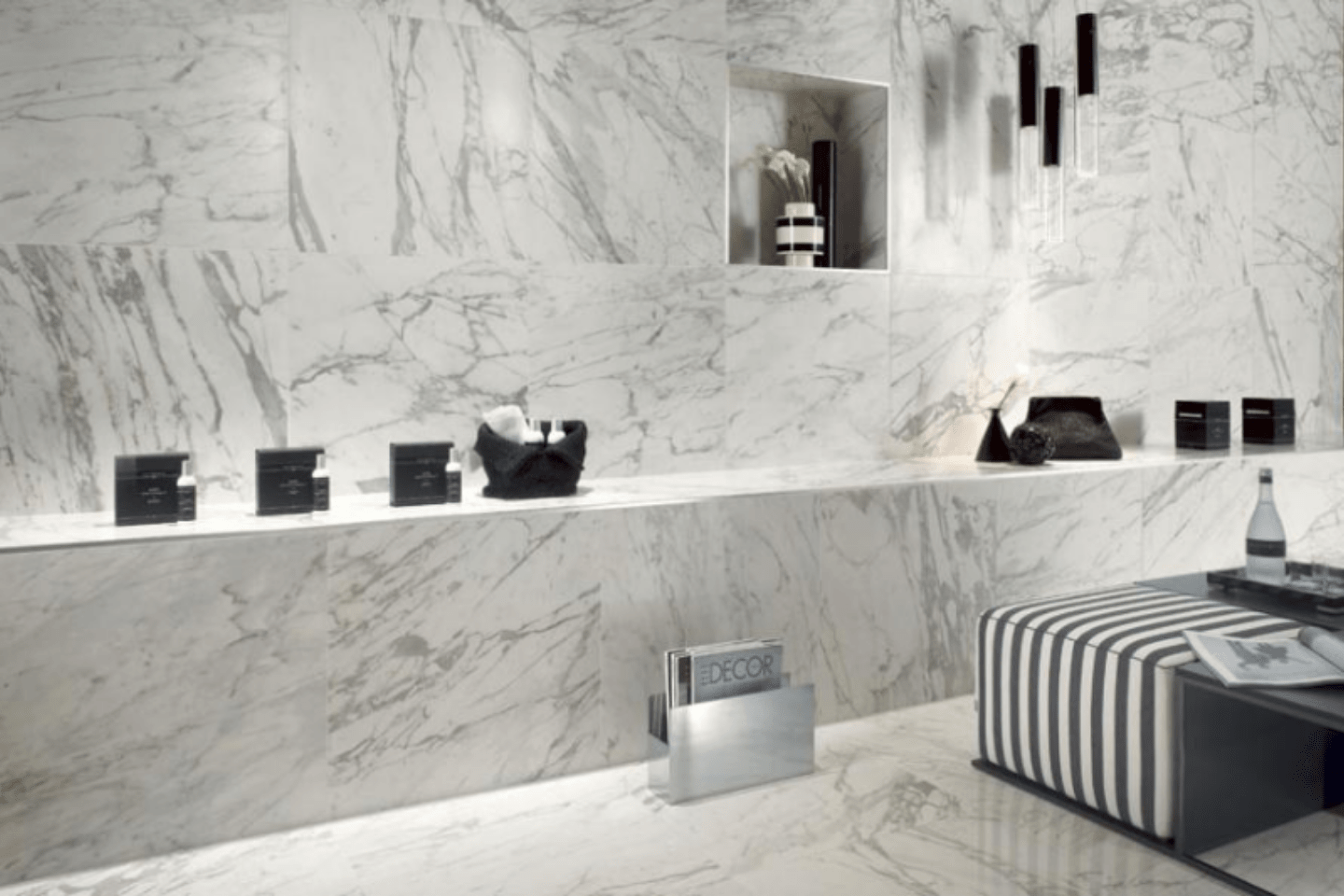
Polished or lappato. The shine gives away every drop of limescale and every mop mark. Here the final drying is what makes the difference. Avoid abrasive powders and hard scourers, which can scratch the shine, and check the data sheet to see whether the manufacturer recommends any specific care for that surface.
Matt or natural. The most forgiving. It hides limescale and footprints, and a pH-neutral cleaner is enough for most of the year.
Anti-slip (R11 and above). The texture that provides grip also holds dirt. It is better cleaned with a brush than with a mop, and benefits from a slightly more frequent deep clean. If you are unsure which class you need in each area, it is explained in our guide to R9, R10, R11 and slip resistance classes.
All of this applies to porcelain. If your floor is red-body glazed stoneware, the difference is explained in stoneware or porcelain: which to choose for each use.
Cleaning after tiling
A newly laid floor is usually left with a greyish haze that does not come off with normal mopping: it is residue of cement from the grout and the adhesive, known as grout haze. Removing it is the post-installation clean, and it is worth doing properly, once.
- Wait until the grout has set, for as long as the grout manufacturer indicates.
- With cement grout: a dedicated acid after-tiling cleaner, diluted, on a floor that has been wetted first, and a thorough rinse.
- With epoxy grout: the residue is not cement and acid will not work; use the cleaner recommended by the epoxy manufacturer, usually alkaline or solvent-based.
- Protect first metal trims, taps and any nearby natural stone or marble, which acid can attack.
Shower and bathroom walls
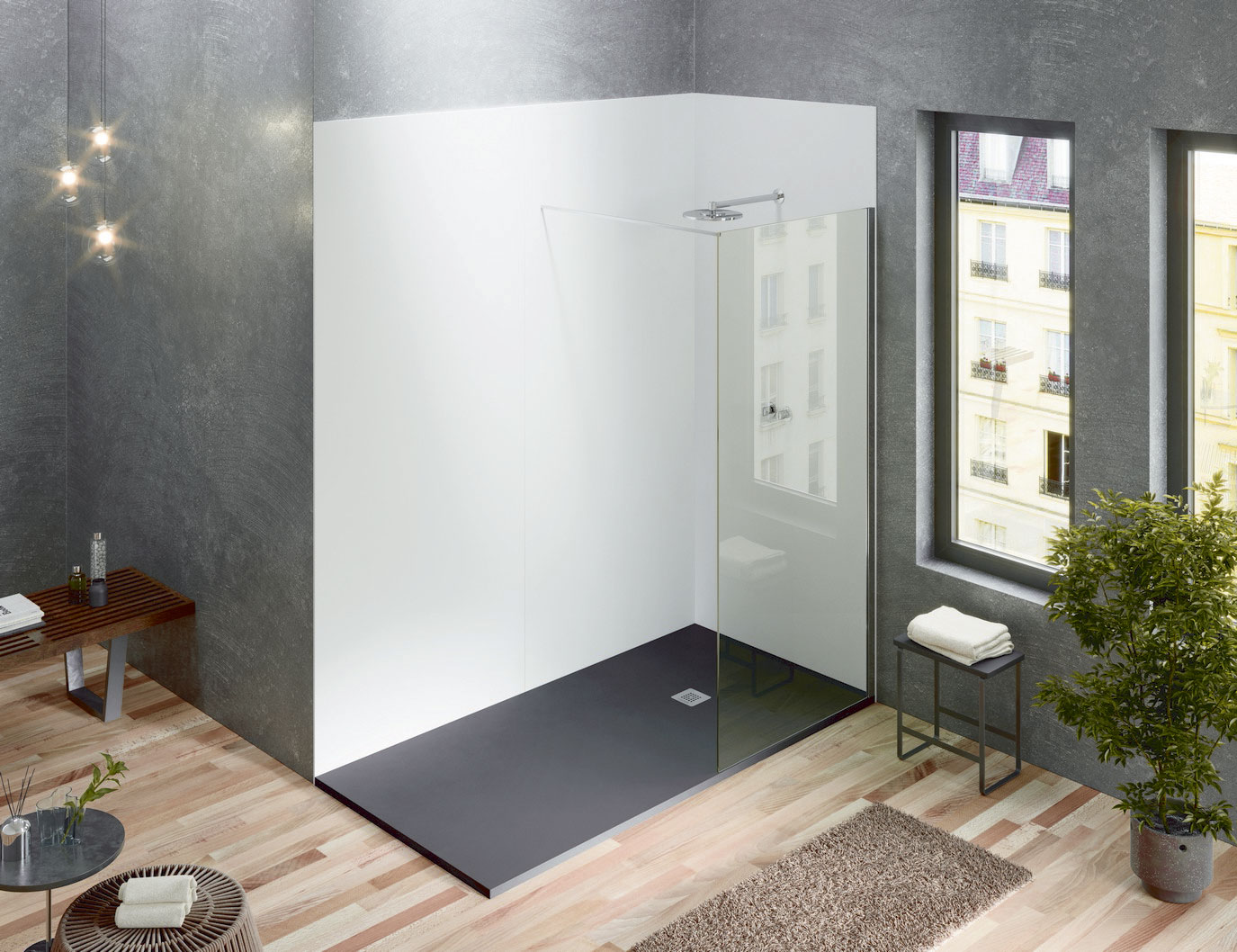
This is where hard water shows most. The most effective approach is not to clean harder, but sooner: running a rubber squeegee over the walls and screen after every shower removes most of the water before it evaporates and leaves limescale.
For existing haze, the same method: mild descaler, grout wetted first, rinse and dry. Take care with metal trims, drain grilles and taps: not all of them tolerate acids. Large-format wall tiles or a shower tray flush with the floor mean less grout, and therefore less maintenance; we cover this in how to choose a shower tray and, compared with microcement, in microcement or porcelain in the bathroom.
Terrace and pool surround
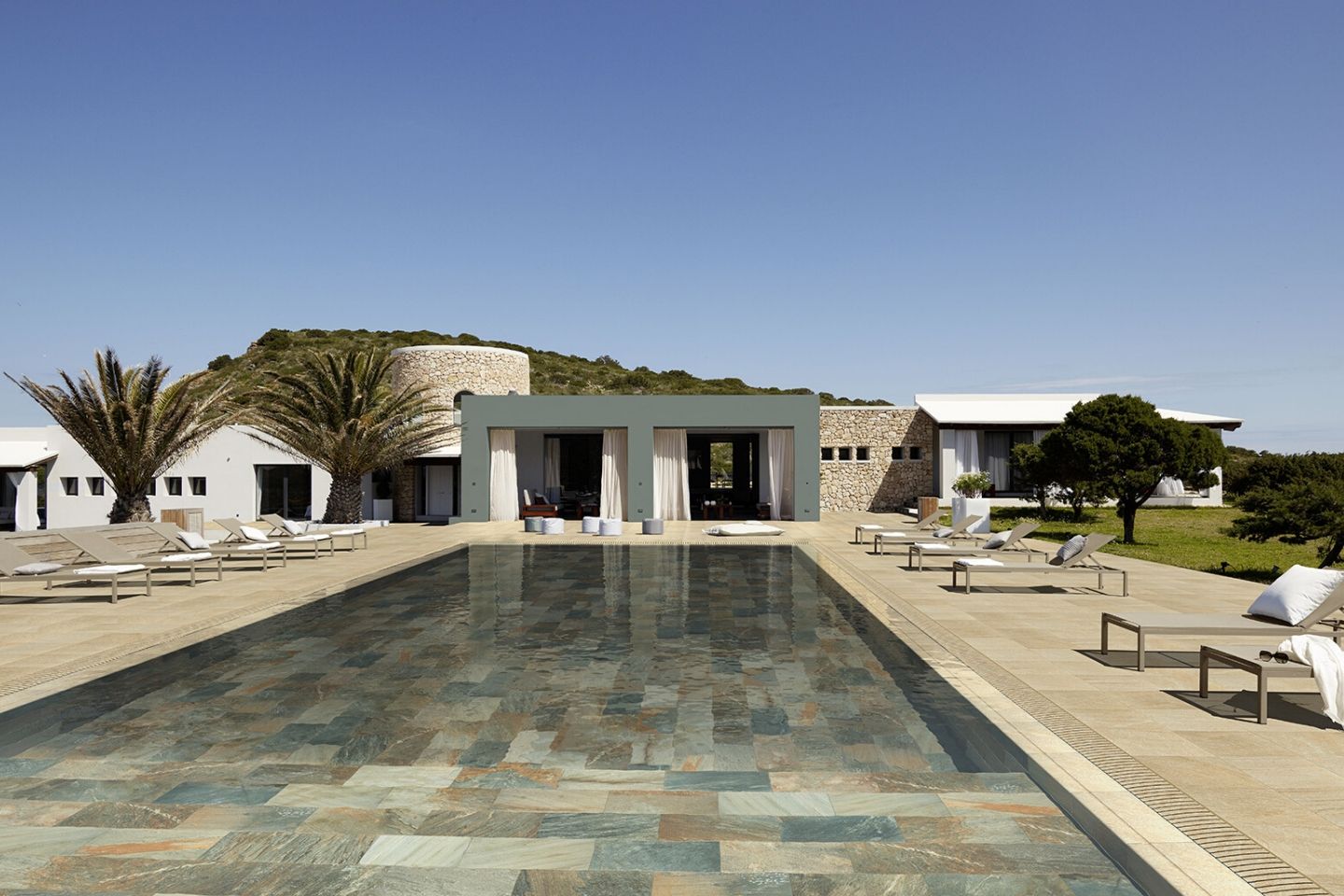
Outdoors, limescale from hosing down combines with salt and soil. For everyday care, a brush and water with a neutral cleaner; for ingrained dirt on anti-slip surfaces, an alkaline degreasing cleaner for outdoor use. Limescale, as indoors, with a mild descaler and the grout wetted first.
Around the pool, watch the rinse water: acid products must not end up in the pool. The key points for choosing that paving are in outdoor porcelain paving in Mallorca and in anti-slip flooring for pools. If the pool is lined with mosaic, the waterline has its own logic, explained in glass mosaic for pools.
What not to use
- Hydrofluoric acid or products containing it: it is the only acid that attacks ceramics and glass.
- Strong undiluted acids (hardware-shop hydrochloric acid, for example) on a regular basis: they damage cement grout and nearby metals.
- Waxes, polishes or oil-based soaps: porcelain does not need them; they leave a film, trap dirt and can make the floor slippery.
- Wire wool and abrasive powders on polished surfaces.
- Mixing products, especially bleach with acids or with ammonia: they give off toxic gases.
If you are coming from a worktop, the logic is the same; you will find it in porcelain worktops: resistance and maintenance.
Where to see it in Palma
The simplest way to know how a floor will age is to see the finish up close: polished, matt and anti-slip surfaces behave differently with limescale. At our showroom you can compare porcelain flooring surfaces side by side.
Gomila Cerámica
Carrer de Calçat, 16 · 07011 Palma (Mallorca)
Tel. 971 732 343 · info@gomila-ceramica.com
Opening hours and how to find us
Frequently asked questions
How do you clean porcelain tiles day to day?
Sweep or vacuum, then mop with lukewarm water and a pH-neutral cleaner, with the mop well wrung out. With hard water, a final pass to dry the floor prevents limescale rings.
How do I remove limescale from porcelain tiles?
With a mild acid descaler for ceramics, or diluted white vinegar for light deposits. Wet the surface and the grout first, leave it on briefly, scrub with a non-abrasive sponge and rinse with plenty of water. Use it occasionally, not daily.
Do vinegar or limescale removers damage porcelain tiles?
Not the porcelain tile itself: it withstands household acids. What they can damage, with frequent or undiluted use, is cement grout and some metal trims or taps. The only acid that attacks ceramics is hydrofluoric acid.
How do I clean the grout on a porcelain floor?
With a neutral or mildly alkaline cleaner and a non-metallic brush, rinsing well. If the grout is badly worn, it can be renewed without touching the tile. For a new floor, epoxy grout resists limescale and stains much better than cement grout.
How do you remove grout haze from porcelain tiles after tiling?
Once the grout has set, with a diluted acid after-tiling cleaner on a floor that has been wetted first and a thorough rinse, if the grout is cement-based. If it is epoxy, use the cleaner recommended by its manufacturer. Protect nearby metals and natural stone first.
Do porcelain tiles need waxing or polishing?
No. Porcelain needs no waxes or polishes: they leave a film that traps dirt and can make the floor more slippery. On polished finishes, the shine is kept by cleaning with a pH-neutral product and drying.