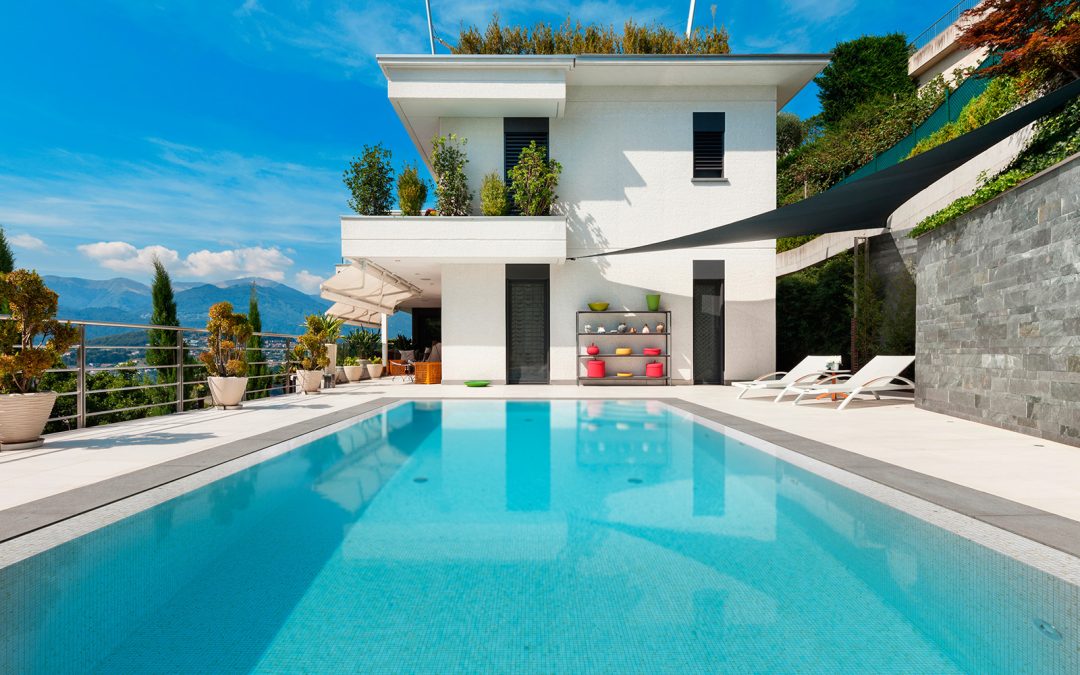
There is a moment, around midday, when the water in a pool stops being transparent and becomes colour. That colour — Caribbean turquoise, deep blue, lagoon green — almost never comes from the water itself. It comes from what lies beneath. And few materials decide it as precisely as glass mosaic, laid tessera by tessera across the shell.
In this guide we explain what glass mosaic actually is, how it differs from porcelain, which formats and finishes exist, how to choose the water tone you have in mind, and why it ages well even in salt-water pools.
In short
- Glass mosaic (known as gresite in Spain) is made of small pressed-glass tesserae, usually 2.5 × 2.5 cm, mounted on mesh sheets.
- The tile colour does not equal the water colour: water deepens and cools the tone. Whites give pale sky-blue; turquoises give the Caribbean look; dark tones give mirrored water.
- Glass is non-porous, so it resists salt water and saline chlorination particularly well, and its colour does not fade in the sun.
- Anti-slip mosaic series exist specifically for steps, beach entries and walkways.
- Mosaic adapts to curves, steps and overflow channels where a large-format tile would require cutting.
What is glass mosaic?
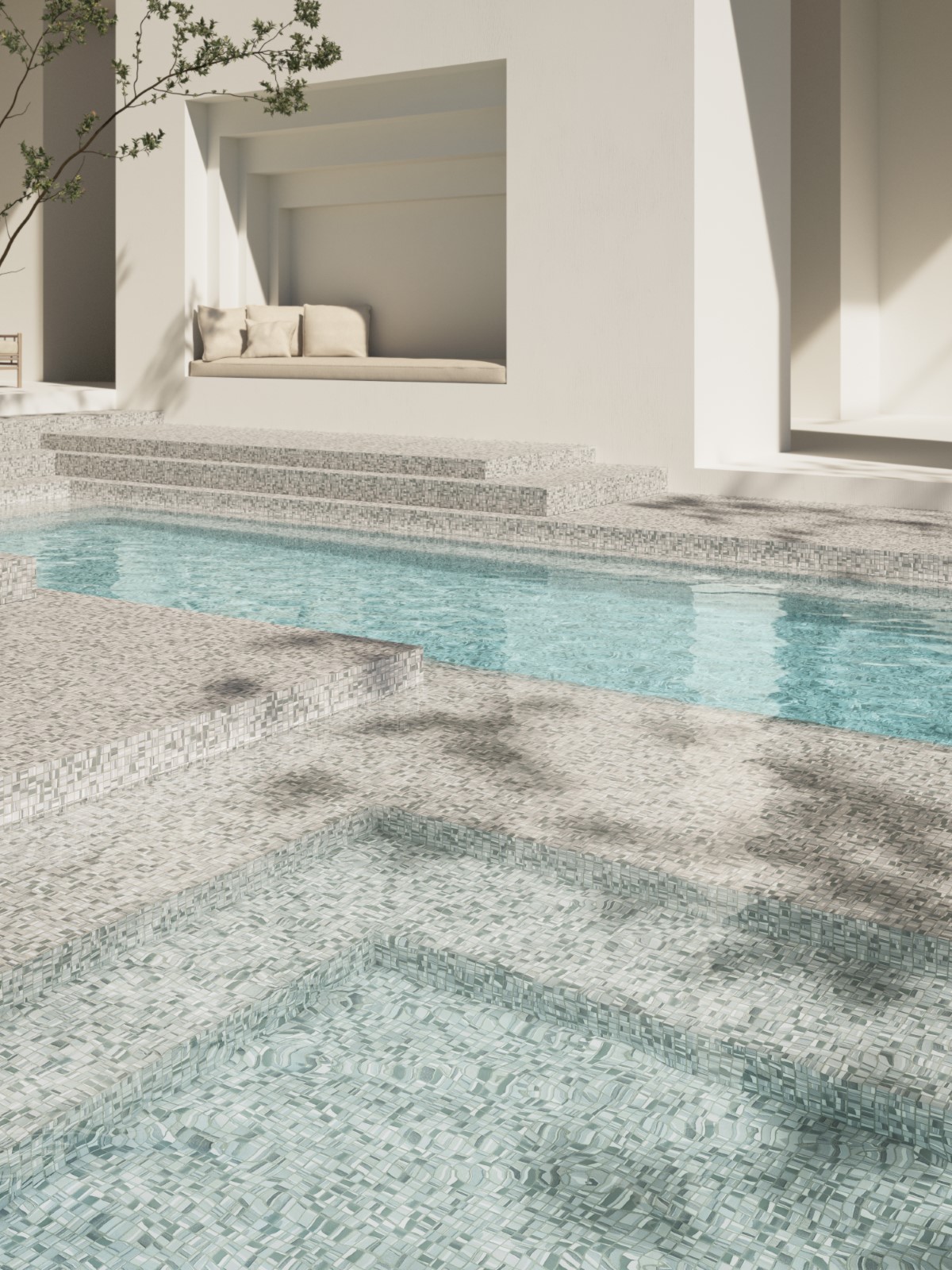
Glass mosaic — often called gresite in Spain — is made of small pressed-glass tesserae, usually 2.5 × 2.5 cm, mounted on mesh sheets that are laid side by side until they cover the entire pool shell, including curved corners, steps and the overflow channel.
Unlike a large tile, mosaic works through the fragmentation of light: each tessera reflects the sun at a slightly different angle, and that vibration is what gives the water its living, shifting quality — something a continuous surface cannot quite reproduce.
At Gomila we work with glass mosaic by Ezarri, a manufacturer specialising in pool mosaic, with plain ranges, colour blends and anti-slip series.
Glass mosaic vs. porcelain: which one for my pool?
There is no absolute winner — there are two different ways of understanding a pool.
| Glass mosaic | Anti-slip porcelain stoneware | |
|---|---|---|
| Look of the water | Depth, sparkle and nuance; the tone shifts with the light | More matt, calm and natural (stone or sand effect) |
| Format | Small tesserae on mesh; adapts to curves and steps | Large pieces; ideal for straight lines and broad expanses |
| Adaptability | Very high (organic shapes, beach entries) | Medium (better in straight geometries) |
| Underfoot | Soft; anti-slip versions available | R11 anti-slip as standard in many collections |
| Style | Mediterranean, classic, resort | Contemporary, minimal, landscape-integrated |
If you picture luminous turquoise water and a pool with soft shapes, glass mosaic is your material. If you want continuity between the interior of the house and the terrace, with a stone or wood finish, look at our anti-slip porcelain and stoneware options for outdoor use.
And if you are still choosing the material before the colour, our guide to the best ceramic tiles for pools compares the three families — anti-slip porcelain, stone-effect stoneware and mosaic — alongside the collections we carry.
Water colour, by mosaic tone
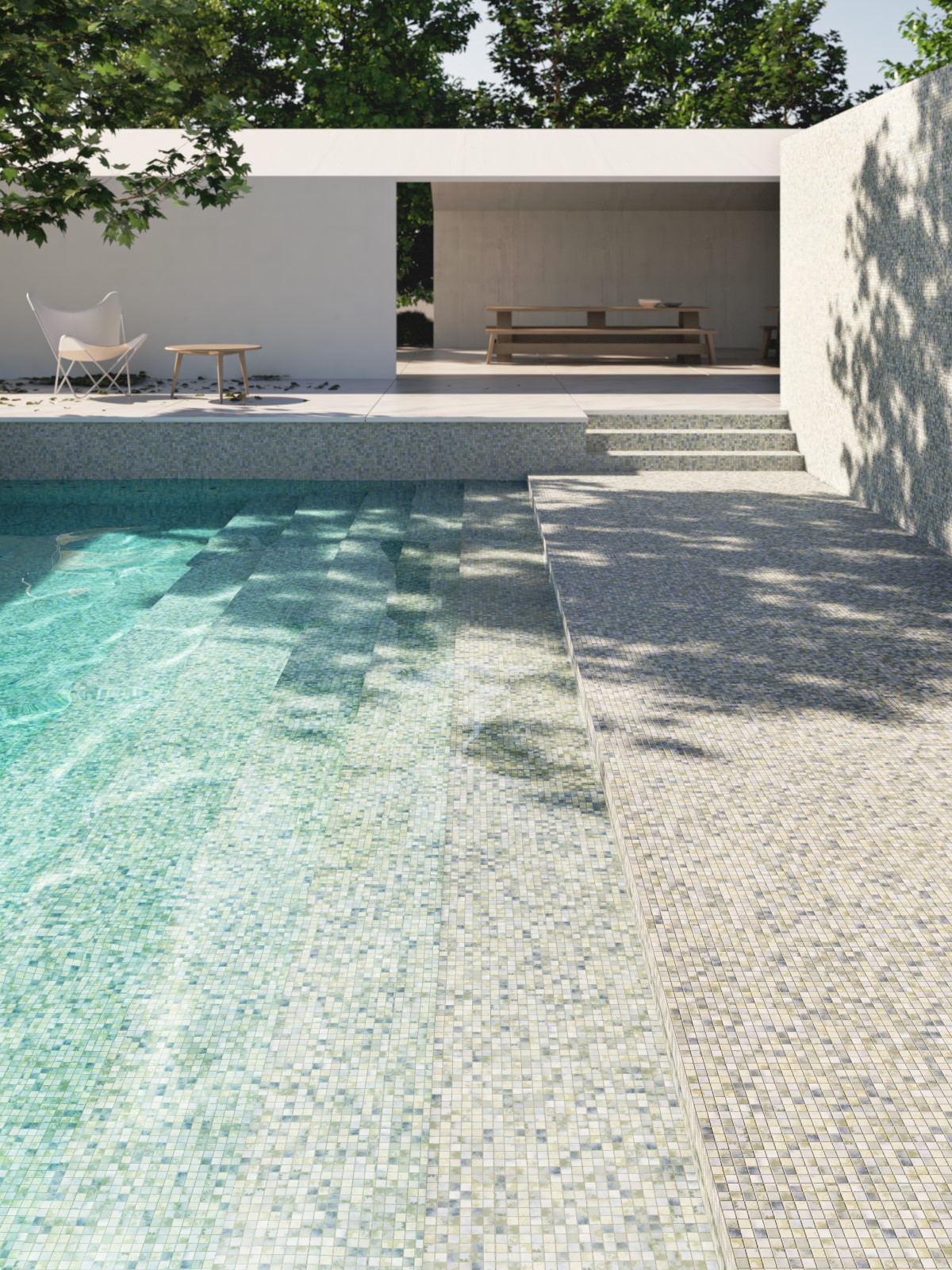
This is the decision that generates the most excitement — and the most doubt. The colour of the tessera is not the colour of the water: water deepens and cools it. As a guide:
- Whites and sands → very pale, crystalline sky-blue water; the hotel look.
- Light blues and turquoises → the Caribbean classic, luminous and transparent.
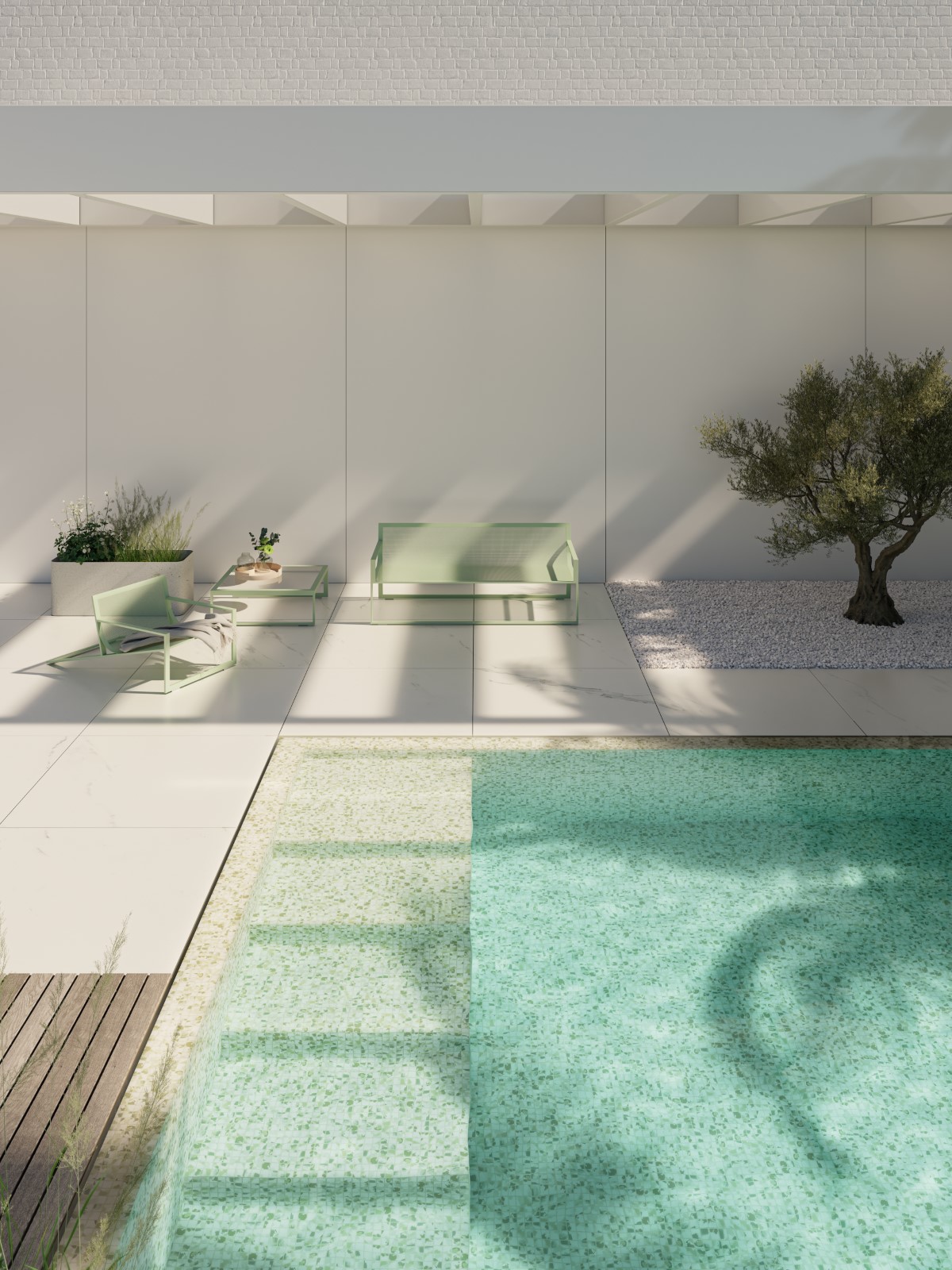
- Greens and beige/pinks → green, lagoon-like tones that settle the pool into the garden.
- Greys, dark blues and blacks → deep, mirrored water; elegant and contemporary.
Ezarri’s blends combine several tesserae on a single sheet to produce a background with life in it, one that never reads as flat. We develop the subject with more examples in our guide what colour will my pool water be?
And if you want to see mosaic beyond the pool — in bathrooms, kitchens or wellness areas — we cover it in full in our guide to glass and ceramic mosaic.
Anti-slip, salt water and durability
Three technical reasons why glass mosaic remains a pool standard:
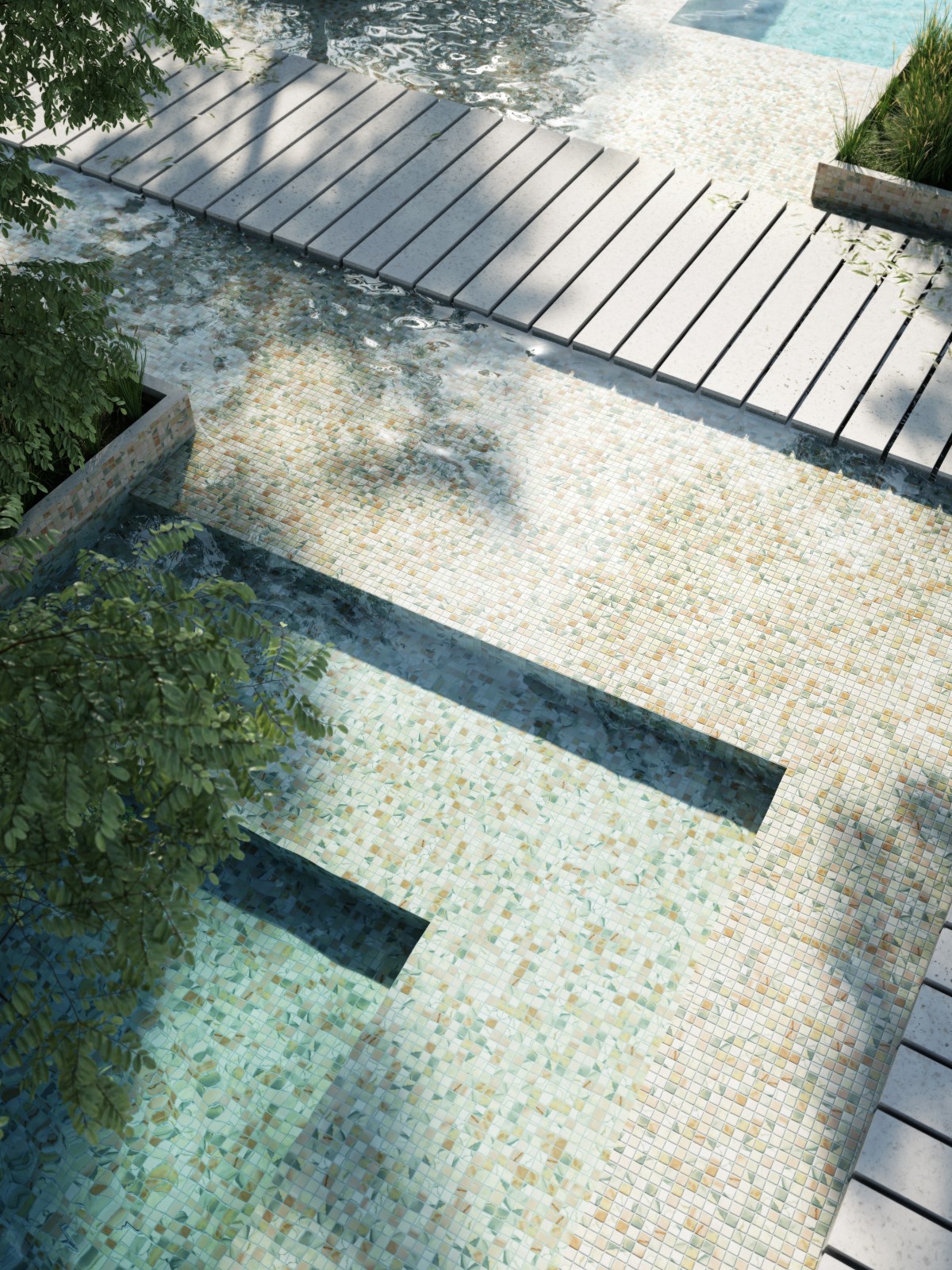
- Anti-slip. There are mosaic series with a specific anti-slip finish for steps, beach entries and walkways, without giving up colour.
- Salt water and saline chlorination. Glass is non-porous, so it stands up particularly well to the chemical demands of salt water and saline chlorination systems, which are increasingly common.
- Colour stability. Being pressed glass, the colour does not fade with sun or use; the surface holds its tone season after season.
How it is installed (and why the detail matters)
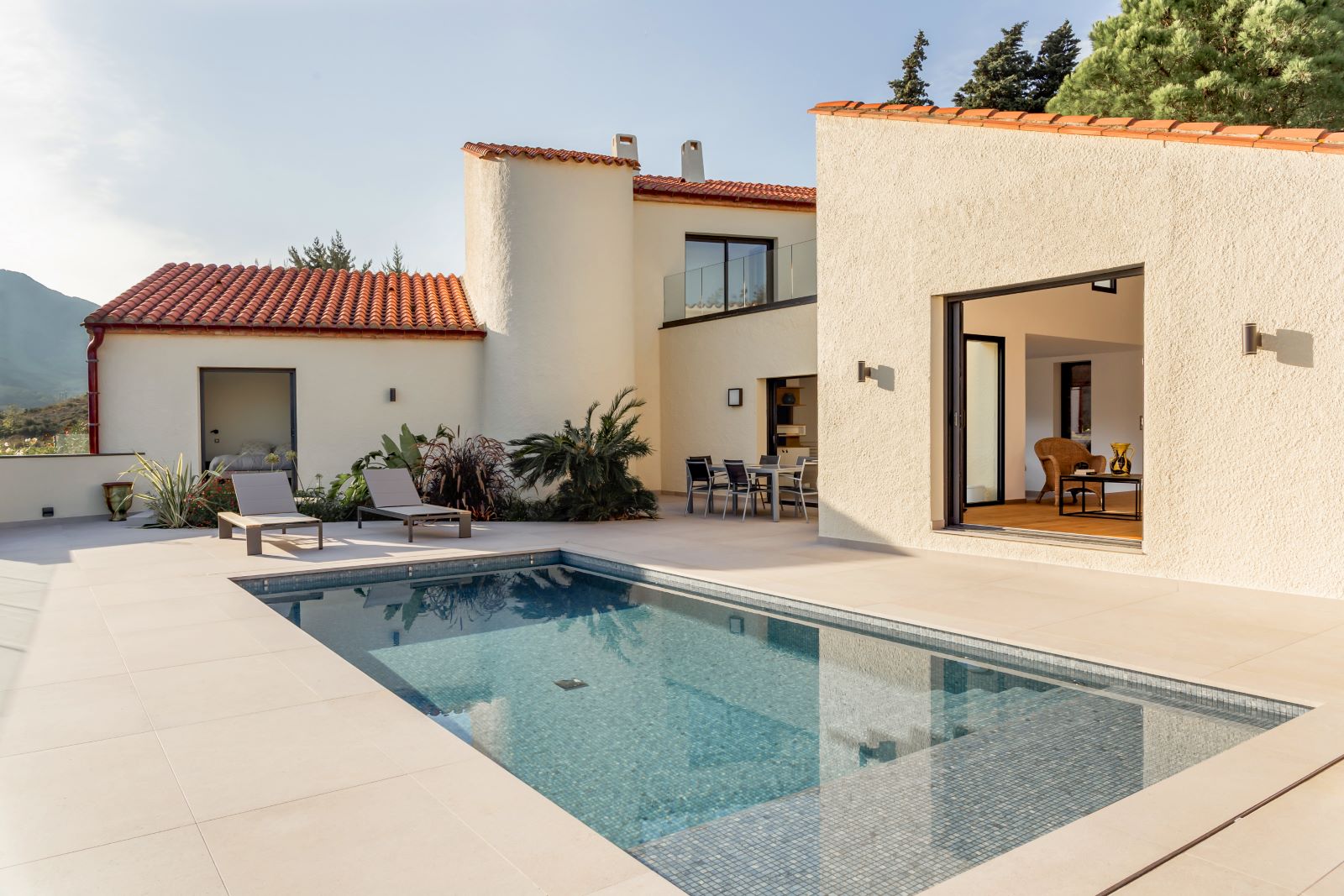
Glass mosaic is supplied in mesh sheets that the installer lays over the already waterproofed shell, using adhesive and grout suited to pool conditions. Two details shape the final result:
- The grout colour, which can reinforce or soften the tone of the mosaic.
- The setting-out on curves and steps, where the small tessera shows its greatest advantage.
This is specialist installation work: at Gomila we advise you on the material and the formats, and put you in touch with the right channel.
In short
Glass mosaic is the material that turns a pool into that pool: the one with nuanced water, the one that changes with the light of day. Choose the colour with the water tone you imagine in mind, consider an anti-slip series for walkways, and if your pool runs on salt water you will gain peace of mind.
👉 Discover glass mosaic by Ezarri and the rest of our pool solutions at gomila-ceramica.com.
Frequently asked questions
- Is gresite the same as glass mosaic? Yes. Gresite is the common Spanish name for glass mosaic: small glass tesserae mounted on mesh, used above all to line swimming pools.
- What colour will the water be with glass mosaic? It depends on the tile colour: whites give a very pale sky-blue; blues and turquoises the Caribbean classic; greens and beiges lagoon tones; greys and darks a deep, mirrored water. Water always deepens and cools the tone of the tile slightly.
- Is glass mosaic anti-slip? There are mosaic series with an anti-slip finish designed for steps and walkways, colour-matched to the rest of the collection so the surface stays continuous.
- Does glass mosaic cope with salt water? Yes. Glass is non-porous, so it withstands saline chlorination and salt water well — both common in pools today.
- Glass mosaic or porcelain for my pool? Glass mosaic gives depth and sparkle and adapts to curved shapes; porcelain offers a more matt, natural look, ideal for straight lines and for continuity with the terrace. It depends on the style of water and pool you are after.
- Where can I see pool mosaic in Mallorca? At Gomila Cerámica in Palma we work with glass mosaic by Ezarri and other pool solutions. You can browse the catalogue and options at gomila-ceramica.com.