Mosaic is the small piece that solves what a large piece cannot. It follows a curve, climbs a column, turns the lip of a pool and makes a flat wall into a surface that shifts with the light. Where large format seeks continuity, mosaic seeks vibration.
In this guide we cover the types of mosaic that exist — glass, porcelain, mesh formats — how they differ, where each one performs best, and which collections we carry at Gomila Cerámica.
In short
- Mosaic is a surface of small tesserae mounted on fibreglass mesh, laid by the sheet, which adapts to curves, steps and pool shells.
- There are three families: glass mosaic (non-porous, for pools and wet areas), porcelain stoneware (matt and walkable) and designer mosaic (chosen for its layout).
- Ezarri manufactures in Lazkao, Spain, with 100 % recycled glass; Onix, with 98 % recycled glass, is the largest international maker of vitreous mosaic.
- The usual tessera is 25 mm; larger 50 × 50 mm formats exist (Ezarri 50mm, Onix Penta) as well as elongated 10 × 30 mm pieces (Mosaico+ P-saico).
- Specific anti-slip series exist for steps and walkways: Aquarelle (Ezarri) and Penta Black Rock Matte (Onix).
What a mosaic is (and why it comes on mesh)
A mosaic is a surface made of small pieces — tesserae — mounted on a mesh backing, usually fibreglass, which allows them to be laid by the sheet rather than one by one. That mesh is what makes the material viable: the installer sets complete panels and the result keeps the regular joint of the small tessera.
From this come its two structural advantages:
- It adapts to curves and awkward junctions — pool shells, steps, columns, rounded fronts — where a large tile would have to be cut.
- It fragments light. Each tessera returns the reflection at a slightly different angle. That vibration is what gives depth to pool water and nuance to a bathroom wall.
The three types of mosaic, and when to choose each
1. Glass mosaic
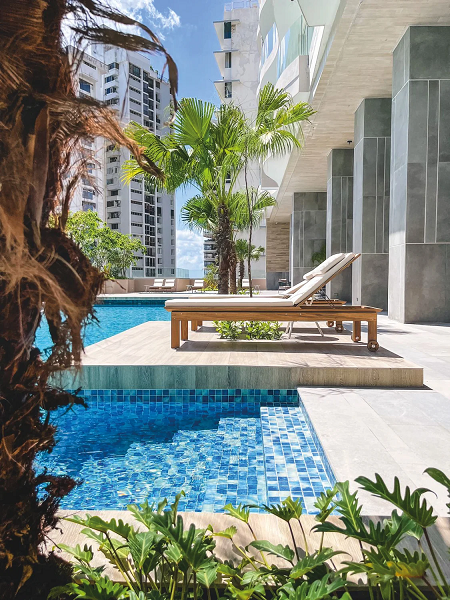
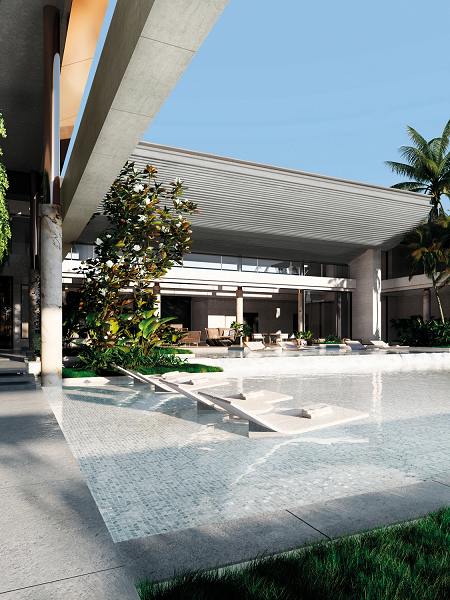
The type most associated with pools and wet areas. Glass is non-porous, which gives it excellent resistance to moisture, chemical treatment and saline chlorination, plus a colour that does not fade in the sun.
This is the speciality of Ezarri, a Spanish manufacturer with more than 40 years devoted exclusively to glass mosaic, producing in Lazkao with 100 % recycled glass. Among its collections:
- 50mm — the same quality in a larger format: tesserae 50 mm a side, four times larger than the usual 25 mm piece. It allows projects at a bigger scale without losing the language of mosaic.
- Aquarelle — reproduces the watercolour effect, with soft anti-slip textures and a range of matt tones that read as both classic and contemporary.
- Gemma — inspired by precious stones: singular veining and infinite reflections, for when the mosaic has to be the protagonist.
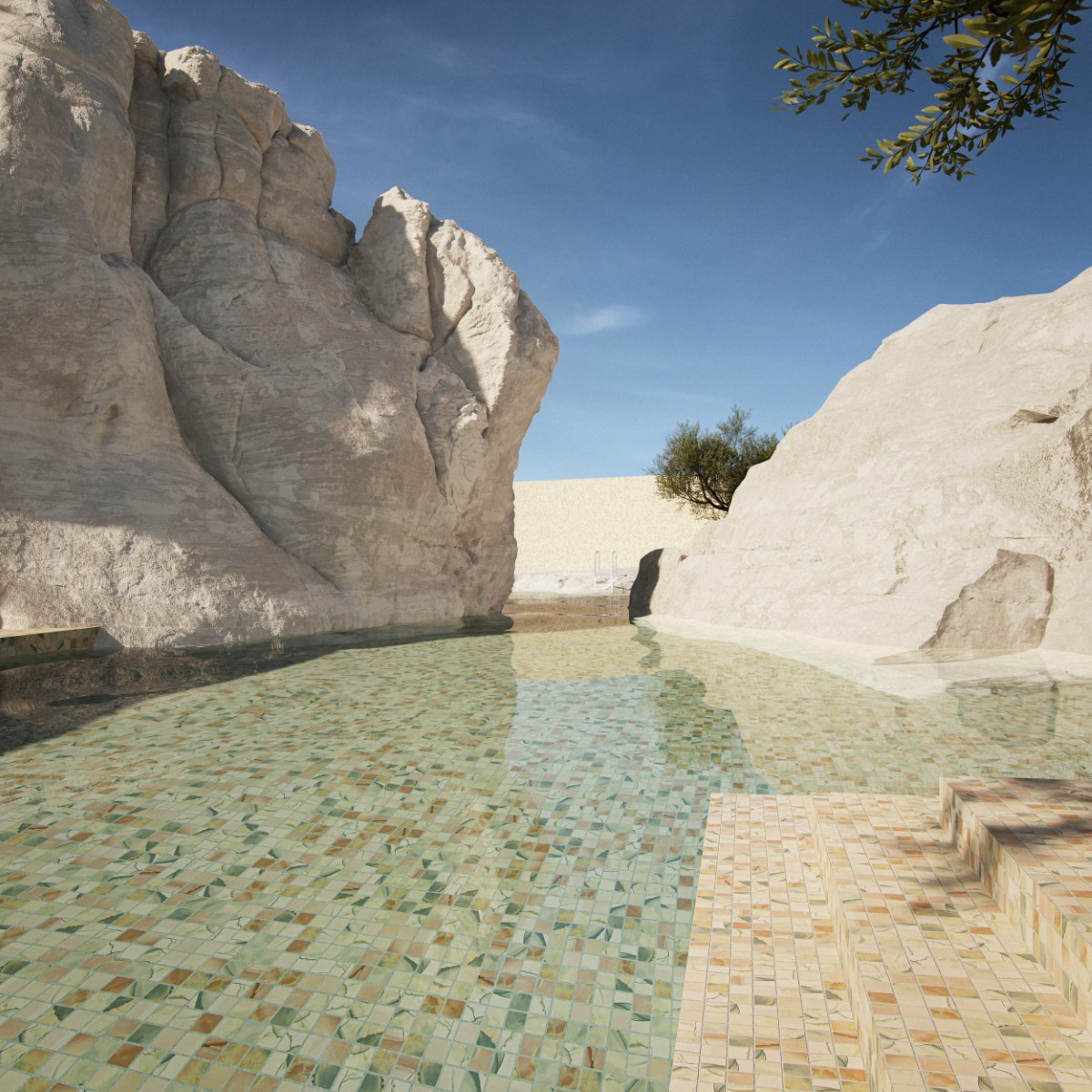
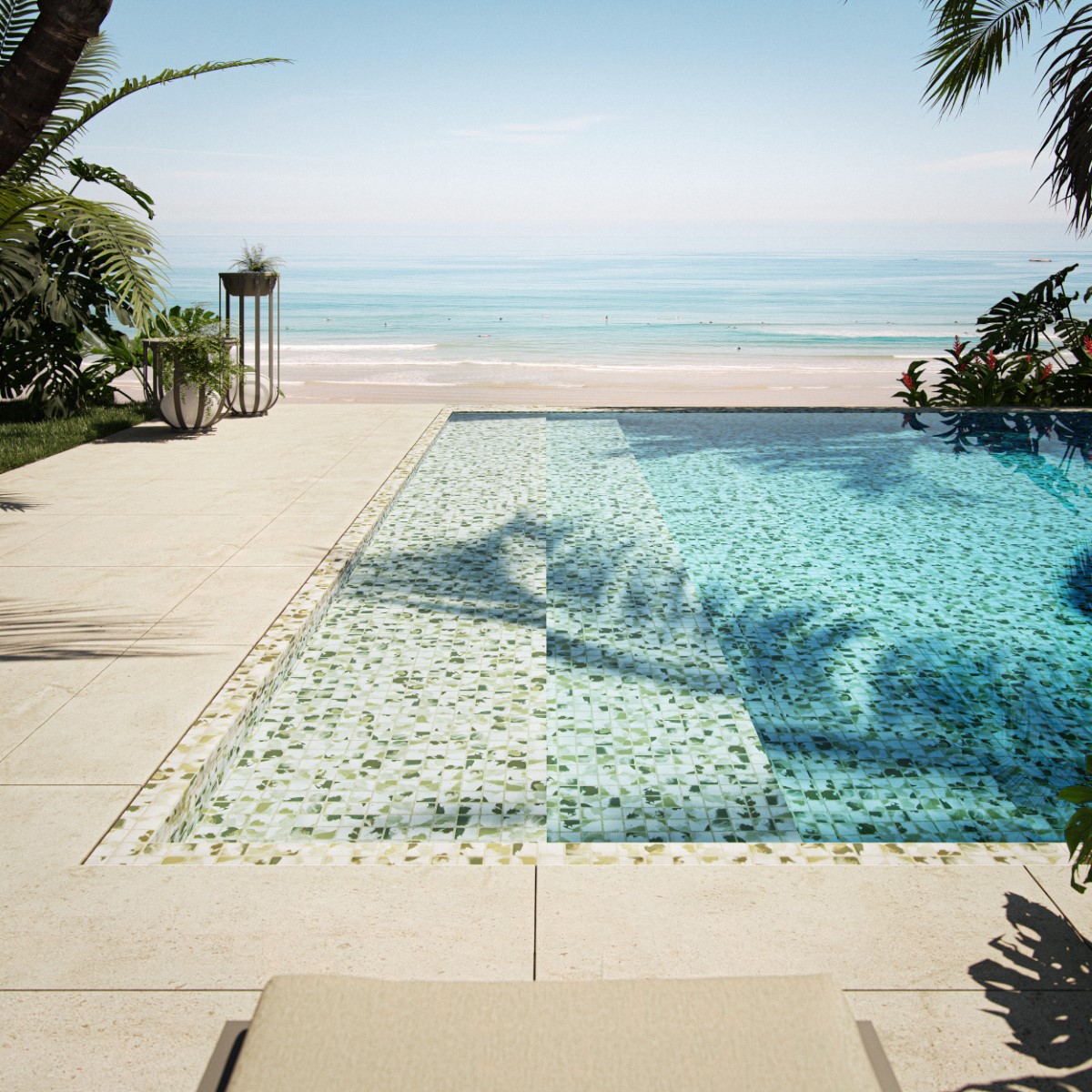
We also carry vitreous mosaic by Onix, today the largest international manufacturer of the material, with 98 % recycled glass, zero porosity and antibacterial properties. Its Penta collection — square tesserae of 50 × 50 mm — runs through a palette drawn from the sea, coral and volcanic landscapes: Penta Carel with a marine texture, Penta Bora designed for wet areas and pools, and Penta Black Rock Matte, anti-slip with the texture of volcanic rock.
2. Porcelain stoneware mosaic
When the mosaic has to be walked on, or when you want a matt, mineral finish rather than the sparkle of glass, the answer is full-body porcelain. It brings the strength and low absorption of porcelain in a broken-down format.
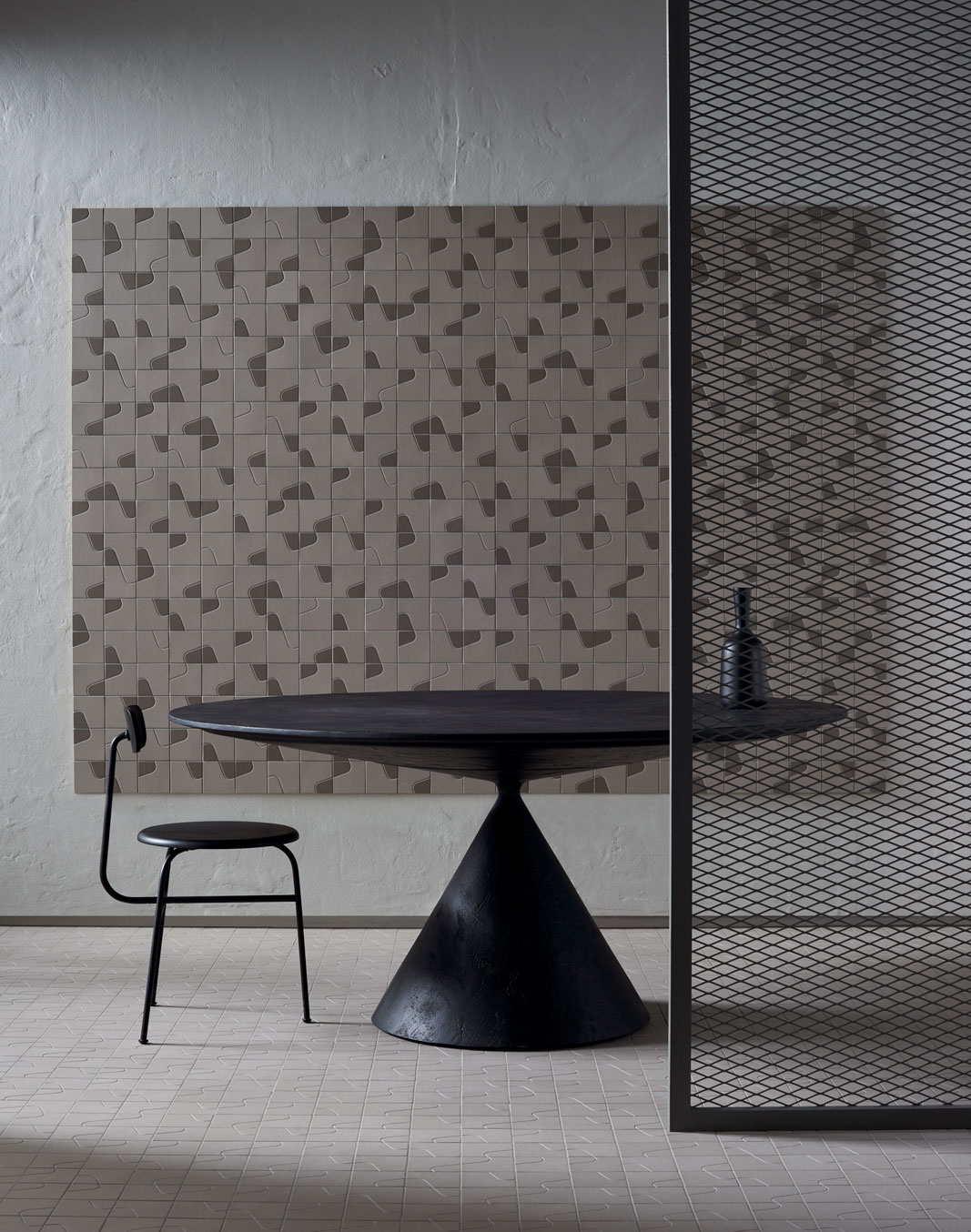
That is the case with Quilt, by Mosaico+: square full-body porcelain tesserae with a score line that lets a segment be separated after grouting. That small freedom turns every installation into a different design, in a regular or irregular pattern, with the memory of Venetian Seminato floors.
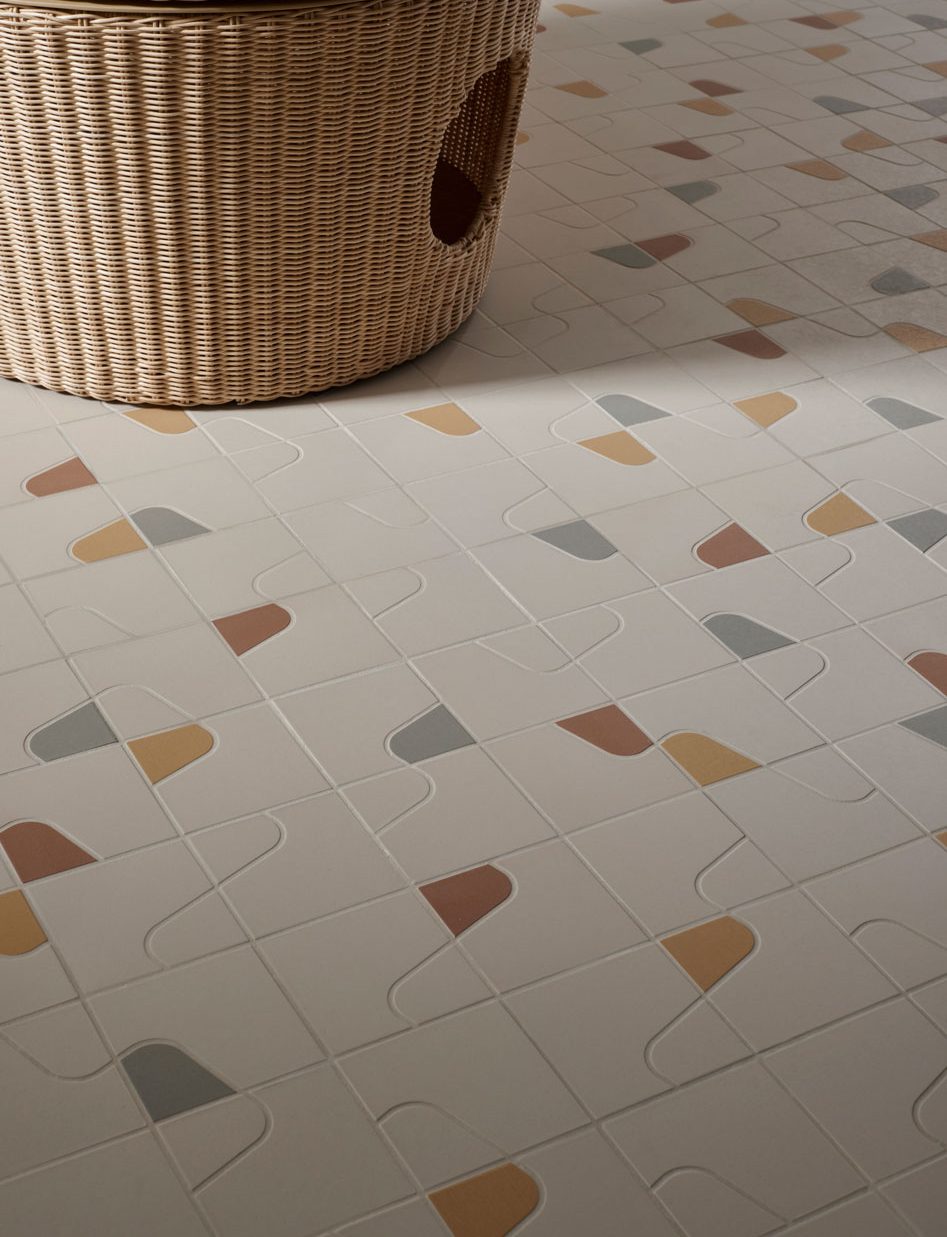
3. Designer mosaic: when the layout is the project
There is a third family chosen not for performance but for drawing. Mosaico+ works this territory with designer-signed collections:
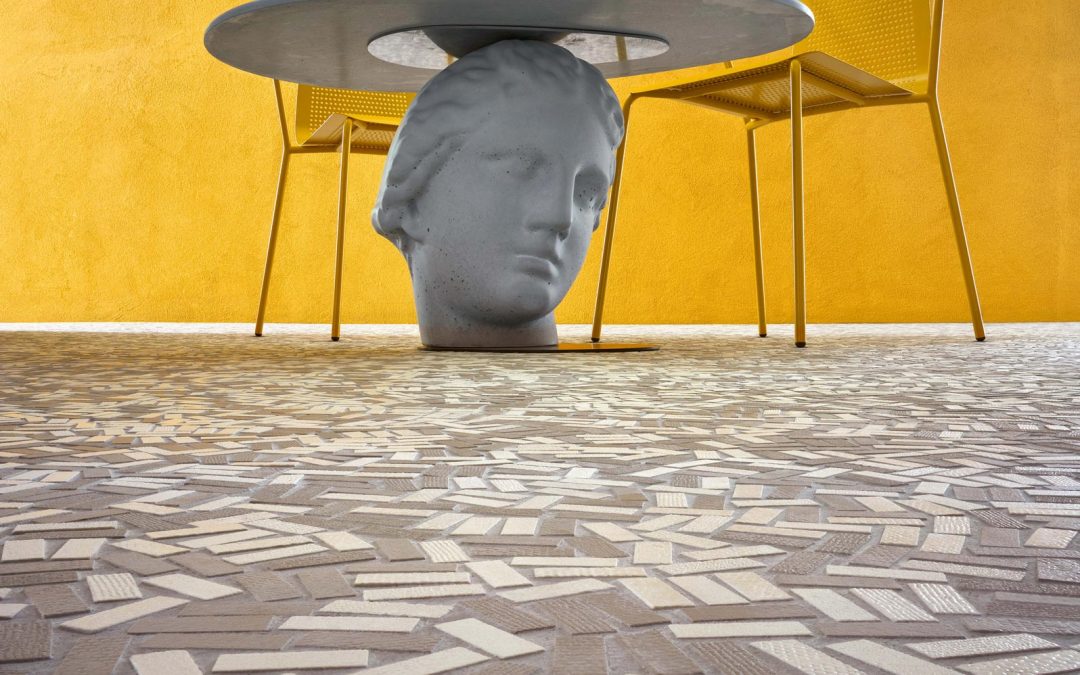
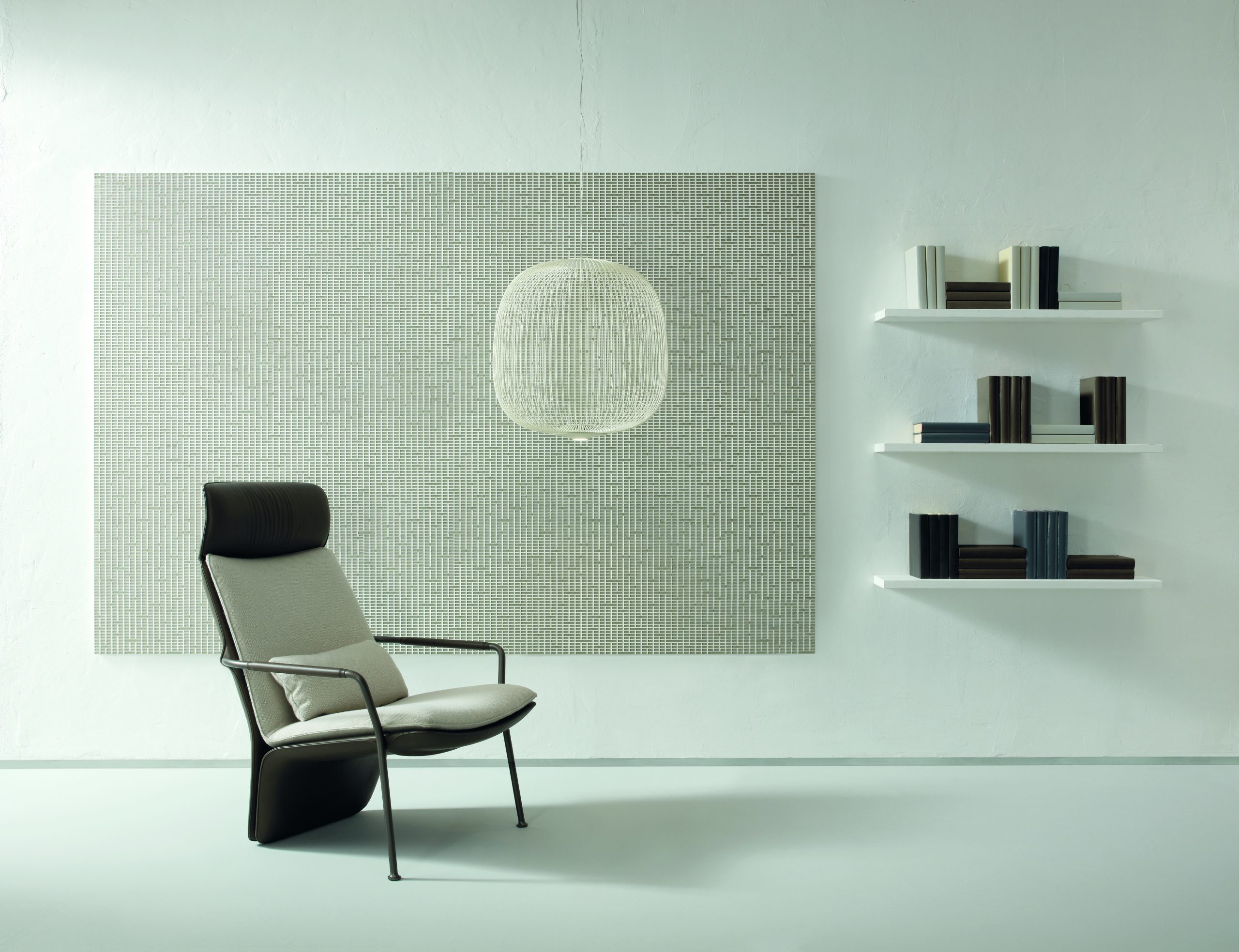
- P-saico (Marialaura Irvine) — elongated fragments of 10 × 30 mm set in irregular patterns forming modules of 315 × 320 mm. A contemporary reading of Venetian Seminato, in which the grout colour changes the result entirely.
- Mist (Kensaku Oshiro) — float glass with a matt finish, in three chip sizes on sheets of 300 × 320 mm, with an interlocking system that generates an endless pattern without visible seams.
- Jointed (Massimo Nadalini) — 5 × 5 cm chips engraved with a graphic motif that supports five different decorations; random arrangement multiplies the combinations.
Where to use mosaic: three scenarios
| Recommended material | Why | |
|---|---|---|
| Pool and wellness | Glass mosaic (Ezarri, Onix Penta) | Non-porous, resists saline chlorination, follows the shell and decides the water colour |
| Bathroom and shower | Matt glass or porcelain | Easy to clean, adapts to niches and benches; matt avoids excess sparkle |
| Kitchen and splashbacks | Porcelain or designer mosaic | Resistant to stains and heat; the small layout adds texture without overloading |
For a pool, the colour of the tessera is the decision that most shapes the final result: water deepens and cools the tone of the surface. We develop this with examples in what colour will my pool water be? and in our guide to ceramic tiles for pools.
If the project is a bathroom, in bathroom and shower decoration you will find mosaic combined with large-format floors.
Anti-slip, grout and maintenance
Three details that decide whether a mosaic ages well:
- Anti-slip. There are specific series with anti-slip texture — Aquarelle by Ezarri, Penta Black Rock Matte by Onix — designed for steps, beach entries and walkways, colour-compatible with the rest of the collection.
- The grout. A mosaic has far more joint than a large tile, so the grout colour is not a detail: it can reinforce the tone of the tessera or soften it until it disappears. In designer collections, the grout is part of the design.
- Maintenance. Glass is non-porous: water and neutral soap are enough, it does not absorb and it does not lose colour. Full-body porcelain behaves just as well on trafficked surfaces.
In short
Choose glass if the mosaic will be in permanent contact with water and you want sparkle and depth; porcelain if it will be walked on or you want a matt finish; and designer mosaic when the layout itself is the argument of the project.
👉 Discover the collections by Ezarri, Onix and Mosaico+, and the rest of our ceramic floor and wall tiles at gomila-ceramica.com.
Frequently asked questions
- What is the difference between glass mosaic and porcelain mosaic? Glass is non-porous and brings sparkle and depth, which makes it the reference material for pools and wet areas. Full-body porcelain offers a matt, mineral finish with the strength needed for surfaces that are walked on.
- What size are mosaic tesserae? The usual tessera is 25 mm a side, but larger 50 × 50 mm formats exist — such as Ezarri’s 50mm collection or Onix Penta — as well as elongated 10 × 30 mm pieces like those in Mosaico+ P-saico.
- Is mosaic anti-slip? There are series conceived with an anti-slip texture, such as Aquarelle by Ezarri or Penta Black Rock Matte by Onix, designed for steps, beach entries and walkways, and colour-compatible with the rest of the collection.
- Can mosaic be used on floors? Yes, provided you choose a mosaic suitable for flooring: full-body porcelain or a glass series with an anti-slip finish. For large trafficked areas it is also worth considering porcelain stoneware in a larger format.
- How is mosaic cleaned and maintained? Glass does not absorb: water and neutral soap are enough, and the colour is not altered by sun or by water treatment chemicals. In every case the point of attention is the grout, which should be sealed and cleaned with a non-abrasive product.
- Where can I see mosaic in Mallorca? At Gomila Cerámica (Calle Calçat 16, Palma) we carry glass mosaic by Ezarri and Onix and the Mosaico+ collections. You can browse the catalogue and samples at gomila-ceramica.com.